2027 must be a turning point, not another coronation – Adebayo
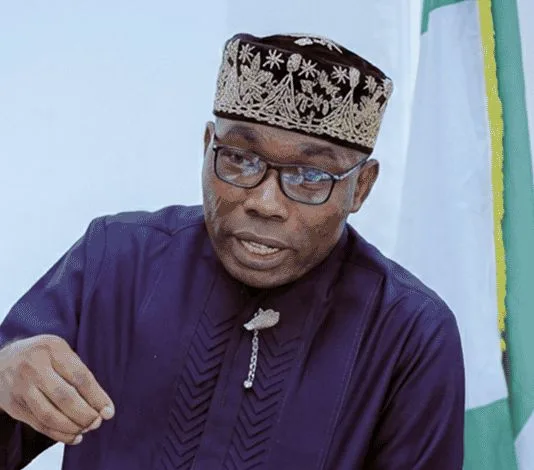
The 2023 presidential candidate of the Social Democratic Party (SDP), Prince Adewole Adebayo, has tackled the Nigeria’s current political landscape, outlining his vision ahead of the 2027 general elections. In this recent interview with journalists, Adebayo rejected the narrative that the opposition space is shrinking. He argued that true democracy lies not in the number of governors or political defections, but in the will and welfare of the Nigerian people. Excerpts
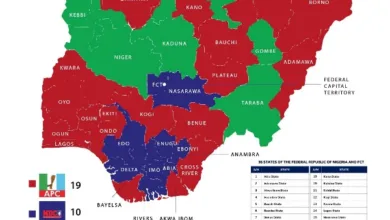
The APC is retaining dominance in the governance of Nigeria, is this not shrinking opposition in the country especially as we move towards 2027 general elections?
There is no shrinking opposition space. It depends on how one defines democracy—whether it is seen as being about public office holders alone or about the broader will of the people. In reality, democracy is driven by the majority sentiment of the electorate, which ultimately determines the direction of the country.
The notion that politics should revolve around incumbency—counting the number of sitting governors, senators, or even the president—is flawed. That is not how democracy works. In any healthy democracy, the focus is not on how many office holders are in power, but on the views and experiences of the citizens.
What truly matters is whether people feel hopeful about the future, whether they approve of the government’s performance, and whether they align with its policies or those of the opposition. Public opinion—not political arithmetic—should shape the narrative.

The media, therefore, should move away from an obsession with incumbents and pay closer attention to the voices of ordinary citizens. Regardless of how many political offices are controlled—whether through influence or otherwise—the key question remains: do the people feel the impact of good governance?
Do citizens feel well governed and confident in the leadership at both the federal and state levels? Are they satisfied with the direction the country or their states are heading? These are the issues that should dominate public discourse. If attention is focused on these critical questions, it becomes clear that those currently in power may face significant challenges.
How do you feel about the SDP not following the ADC’s path of merging with other parties to challenge the APC in 2027?
It’s not relevant to me because that’s part of their narrative, not mine. What matters is that any political position I take aligns with the will of the Nigerian people, the Constitution, and the objectives of our founding fathers at this point in time. If 36 governors decide to join one party, it is not my concern. I have been in the SDP since 1991, and I am not going anywhere. I am comfortable where I am. Some politicians are more mobile, moving from one party to another—that is their style, and it doesn’t concern me. If people complain about governors moving to the APC, then why celebrate when lawmakers move the other way in the National Assembly? That kind of hypocrisy is not part of my thinking. What matters is the quality of those moving—are they moving with the people? Their own records are poor. No state in Nigeria is truly safe, secure, or well-managed; corruption and inefficiency are widespread. That is the common thread among these incumbents. So their migration to one side is not a problem for me.
Regarding who is the main opposition, Nigeria is not a parliamentary system. ADC’s approach—mirroring APC by seeking governors and other politicians—is a copy of the politics of incumbency. Many ADC members came from APC, and their strategy reflects the same cycle of moving opportunistically rather than pursuing principles. In the SDP, we have always maintained that ADC is effectively a branch of APC, which itself is a scion of PDP. They are all part of a relay of failed administrations, handing the baton from one ineffective government to another. ADC is merely trying to jump the queue in this cycle of failure.
Our approach is different. SDP focuses on ideological redirection of the country, alignment with the Constitution—especially Chapter 2 on fundamental objectives and directive principles of state policy—and accountability and social investment. Personality-driven politics, hopping from party to party, is not our style. We are not aiming to replicate what ADC does. That is why we have said their style is not our style. Our approach is principled: the incumbent must go, and we are not concerned with National Assembly members crossing over to our party. We are committed to laying the foundation for a political culture that prioritizes governance, accountability, and the welfare of the people over opportunism and personality politics.
Which style of politics do you not align with?
I am not in tune with politics of hypocrisy. For example, someone who spent 20 years in the Senate—passing four electoral acts but failing to make meaningful reforms to improve electoral credibility—and served eight of those years as Senate President, yet did nothing to implement the Uwais report to make elections transparent, embodies that hypocrisy. The same applies to those who served as Minister of Justice or Attorney General, presided over corruption, breaches of the Constitution, and lack of rule of law, and now, outside office, loudly protest the very issues they once ignored. That is the kind of politics we reject—personality-driven, principle-free, opportunistic politics, where actions depend solely on whether power favors you at the moment. In the SDP, we are not seeking to attract members of the National Assembly to our party. Instead, we are supporting the FixNass movement, which calls for a fresh start: none of these failed incumbents should return.
From 1999 to today, trillions have been appropriated with little to show for it. Nigeria needs a new National Assembly filled with patriotic, intelligent, and independent-minded individuals. We are asking Nigerians to seize the opportunity to determine their representatives, not to rely on recycled, failed legislators.
Our goal is to revamp the system and avoid being beneficiaries of broken incumbency. This is the only way to break the cycle of repeated failure, underdevelopment, and hypocrisy—where governments blame predecessors yet continue the same practices. We are committed to a fundamental shift in Nigerian politics.
Why would Nigerians choose a smaller party over a bigger, more prominent one?
Your questions reflect three major problems in Nigeria. First, there is no true political class. What exists is a mix of military apologists, opportunists, and idle individuals who took power in 1999 due to the way the military exited. These people do not care about parties; they are simply desperate to occupy government positions. Second, the APC is not the root problem—it is a symptom. It is a patchwork of politicians with no common ideology, who came together out of fear that the PDP might dominate for decades. Figures like Muhammadu Buhari and Bisi Akande had nothing connecting them ideologically, yet they joined forces. When the PDP faltered, some opportunists defected to APC, creating what many see as a mutation of Nigerian political dysfunction. APC is fleeting; it represents a temporary, unprincipled alliance with no ideas or vision. By 2027, it will likely be forgotten, as it stands for nothing meaningful.
The real solution is not to poach politicians from one party to another, because they are all compromised. The focus must return to the people—opening up the “stinking room” of politics, bringing in fresh, patriotic individuals with integrity, professional experience, and a proven record of leadership.
We need citizens who are not career politicians but civic-minded leaders—examples of what a righteous Nigerian should be. This is the only way to revitalize Nigerian politics because the current political crop offers nothing substantive, only empty promises and personal ambition.
Many Nigerian voters cannot distinguish the SDP, APC, and ADC, as the ideological differences between them are not clear to the public….
Whoever thought otherwise clearly does not understand Nigerians. The real problem is that politicians are not addressing the issues that affect people’s lives. Instead, they focus on personal attacks, ethnicity, religion, and certificate disputes. The concerns of Nigerians are real: insecurity, poverty, and systemic injustice at every level of society. People worry about how to get home safely, how to protect their children from kidnapping, and how to maintain a healthy family with access to good housing, healthcare, and education. These are the issues that matter to citizens, and these are the issues SDP addresses with concrete plans. That is why SDP is distinct. We focus on making elections credible, ensuring real-time electronic transmission of results, eliminating violence, and maintaining an independent INEC. SDP is a long-standing political party with a long-term plan to help Nigerians become conscious of their choices and hold governments accountable so that national objectives can be achieved.
Political parties are now using either consensus or direct primaries. What is your view on this?
My point is that President Bola Tinubu is not an elder statesman. He has mismanaged the opportunity to properly implement the Electoral Acts, which he mishandled. However, democracy does not rise or fall based on a single individual misusing office. While we may criticize imperfections in the Act, it is important to remember that Nigeria has endured colonial rule, military rule, and still held elections—Abiola won even under difficult circumstances. Success is possible if the people on our side are given the chance, despite flaws in the system. The election timetable, in my view, is acceptable. What truly matters is not the antics of any individual, but the engagement and aspirations of the Nigerian people. If citizens are aloof, disaffected, or apathetic, democracy will struggle to take root. The future of our democracy depends on the people, not on one officeholder.
Peter Obi has expressed uncertainty about securing the ADC presidential ticket. Does this not reflect how poorly organized the opposition parties are for 2027 if even Obi cannot secure his party’s nomination?
I don’t understand. Why should politics and democracy rest on the personal ambition of an individual. It is not relevant.
Who is not relevant?
All these names are irrelevant to today’s question. Whether someone is a transient politician, moving from party to party, does not matter.
Do you have what it takes to get there?
You will have what it takes to get there if you have what the Nigerian people want.
Do you have what the Nigerian people want?
I understand what the Nigerian people want and their real issues, but I am not interested in grabbing power for the sake of it. Our focus is on engaging citizens, debating real issues, and ensuring that on election day every concerned Nigerian comes out to vote. That is why we have been advocating for improvements in the Electoral Act—to enable at least 75% turnout, so that whoever wins does so with substantial public involvement.
The task ahead requires Nigerians to actively contribute to solutions for the country through their productivity, and that starts with trust in government. This is why the names often highlighted in the media are irrelevant. What matters are the issues at stake and the differences in how parties and candidates propose to address them. Elections should focus on policies that impact Nigerians’ daily lives and address the nation’s deepest concerns—that is the SDP’s approach.
Many people have joined the SDP quietly, without fanfare. In some state houses of assembly, we have seen a substantial shift toward our party. We do not celebrate titles or past positions; if someone joins, we ask what they intend to do. When they cannot show commitment to action, we move on. We are not interested in personality parades. What we value are issues, principles, ethics, and genuine commitment.
Will you be contesting in 2027?
By God’s grace, I have informed my party that I intend to be the SDP’s presidential candidate in 2027, and my goal is to win for the Nigerian people on the platform of the SDP. That is my prayer, and it is why I am working diligently toward it.
I also want Nigerians to view 2027 not as another year of politicians being coronated, but as a turning point for the country. We can no longer continue on the current path—there is no room for rising insecurity, poverty, unemployment, inflation, economic deficits, frequent blackouts, broken infrastructure, or non-functional hospitals. What we need is a change of direction: to use the nation’s resources to develop the country, distribute opportunities fairly, and ensure that Nigerians can take pride in their leaders—just as Catholics take pride in the Pope. That is the standard of leadership Nigerians deserve.
Does the SDP have the financial capacity to contest the 2027 election?
The SDP does not believe in money politics; we believe in people’s politics. Where you have strong grassroots support, resources naturally follow—based on legitimate, verifiable income, not the diversion of public funds. There are enough members in the party with sufficient legitimate resources to run an election nationwide. We also have a policy that sets a maximum cap on contributions to ensure broad participation rather than relying on a few wealthy individuals. Money is not our problem. Our focus is on credible elections, free from vote-buying, rigging, violence, or intimidation—because that is not part of our tradition. We want elections that engage Nigerians, protect their participation, and foster confidence in the democratic process.