Buhari, biographies, myths and controversies, by Simbo Olorunfemi
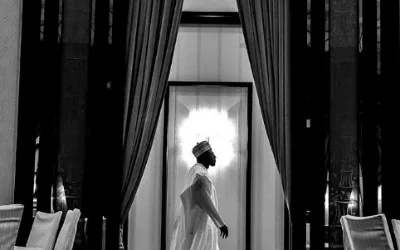
When the Buhari biography (Muhammadu Buhari — The Challenges of Leadership in Nigeria) written by Prof. John Paden’s book was released sometime in 2016, it triggered a pronounced controversy, just as the new one by Dr Charles Omole has.
One particular issue of controversy in that biography was the Author’s account of how Prof. Yemi Osinbajo emerged as the running mate to the then Candidate Muhammadu Buhari in 2014.
By some coincidence, Prof. Yemi Osinbajo is again at the centre of one of the issues of controversy in the second biography by Dr Omole. This time, it has to do with what transpired between him and President Buhari and
the circumstances surrounding his decision to run for the Presidency in 2023.
Two biographies, two controversies, with speculations around Prof Yemi Osinbajo finding their way into it. Interesting.
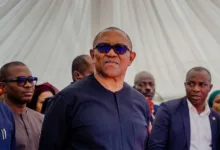
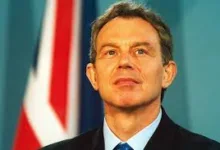
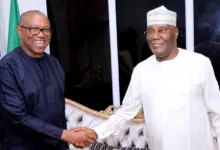
In his book, Paden detached Asiwaju Tinubu from the eventual choice of Prof Osinbajo as General Buhari’s running mate, giving that credit to other people, positioning as having been an antagonist, rather than as an enabler.
I remember pushing back against that account then, against fierce argument from some people here who, at the time, were no fans of Asiwaju, even if they would change their position later.
The kernel of their argument was essentially that I could not have been in a position to push back against an account from an authorised biographer. While it was not expressly stated then, there was a presumption that being an Oyinbo with such a pedigree,his account could not but have been factual.
Their argument then was essentially this – Who was I to be contesting an account given by an Oyinbo man who had direct authority to write the book?
But I stood my ground that the man’s account was not only factually suspect, but naive, as the process he presented was rather simplistic, which could have only been so because of his Oyinbo background, which ironically some assumed as a plus.
What I didn’t disclose then, and won’t be going into the details now, was that I had some direct involvement at the time with the process that culminated in what eventually became the Buhari-Osinbajo ticket, and didn’t see how the hand-holding by Asiwaju could have been written out of what transpired back then, no matter who the Author was
Taking a cue from that first biography, which I have not read, and reports from the second one, my feeling is that the two works might not have benefited from the kind of diligence that might have weeded out some accounts that are obviously faulty.
But that these biographies, like many others, might fall short in terms of accuracy, is not enough reason to dismiss them. Sometimes, laziness sets in. Sometimes, there is the misplaced assumption of knowledge ascribed to sources by Authors.
Listening to Dr Omole the Author of the second biography, it is interesting to find out how the idea of the new book came about.
The idea of a book was neither in the original contemplation of Mrs Buhari nor his. It was not planned. It was more like a child of circumstance.
According to him, those behind the publication of the first book had approached Mrs Buhari with the idea of re-presenting the book as part of the programmes for the 25th Anniversary of the Arewa Consultative Forum.
She, however, thought it wasn’t such a bright Idea re-presenting a book written about 10 years ago without updating it, which was how the Author came into the picture.
But Mrs Buhari felt that there was no point relaunching the old book, but wanted an update
The initial scope, according to Dr Omole was to update the book, but because of some issues and the fact that they couldn’t find the soft copy of the book, he then decided to write a whole ‘new’ book altogether.
So, the idea that there was an agenda to this by the family might not be true. If one goes by the response of the Author, some of what is said to be in the book might as well be only imaginations from the minds of those who have not read the book.
If the accounts of those who claim to have read the book is anything to go by, checked by facts from my direct personal experience, it might be that, again, some of the reported accounts have fallen into the error of presenting or reinforcing myths rather than clearing them up.
The real danger is that the myths will continue to be played up unless those who were at a vantage position to see things clearly step up into the ring with their gloves.
There are a few people I know who definitely need to write.
A lot has been made of cabal or no cabal. I doubt that there is any power centre that does not have its own cabal(s).
Omole argues that there was only one cabal around Buhari, Dalung says that there were many.
I would rather line up behind Dalung, as that is often the case, just as it is that rivalry and turf battle is not entirely unusual in power centres.
At the end of the day, it is more about how the balance of forces is established or maintained by the man at the centre of it, consciously or unconsciously.
Listening to Halima Buhari at a recent event in Abuja, I could feel the sheer weight of the burden she and other members of the family carried, in her voice. I also found her words quite genuine and profound. Excerpts:
“Behind every soundbite, there was a human being; sometimes tired, sometimes determined, sometimes frustrated, always painfully aware that his decisions impacted millions of lives. While the public saw President Buhari, the family saw “Baba”, a man who grappled privately with the imperfect choices and trade-offs required by Nigerian leadership.”
Biographies aside, I would think that it is becoming increasingly more obvious, that Muhammadu Buhari indeed largely lived up to his claim of being for everybody and nobody.
I think that left everyone around him neither truly satisfied nor wholly disappointed, but possibly confused.