Where is Nigeria’s Paul Kagame? A reflection on leadership, reform, and national renewal — by Solomon Dalung
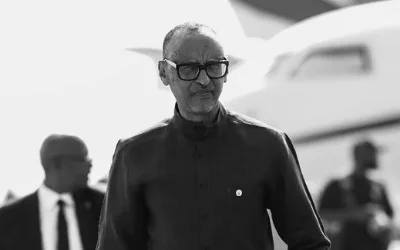
The tragic experience of Rwanda in 1994 remains one of the darkest moments in modern African history. For over three months, following the assassination of President Juvénal Habyarimana in an air crash, Rwanda existed without a functional government. The country descended into genocidal anarchy as nearly one million people, predominantly Tutsis and moderate Hutus, were brutally murdered, while state institutions collapsed and social trust was completely destroyed. In the midst of this national catastrophe, Paul Kagame emerged from the bush as a rebel leader and assumed responsibility for restoring order in a country that had virtually ceased to exist as a state.
Kagame’s rise to power was not through inherited institutions or stable governance structures, but through the ashes of total collapse. Yet within a remarkably short period, he restored law and order, rebuilt state institutions, reorganized the security architecture, and re-established public confidence in government. One of his most defining achievements was his uncompromising stance on accountability, transparency, and discipline in public service. Corruption, which had crippled Rwanda’s pre-genocide governance, was confronted head-on. Public officials were subjected to strict ethical standards, and state resources were managed with fiscal prudence and institutional integrity.
Beyond institutional rebuilding, Kagame pursued a deeper social transformation. He abolished ethnic identities in official discourse, replacing them with a unified national identity. This was a radical but necessary step in a society previously torn apart by ethnic divisions. He also reoriented Rwanda’s educational and administrative systems from a Francophone to an Anglophone model, strategically integrating Rwanda into the global economy and the Commonwealth. Perhaps most importantly, Kagame institutionalized the traditional Gacaca justice system, which provided a framework for truth, reconciliation, justice, and national healing. Victims were acknowledged, perpetrators confronted, and the collective responsibility of rebuilding the nation was impressed upon every citizen.
In Africa’s post-conflict history, Rwanda stands as a rare example of disciplined leadership translating into tangible national transformation. Today, Rwanda is among the most stable, secure, and economically organized countries on the continent. Infrastructure development, urban planning, healthcare delivery, gender inclusion, digital governance, and public service efficiency have become reference points for African governance. These achievements were not accidental; they were the product of vision, political will, discipline, and a leadership culture that placed national interest above personal comfort.
Nigeria, by contrast, presents a deeply troubling paradox. Unlike Rwanda, Nigeria has never experienced total state collapse. It possesses vast human and natural resources, a functioning constitution, democratic institutions, and a relatively sophisticated economy. Yet despite these advantages, the country has remained trapped in a cycle of underperformance, corruption, insecurity, and leadership failure. The brief but impactful six-month tenure of General Murtala Mohammed in 1975–1976 demonstrated that decisive leadership can redirect national destiny. Many of the reforms he initiated, public sector discipline, anti-corruption drives, urban restructuring, and institutional reforms, remain unmatched decades later.
President Muhammadu Buhari inherited a functioning government in 2015 but justified poor performance with the narrative of an “empty treasury.” Eight years later, Nigeria was left economically weaker, more insecure, and more divided. The anti-corruption agenda collapsed into selective prosecutions, while insecurity escalated from localized insurgency to nationwide criminality. Banditry, kidnapping, terrorism, and communal violence became normalized, and public trust in the state steadily eroded.
President Bola Ahmed Tinubu assumed office in 2023 with bold economic reforms, most notably the removal of fuel subsidy and the unification of exchange rates. In principle, these reforms were necessary. However, they were implemented without adequate social protection mechanisms. The result has been unprecedented hardship: inflation, collapsing purchasing power, rising unemployment, increased taxes, tariffs, bank charges, data costs, and deepening poverty. Nigerians are asked to “sacrifice,” while political elites live in affluence, shop abroad, educate their children in Europe, and enjoy luxury lifestyles disconnected from the suffering of ordinary citizens.
Although the Tinubu administration claims that reforms have increased revenues to subnational governments, the reality remains grim. Nigeria has recorded more foreign and domestic borrowings within two years than most administrations in comparable periods, yet visible development outcomes remain elusive. Corruption allegations persist with little consequence.
The case of the former Minister of Humanitarian Affairs, accused of mismanaging tens of billions of naira meant for the most vulnerable Nigerians, symbolises a system where accountability is sacrificed on the altar of political loyalty.
Insecurity has worsened beyond imagination. Communities are raided, citizens abducted, and ransom payments institutionalised as survival strategies. Governance has increasingly been replaced by political calculations ahead of the 2027 elections, while the president is frequently perceived as detached from domestic realities. The constant justification for failure remains the familiar refrain: “we inherited these problems.”
This is the fundamental difference between Rwanda and Nigeria. Paul Kagame inherited no government; he built one. Bola Ahmed Tinubu inherited a functioning state burdened by challenges; yet over two years later, the dominant narrative remains blame rather than responsibility. Leadership, in its true sense, is not about managing excuses but about confronting realities with courage, vision, and discipline.
Nigeria does not need a dictator; it needs a leader with moral authority, institutional discipline, and a national vision anchored in justice, accountability, and service. The question is not merely when Nigeria will have its own Paul Kagame, but whether Nigeria’s political culture is willing to produce and support leadership that places national survival above personal ambition, party loyalty, and elite comfort.
Until Nigeria embraces a leadership philosophy rooted in sacrifice, integrity, competence, and national purpose, the dream of transformation will remain distant. Rwanda teaches that even from genocide and state collapse, a nation can rise. Nigeria’s tragedy is that despite having every opportunity to succeed, it continues to fail not for lack of resources, but for lack of leadership. Juma’at Mubarak.
–Dalung is Nigeria’s former Minister of Sports and Youth Development