World Bank report, Peter Obi and misinterpretation of data — by Michael Chibuzo
Your latest post about a World Bank report on Nigeria’s federation account deductions, coming just days after Atiku posted his own, simply reinforces the reality that you are confused about many things. You often muddle things up and even end up contradicting yourself without realising it. For someone who aspires to lead the world’s 8th most populous nation and the 19th largest economy by purchasing power parity, it is shocking to hear you say some of the things you say. And this has nothing to do with our different political leanings.
Now, to your post.
You insinuated that the deductions from revenues due to the federation account over the last three years (reported by the World Bank to be around N34 trillion) were “institutionalised corruption.” I am almost certain you did not read the report before making this claim. It is more likely that you fed the Punch Newspaper’s selective narrative (centred around pages 21 and 22 of the 55-page report) to AI to generate a talking point, otherwise you would not have made such a post.
As usual, let me deconstruct your claims and correct the misleading narrative you are trying to push, whether ignorantly or mischievously.
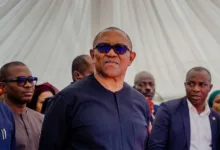
First, these deductions are not institutionalised corruption. Part of the deductions include statutory transfers like the 13% oil derivation fund distributed to oil-producing states, including Anambra, our dear state, which received N1 billion from the fund in February 2026. These deductions also include Joint Venture cash calls (JVCC), savings into the Stabilisation Fund and the non-oil revenue excess account, refunds to states for priority projects, development of natural resources, the North East Development Commission (NEDC) and others. As a former governor, it would be shocking if you didn’t know these, even if it was your Commissioner for Finance who attended FAAC meetings.
For clarity, here is a breakdown of the 2025 revenue inflows and deductions as reported by the World Bank.
Total gross oil and gas revenues for 2025:
Oil and gas royalties (NUPRC): N7.552 trillion
Gas flaring penalties (NUPRC): N611 billion
Rentals and Miscellaneous (NUPRC): N84 billion
NNPCL Production Sharing Contract Profit: N1.512 trillion
Oil and gas taxes (FIRS): N4.815 trillion
Total oil and gas revenue: N14.574 trillion
Non-oil revenues:
Company income tax, stamp duty, capital gains tax (FIRS): N9.777 trillion
VAT (FIRS): N8.607 trillion
Electronic money transfer levy (FIRS): N444 billion
Customs revenues (NCS): N4.041 trillion
Total non-oil revenue: N22.869 trillion
Total revenue for 2025: N37.443 trillion
Now, the deductions for 2025:
Savings into non-oil excess account: N2.688 trillion
Funding for security, intervention programmes and allowances: N1.253 trillion
Statutory transfers to MDAs (FIRS, Customs, NMDPRA, NUPRC, NEDC, FEF, RAMFC, NNPCL, NSIA): N4.179 trillion
Interventions for states (infrastructure and security): N1.15 trillion
Refunds to subnationals (NLNG, Excess Crude Account, JV cash calls, 13% derivation etc.): N4.568 trillion
Renewed Hope Ward Development Programme: N900 billion
Other deductions (refunds for priority projects, recovery of withholding taxes to states): N192 billion
Total deductions for 2025: N14.930 trillion
This is where the misconception lies. The bulk of these deductions are not “leakages” as you insinuated. Many of them are mandated by law, passed by the National Assembly—such as those for RAMFC, NEDC, FIRS, NUPRC, etc. Some deductions end up with states, including the 13% derivation, security votes, project refunds, and interventions. Even the savings in the non-oil revenue excess account return to FAAC for sharing when revenue inflows fall short.
This is the problem with rushing to push a narrative built on incomplete information.
Now, are there issues with the present deductions? Yes. These issues mainly revolve around the cost-of-collection system, which is pegged as a percentage of federation revenues. Lawmakers created this percentage system to guarantee funding for critical agencies. However, when nominal revenue rises—as we are witnessing today under President Tinubu—these percentage-based deductions rise automatically, leading to larger statutory transfers.
But this does not mean the transferred money is “gone” or automatically spent. MDAs are mandated to remit their operating surplus at the end of each fiscal year. So if RAMFC, for instance, receives more than its approved budget due to higher inflows, the excess is remitted back to the federation account and becomes part of what is later shared among the three tiers of government.
For NEDC, the revenue transferred, which is in excess of its approved budget is returned to the VAT pool since it is funded from VAT.
My dear Obi, you also skipped page 31 of the World Bank report (that is, assuming you even read it), where it highlighted that the rollout of the Revenue Optimisation and Assurance Project (REVOP) by the Tinubu administration will reduce leakages and improve compliance. You also ignored the World Bank’s optimism about the President’s February 2026 Executive Order suspending unconstitutional pre-FAAC deductions by NNPCL. This policy will raise oil revenues by about 0.4% of GDP annually.
The section you and Atiku Abubakar tried to capitalise on was actually presented in the context of an ongoing reform effort by the administration to rationalise MDA deductions. Thanks to the suspension of the NNPCL’s 30% Frontier Exploration Fund deduction and another 30% management fee deduction, remittances have already increased: NNPCL remitted N1.804 trillion in February 2026, up from N726 billion in January 2026.
It will only get better.
So, Mr Peter Obi, you need to calm down with your now monotonous preaching built on superficial claims. Everything becomes “corruption” to you—including systems you once participated in as governor. You say you championed savings during the Jonathan era while other governors wanted everything shared. Today governors agree to set aside substantial non-oil revenues for savings, yet you call the process corrupt.
In the February 2026 FAAC report, N850.56 billion was transferred into the non-oil excess account for savings out of the N3.04 trillion that accrued, with N1.894 trillion shared after deductions.
If you became President today, are you aware that you cannot unilaterally change this system without the buy-in of governors and local governments, plus constitutional amendments? Would you scrap the 13% derivation? Would you stop savings?
So, my dear brother, try to conduct deeper research before rushing to post things simply to appear oppositional. Reforms are not proclaimed into existence – they are built over time. And we are, in fact, witnessing an unprecedented reform journey under the banner of Tinubunomics.