Africa, Nigeria are not overborrowed but underfinanced – Fasua replies Sanusi — by Tope Fasua
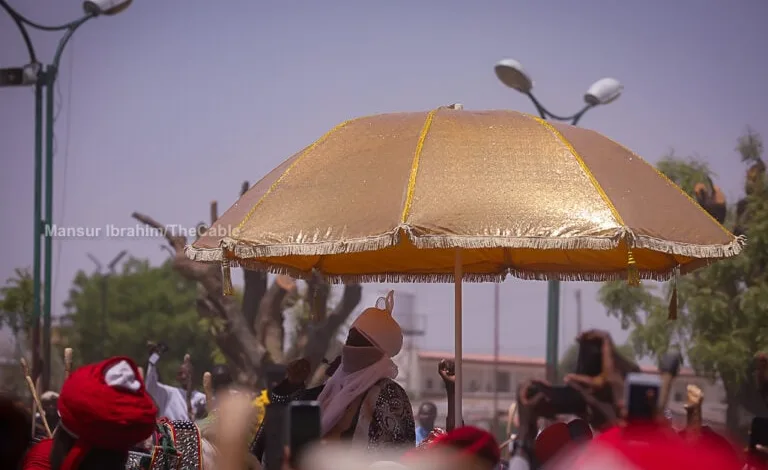
I had already started writing an article in which I sought to communicate the very fact that the world is not (yet) invested in Africa or Nigeria, when the 16th Emir of Kano, Muhammed Sanusi II, made the statement to the effect that with subsidy removal, the federal government should not be borrowing at all. The article, therefore, seeks to address Emir Sanusi’s concern while explaining why there is an urgent need for the world’s financiers to give Africa – especially Nigeria – a chance and invest here just as they have done elsewhere in the past (especially in their own countries). It is important to state upfront that I am not advocating for reckless borrowing for Nigeria or Africa at large, but I am taking a pragmatic look at our future, and asking that we do not allow our past to necessarily define and determine that future, but to take ourselves more seriously and think outside the box as per our possibilities. I will explain that in a bit.
First, I need to explain why a response to Emir Sanusi is apposite at this moment. From available information, the Emir is the global Chairman of Black Rhino, a private equity, infrastructure-focused subsidiary of Blackstone (the world’s largest alternative asset manager with Asset Under Management (AUM) in the sum of $1.2 trillion and counting). Blackstone itself birthed BlackRock (the world’s largest asset manager with AUM in the excess of $10 trillion) before they split. So, the eloquent Emir is sitting on a pile of cash and straddling significant advocacy power which can be of great assistance to Africa and Nigeria. I wager that we haven’t seen very significant flows from these large entities and Nigeria – among other African nations – have to rely on sundry sources for finance. Black Rhino, which Sanusi chairs globally, boasts of assets under management of $35 billion. More than being a powerful traditional leader in Nigeria, Emir Sanusi is actually a global financier.
Now, with only 1.8% of global debt resident in Africa ($2 trillion out of $111 trillion), I am of the view that contrary to the narrative being pushed to the extent that it is now received wisdom – that a country like Nigeria is ‘overborrowed’, or that African nations are not managing their debts well enough, indeed the reality is that Africa as a whole, and Nigeria in particular, are underfinanced. Out of a total Global Debt of $111 trillion as of 2025, African countries could only manage about $2 trillion. Australia alone sits on $1.6 trillion ($1 trillion federal, $0.6 trillion for states – this metric is significant given that in Nigeria, the federal government carries 93% of the national debt). Of course, the USA is the world’s biggest debtor with $38 trillion in its coffers. China comes in second with $18 trillion, and Japan with $12 trillion. The UK, France, and Italy are just three countries in Europe whose debts are at least 150%-200% what the whole of Africa owes. North America holds 38% of World Debt, Asia holds 33.2%, the Middle East 1.8%, Europe 21% and South America 3.1% and Oceania (chiefly Australia), 1.3%. That is the current distribution.
With the advantage that Africa possesses in terms of population and demographic advantage, space and potential for growth, land mass, natural resources, investible projects, infrastructural deficits, and human capital, a share of 1.8% of world debt is dismal, and is in fact a dismissal of the continent, her people and the likelihood of a great future integrated with the rest of the world. The few reasons one could adduce to the very lethargic investment pace by world financiers into Africa and Nigeria could be that they don’t believe Africa is ripe for development yet, or that we could not handle sizeable projects financed with their credit. It is therefore very depressing to listen to operatives from especially western nations who talk down on Africa and try to convince us that we are already borrowed to the hilt, when in fact we haven’t started. The world knows that the large countries of the world are the ones that should be cautious now, given how much debt they sit on.
Meanwhile, this analysis so far only considers structured, formal debt. There is a universe called Private Debt and Household Debts, with another $150 billion sitting there. Africa has very little, given the absence of credit cards, mortgages and such like in most countries on the continent. The continent still largely runs on cash. Good for our peace of mind, but bad because we are not leveraging what we have, especially for public infrastructure. I agree that consumption and consumerism should not be prioritised for now. Yet the top nations of the world developed by borrowing (for public infrastructure and private consumption), and it is hard to imagine how African nations can also develop and make progress without accessing substantial credit.
The good thing is that in today’s world, information flow is much more enhanced. It bears repeating that I am not advocating loose borrowing. There are several formats under Public Private Partnerships that can be easily put together, tying up all loose ends and ensuring that private sector efficiency and predilection for professionalism is brought to bear on ensuring project success. Also, rather than borrowing for ‘budget support’, recurrent expenditure, cash transfers and such like, the focus should be on opening up the continent for the world by financing huge projects in rail transport, seaports, airports, power – including alternative energy, solid mineral beneficiation, value-addition to agricultural products, mechanized agriculture, and even a bit of health and educational systems (I believe most of these should be funded from our internal resources). The opportunities are a plethora, and we don’t want any discouragement.
Back to the allegations of reckless borrowing as levied by Emir Sanusi, among other pundits, it must be emphasised that Nigeria is maintaining one of the best debt management structures and strategies in the world. Since the establishment of the Debt Management Office in the year 2000, Nigeria has taken better hold of its debts. In the Second Republic (1979 – 1983), we saw a lot of reckless borrowing at every level, including states and local government. Some of these also happened under the military government, especially when we liberalised our economy and were told to embrace extreme levels of orthodoxy. The DMO today ensures that we fulfil our obligations as and when due, and that we keep borrowings within agreed limits.
Today, Nigeria’s debts stand well within the recommended 60% of GDP (according to the Fiscal Responsibility Act), or 70% according to ECOWAS, World Bank and the International Monetary Fund (IMF). At barely 39%, we are doing very well. We know that what matters most is the ability to service (or repay) the debts. To this extent, with new revenue drives, the Tinubu Administration has been able to work down debt service to revenue ratio from a high of 120% in December 2022 to barely 68% today. Even on an African ranking, Nigeria’s loans are far behind what they have in South Africa, Egypt, Algeria and Morocco.
THE FUTURE
The key flaw in Emir Sanusi’s argument is that it is focused on the immediate. A country can cut down on wasteful subsidies and still borrow for infrastructure-building. They are two different things entirely. Nigeria paid out an average of $10 billion yearly in fuel subsidies, and the system was fraught with fraud. That has stopped today, and we have a new petroleum sector to show for it, where Nigeria is often a net exporter of refined oil (Jet A1, PMS, etc.). We also have enhanced liquidity at the subnational level to show for it, where our states have spent over 300% of what they did in 2022 on capital projects.
The onus of development has been shifted to the states and local government where the people actually live, and that is just fantastic. It needs to be noted, too, that nations must naturally borrow as a strategic imperative. When the 7th President of the United States, Andrew Jackson, repaid US debts in 1835, what followed was an economic slowdown and a deep recession. The US realised it was going to become a subsistent, agrarian economy and went back to borrowing as a way of accelerating growth and incentivising creativity and risk.
And for the world of financiers who have ignored Africa, their non-investment does nobody any good except to keep Africa as the basket case and the class clown – and to what effect? A considerable portion of global liquidity came from Africa’s resources and historical extraction systems, including colonialism and the slave trade. We aren’t asking for too much, but to also be allowed to rise just like everyone else did.
Other suggestions include selling off assets rather than borrowing, but this is risky as it could lead to short-term gains at the expense of long-term national wealth. Nigeria’s tax reforms are also expected to improve revenue collection, especially from the informal sector. Ultimately, borrowing remains a tool for development and international engagement, and Nigeria must balance prudence with ambition as it pursues growth.