Aliko Dangote: Believer, builder, billionaire — by Taiwo Olanegan
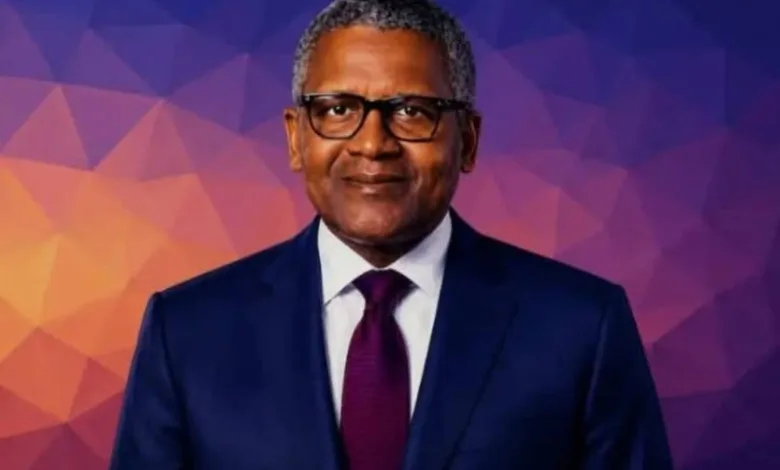
Aliko Dangote’s legs are on our necks, and he would march on them until the tears dry up from our sockets. This is the man who determined the price of our doughnuts, meat pies, and bread before he went into processing salt, sugar, and cement. We have cooked with his tomatoes, drunk his juice, and at one time even borrowed from his bank. The only part of our being that is not sold to Aliko is access to the keys of the kingdom of God.
In about 36 months, after the listing of his refinery, Dangote’s net worth could be repriced much higher than today’s estimates of around $28–36 billion. With strong execution, he has a real shot at pushing toward $70 billion and beyond within the next decade, making him richer than the economies of many francophone countries combined. Na our papa be this o… We no get another one.
Why is Dangote rich? He is because he was born so. He’s a Dantata. Why is Dangote wealthy? He is because he’s shrewd, had access to capital and savvy. Why is Dangote prosperous? He is because he’s ruthless!
I have told my friends in private conversations that if I were in America, where my rights and safety are guaranteed, I would write a book on Aliko Dangote, and it would be a bestseller. I have followed his story from the days he competed with the Churchgate group. I knew when he acquired Benue Cement Company (BCC), took control of NASCON, and built his empire.
Dangote has consistently told us the secret of his wealth, but we are deaf to his voice. He says Nigeria is the hidden gem, the best place to invest. Dangote Cement, Dangote Foods, Dangote Sugar, and NASCON are multi-trillion-naira businesses listed on the stock market. He would list the $20b Dangote Refinery on the NGX shortly.
The main reason Dangote sells petrol products at high prices is because he wants to recoup the massive cost of building the refinery within a reasonable timeframe. That project was funded through syndicated loans from local and international banks. Aliko wants to be debt-free from the project before he turns 75. In other countries, a refinery of that scale and cost would take much longer to reach full profitability. Should we blame him for his impatience? Not at all! Nigeria is one of the few places where you can invest a million and multiply it significantly in 24 months.
What catapulted Aliko Dangote onto the Forbes list as Africa’s richest man? His greatest advantage is his unshakable belief in this country and his willingness to put into practice what he learned at Al-Azhar University in Cairo, Egypt where he picked a Bachelor’s degree in Business Administration in 1977. I don’t think Aliko is the wealthiest man in Nigeria in pure liquid cash terms. If he had never listed his companies on the NGX, he might have been like another Deji Adeleke – rich and popular, but not as influential.
In 2000, during Nigeria’s privatization drive, Dangote Industries acquired controlling interest in Benue Cement Company (BCC). This was a game-changing move. I stood at the entrance of BCC, Gboko, in 1996. The factory was so massive it scared the spirit out of me. Dangote acquired a controlling stake in that struggling asset during privatization, used it as leverage to raise finance, and transformed it into today’s Dangote Cement PLC. The asset was later merged with Obajana Plc to form Dangote Cement Plc, which listed on the Nigerian Stock Exchange in October 2010 at one of the largest valuations in the exchange’s history.
The explosive rise in share price after that listing created a massive multiplier effect. What started as a struggling state asset with modest capacity became a giant through scale and dominance. Post-listing, the stock delivered extraordinary returns for investors, dramatically increasing the value of Dangote’s majority stake. It unlocked liquidity, credibility, and capital for further expansion, turning operational success into compounding public wealth and pushing his net worth significantly higher. Similarly, his moves with NASCON turned a weak player into a market leader in salt and consumer staples. These acquisitions embodied backward integration, scale, and control over essential goods.
Don’t be discouraged by the jargon above. Let me explain it simply, the way your Economics or Commerce teacher would:
When you list your company on the stock market, you offer a part of the shares to the public. Investors buy because they trust your ability to grow the business and deliver profits. That’s the cheat code of billionaires everywhere. Think Bill Gates, Steve Jobs, Elon Musk, or Tony Elumelu, Abdul Samad Rabiu of BUA. When Dangote Cement listed, Aliko and his family retained the vast majority of the shares (around 87%). Only a minority floated freely. As the price climbs, and it has climbed impressively, that initial investment and leverage multiply into trillions in value.
For emphasis, Aliko Dangote and his family kept 87% of Dangote Cement when it opened for trade at ₦135 in 2010. Only 13% of it is on free float – available for daily trade on the floor of the Nigerian Exchange. And as the price moves up, and up, till it gets to ₦1,000+ in 2026; Aliko’s initial investment of $500m of personal and syndicated loans used to acquired Benue Cement Company in 2000, and consolidate it into Dangote Cement PLC is worth $12b as at today. For context, in 2025 financial year, Aliko Dangote and his holdings in Dangote Cement received $320m as dividends!
In a nutshell, Dangote’s super wealth isn’t just from high cement prices. It comes from investors trusting him to grow earnings and pay dividends. He uses his holdings as collateral to borrow and build the next big thing – foods, refinery, ports, power, creating a powerful cycle of leverage. Aliko Dangote takes his interests and holdings in Dangote Cement Plc and uses them as collateral to obtain huge loans from banks to build Dangote Foods Plc. Then he uses both to collateralise further loans to build the Dangote Refinery. He then uses his shares in the refinery to build Dangote Ports and Power in Olokola.
I don’t claim his journey was along this simple flowchart, but it shows the real cheat code of the ultra-wealthy: using other people’s money, and mastering corporate finance. Dangote believes in Nigeria. He adapts to our realities and works with the peculiar economy we have. He even borrows from everyday people like us – Dangote Sugar recently issued commercial papers that were oversubscribed.
It is easy to credit his success to government patronage or monopoly power. But we cannot ignore that Aliko walked where angels feared to tread. He took on struggling assets like BCC and Obajana, brought in technology and expertise, serviced massive debts, and rewarded shareholders with dividends. He is steadily building toward even greater heights, coasting to the $100b mark in networth.
The sky is wide enough for every shade of plume. It takes years for a company to list on the NGX; yet, there are grasshoppers – companies – with as little as ₦1b valuation/annual turnover who are daily traded at the first or second-tier level of the Nigerian Market. Your company could be there in the next eight years if you are really desirous. You may not believe it’s possible, but Dangote did. You don’t know the process, but have you spoken to a lawyer or investment advisor? Dangote did. You doubt Nigeria because of power, water, corruption, and high interest rates. Dangote faces the same challenges and still pushes forward.
The hardest thing for many Nigerians is to believe in our own country and its potentials. But that’s exactly where the truly wealthy want you. They want you to keep doubting. So only them would corner the goodies of the land while you whine and wail. Inspite of the noises about insecurity and the inability of the Tinubu administration, the Nigerian Stock Exchange outperformed other global markets in dollar term.
As for me, I believe I will see the goodness of the Lord in the land of Nigeria. You would too, if you would see with Aliko Dangote’s glasses.