Build local cloud or risk digital dependence – NITDA DG warns Africa
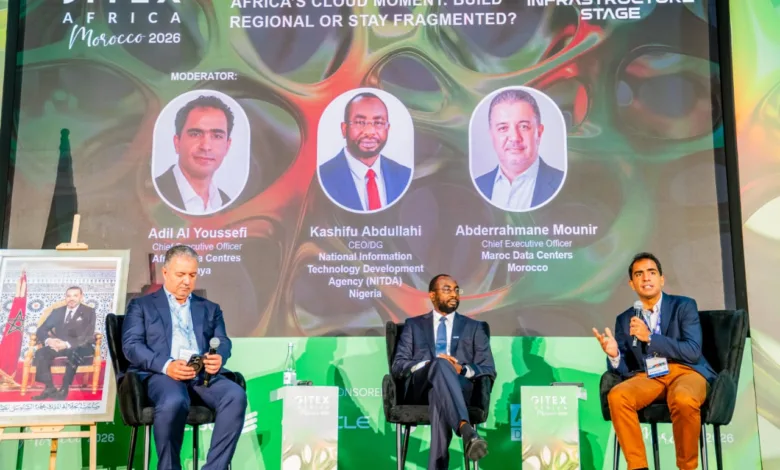
The Director-General of the National Information Technology Development Agency (NITDA), Kashifu Inuwa, has called on African nations to establish domestic cloud infrastructure and ensure data sovereignty, warning that failure to do so could result in long-term digital dependence.
Speaking at a high-level strategic session during the GITEX Africa 2026 summit in Morocco, Inuwa urged the continent to move beyond being a passive consumer of foreign technologies and instead become a key architect of its own digital ecosystem.
He cautioned that Africa’s current fragmented digital landscape leaves it vulnerable to external disruptions and undermines efforts to build a fully integrated digital economy. According to him, digital integration has become a non-negotiable requirement for national survival in a world driven by rapid data processing and intelligent systems.
Using a vivid analogy, Inuwa described cloud infrastructure as the “life-support system” of the modern digital economy, stressing that without regional data centres and harmonised regulatory frameworks, African countries remain exposed to policy changes and geopolitical interests of foreign service providers.



The NITDA boss highlighted the continent’s limited share of global digital infrastructure, noting that although Africa accounts for 15 to 19 percent of the world’s population, it holds only about 0.6 percent of global data centre and computing capacity. He described this disparity as a structural disadvantage with implications for data security, economic independence, and innovation.
Despite these challenges, he pointed to Africa’s youthful population, growing internet penetration, and expanding startup ecosystem as major strengths. He said the continent has a unique opportunity to leapfrog outdated systems and build modern, scalable infrastructure, but stressed that this would require coordinated action among governments, the private sector, and regional institutions.
Inuwa proposed the creation of a “cloud of clouds” — a federated system linking national and regional cloud platforms into a unified network.
He explained that such a model would allow countries to retain control over their data while benefiting from shared standards and collaboration, adding that achieving digital sovereignty is not just a technical goal but a strategic imperative for Africa’s long-term stability and self-determination.