Lagos key to Nigeria’s $1trn economy by 2030 – Sanwo-Olu
By Adeola Ogunrinde –
Lagos State Governor, Babajide Sanwo-Olu, has declared that the Lagos State Development Plan 2052 is a strategic national asset aligned with President Bola Ahmed Tinubu’s goal of transforming Nigeria into a $1 trillion economy by 2030.
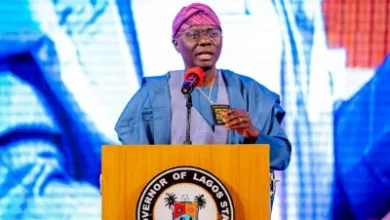
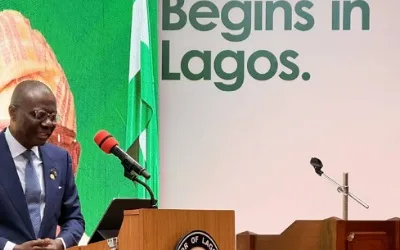
He made this known on Tuesday while delivering the keynote address at the First Distinguished Lecture of 2025, hosted by the Nigerian Institute of International Affairs (NIIA) in Lagos. The lecture, titled “Lagos, Nigeria 2030: Projections of a World Power,” marked the first in the NIIA’s new series to be delivered by a sitting Lagos State Governor.
Sanwo-Olu said the state’s 30-year development plan is built on four pillars: a Thriving Economy, Modern Infrastructure, a Human-Centric City, and Effective Governance. He noted that these pillars outline Lagos’ ambition to become Africa’s model mega city and a secure, productive global economic hub.

As Nigeria’s commercial capital, Sanwo-Olu emphasized that Lagos is well-positioned to drive Tinubu’s economic vision. He stressed the importance of aligning national and subnational strategies, noting that Lagos’ trajectory mirrors national frameworks like Vision 2010, Vision 20:2020, and Nigeria Agenda 2050.
He reiterated some of Tinubu’s key targets for 2030, including growing the economy to $1 trillion, ending gas flaring in line with the Paris Climate Agreement, and generating one-third of the nation’s electricity from renewable sources. These, he said, require coordinated efforts across all levels of government.
Sanwo-Olu also redefined the idea of global power, emphasizing that it extends beyond military might to include economic resilience, technological advancement, and urban leadership. He called on subnational governments and cities to take the lead in shaping Nigeria’s transformation narrative.
In his welcome remarks, NIIA Director-General, Professor Eghosa Osaghae, stating that the event was historic, described Lagos as Africa’s growth centre and a global city in the making. “There are five cities named Lagos in the world,” he said, “but Nigeria’s Lagos stands out as the flagship in terms of development, population, and its potential to lead globally.”
The high-profile event brought together diplomats, scholars, civil society leaders, and policymakers to discuss Nigeria’s future global positioning.