Lower energy prices likely to taper inflation in June, says analysts
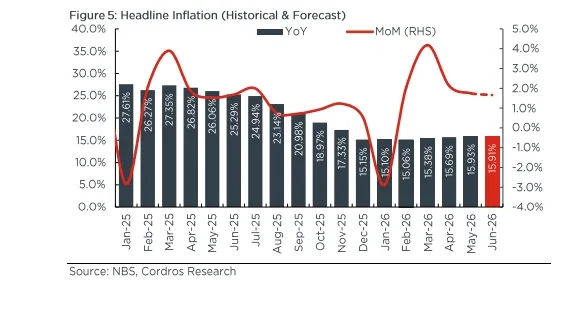
A group of analysts at Cordros Research have said developments across major inflation drivers such as renewed moderation in global energy prices, continued naira stability and the onset of green harvests suggest that inflationary pressures are likely to ease in June 2026.
This is coming amid the National Bureau of Statistics (NBS) Nigeria’s headline inflation that gained 24basis points to 15.93per cent in May 2026 (April: 15.69per cent).
According to the NBS report, on a month-on-month basis, food inflation moderated to 2.98per cent in May from 3.63per cent in April, indicating a slower pace of food price increases.
The report by Cordros Research further projected it expected inflation to ease to 1.66per cent m/m in June (May: +1.75per cent m/m), with the y/y rate moderating slightly to 15.91per cent (May: 15.93per cent).




Cordros Research stated that, “On the energy front, we note the recent pullback in global crude oil prices following a US-Iran peace deal and the planned 60-day reopening of the Strait of Hormuz.
“Specifically, Brent crude, which settled at around USD96.00/bbl on June 2, moderated to USD91.45/bbl on June 9 and further to around $83.10–$83.17/bbl by June 15, compared with an average of $102.78/bbl in May.
“ If sustained, the decline in oil prices is expected to translate into lower petrol and diesel prices. This would be mildly disinflationary, given the strong pass through of fuel costs to transport fares, logistics costs and food distribution.
“At the same time, the naira has remained broadly stable in the official market, trading around the N1,360.00–N1,370.00/USD range in early June.
“This relative stability is expected to mute FX pass through to imported food, refined products, pharmaceuticals and other tradeable consumer goods.
“More importantly, we believe the absence of renewed currency pressure should help contain pricing expectations among importers, wholesalers and retailers, reducing the likelihood of broad based price mark-ups in June.”
Elsewhere, the core index increased by 1.94per cent m/m (April: 1.03per cent m/m), with the y/y rate settling higher at 16.82per cent (April: 15.86per cent y/y).
This was primarily driven by higher price pressures in the alcoholic beverages & tobacco (+0.88% m/m vs April: +0.42per cent m/m) and clothing and footwear (+0.86per cent m/m vs April: +0.46per cent m/m) sub-components.
On the contrary, price pressures moderated across education services (+0.32per cent m/m vs April: +4.92per cent m/m), information and communication (+0.63% m/m vs April: +4.07per cent m/m), health (+0.76per cent m/m vs April: +2.10per cent m/m), and restaurants and accommodation services (+1.40per cent m/m vs April: +2.62per cent m/m) sub-components.
On food inflation, they said, “onset of green harvests to provide some seasonal relief to prices, particularly for early maturing crops and selected staples such as maize, yam, sweet potatoes, millet, cowpea and groundnut.
“This is expected to improve market supply and partly offset the lingering impact of elevated transport costs and higher farm input costs.
“However, persistent insecurity in key food producing areas is likely to limit the extent of moderation, as disruptions to farming activities and supply routes continue to weigh on food availability and distribution costs.”