TRAVELOGUE: Kigali, echoes of Rwanda genocide and other stories, by Tunde Rahman
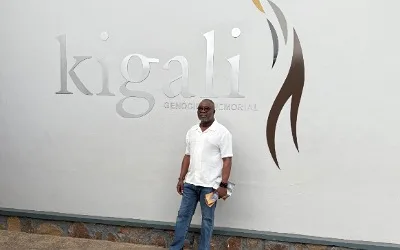
I had long nursed the idea of visiting Kigali, Rwanda’s capital, given the exciting stories of infrastructure development, well-paved networks of roads and other beautiful things I had heard about the country. When, therefore, I needed to travel to the United Kingdom late last year, I decided to route my trip through Kigali aboard RwandAir. So November 28, 2025, marked my first trip to Kigali and my first experience on RwandAir as well.
The wonderful experience I had on RwandAir more or less offered a pleasant hint of the trip itself. Indeed, everything about the journey was flawless. The aircraft we flew in was new and clean. The check-in formalities were seamless, and the cabin crew were excellent. It was a five-and-a-half-hour flight, but it did not feel like I spent up to five hours in the plane. Everything went so smoothly that time simply seemed to roll by.
Within minutes of arrival at Kigali International Airport, I had retrieved my luggage and passed through immigration with the help of Oluwaseun Akande, a senior official at the Nigerian Embassy in Kigali, who was on hand to receive me and accompany me to the hotel.
Kigali International Airport is quite small, but what it lacks in size it offsets with an appealing design. A first-time visitor like me cannot help but notice the sheer beauty and cosiness of the airport. It is also very functional and efficient. The services available were excellent, and the internet Wi-Fi was smooth and fast.
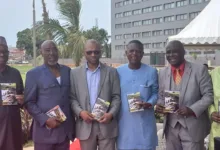
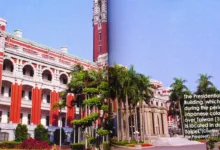
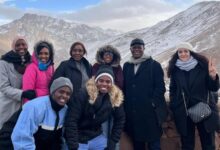

Having settled into 2000 Hotel in the heart of Kigali, described as a four-star hotel, I began to plan my itinerary. I decided to stay in downtown Kigali because I really wanted to explore the city, catch a full glimpse of it, and meet and interact with the locals. As indicated, I was en route to London and planned to spend only three nights in Kigali. The three nights had to be well utilised, in line with the trip’s objectives of learning virtually everything about Kigali: its culture and traditions, the people, their history, and the tourist sites.
Oluwaseun proved very useful in this respect. Along with a few tourists I encountered at the hotel, I visited several places, including Fazenda Sengha, Mount Kigali, Kimironko Market and, of course, the Genocide Memorial. Chauffeured by my Rwandan cabbie, who simply gave his name as Godwin, I also went round the city centre to catch glimpses of important places such as Kigali Government House, President Paul Kagame’s residence, some embassies, major conference centres and big hotels.
Fazenda Sengha is an impressive recreational park. Its features include zip lines, archery, horse and donkey rides, train rides, paintball, as well as a restaurant and a bar. From this park, erected on a mountain, one can get a bird’s-eye view of Kigali. A river that snakes through the city can also be seen. It was there that I saw donkeys again after a long time, and even rode one.
At Mount Kigali, a prominent hill in the city that rises 1,853 metres high, one can also enjoy a panoramic view of the entire city. Standing at its summit, this impressive hill is easily one of Kigali’s main attractions.
Rwanda is largely a one-city country. Everything revolves around the capital, Kigali. I was told there was little point in visiting other towns and villages, which are predominantly rural and far-flung, as they featured little of note. Notwithstanding this, President Kagame has made a tremendous impact on Rwanda’s development. According to official documents in Kigali, the hallmarks of his administration are peace and reconciliation, women empowerment, promotion of investment and entrepreneurship, and access to information technology.
On the streets of Kigali, President Kagame is good news. The people visibly adore him and commend his impact on the country. His residence is a sprawling structure next to the Government House. Its sheer majesty is understandable, given his status as president.
Reminded that Kagame has been in office since April 2000 and was recently sworn in for a new five-year term in August 2024, my cabman, Godwin, simply retorted: “That is not important to us. He is doing well and we love him. He treats all of us equally. Our country is okay. We don’t count how long he has been in power.”
Impressive as the sights were, this is an unsolicited piece of advice to President Kagame: after 26 years in power and still counting, it is time he started thinking seriously about grooming a suitable successor to continue his progressive policies and quitting the stage when his present term expires. Otherwise, he risks undermining the good legacies he has built and the impact he has made on the Rwandan people.
As stated, the three-day trip to Kigali was generally eventful and exciting. There is so much to write about. Yet there were also depressing and humbling moments, particularly at the Kigali Genocide Memorial, built to commemorate the 1994 Rwandan genocide as a place of remembrance for the more than one million victims of the genocide against the Tutsi.
Inside the memorial, the remains of over 250,000 people—the bones of those massacred, mostly Tutsis—are interred. Visitors are confronted with grim stories and images of how Hutus turned against Tutsis; how brothers turned against brothers, friends against friends; how families that had long related well and even inter-married turned against one another. The graves are neatly arranged across the large and sombre grounds, evoking the tears and bloodshed of the Rwandan civil war.
Accounts of genocide survivors are also displayed on the walls of the memorial centre. In his book Conspiracy to Murder: The Rwandan Genocide, Linda Melvern gives a chilling account of the killings, quoting part of a report by the International Committee of the Red Cross issued on April 29, 1994: “Whole families are exterminated; babies, children, old people and women are massacred in the most atrocious conditions… The cruelty knows no limit.”
As I criss-crossed the memorial, moving from one room to another, reading the narratives and viewing the haunting images, tears welled in my eyes. I prayed silently that such horror would never occur again, anywhere, to any people or nation.
Those alleging genocide in Nigeria and spreading such narratives do not understand what genocide truly means. Yes, Nigeria is battling security challenges. Yes, there are killings—very unfortunate and disturbing—but the government is confronting them head-on. There is no genocide in Nigeria, whether of Christians or Muslims, and we should not pray for one. Anyone who has seen the magnitude of the Rwandan massacre as documented at the Kigali Memorial will understand this clearly.
President Kagame deserves commendation for his post-war efforts at peace and reconciliation, as do the people of Rwanda for embracing unity after such devastation. Speaking on her personal commitment to peace, Lydie Mutesi, a guide at the Kigali Genocide Memorial, wrote on the wall of the centre: “The memorial is a very important place. I feel responsible and humbled because I’m contributing to teaching the world and my community about building peace after genocide.”
Rahman is a journalist and media aide to Nigeria’s President, Bola Tinubu.
