Why Tinubu’s track record still sets him apart, by Kayode Adebiyi
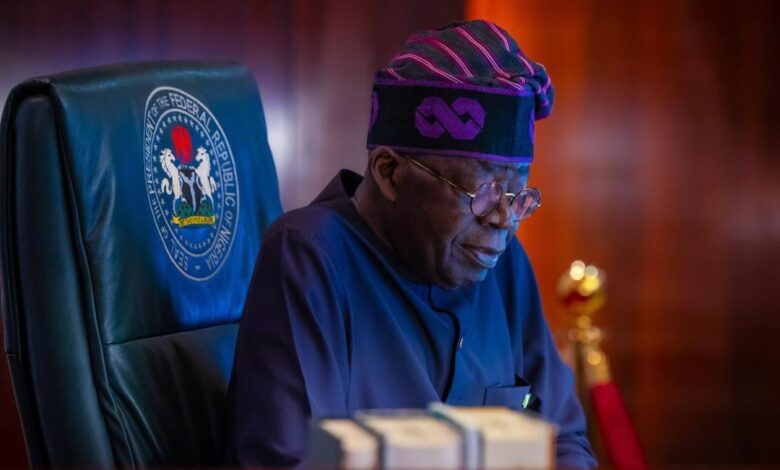
Tinubu was the first governor in the history of Nigeria to raise a bond for infrastructural development. At that time, the PDP-led government of President Obasanjo said it was neither possible nor feasible. Not long after, the same PDP-led federal government began using the same model, and other state governors took a cue.
Today, raising bonds as an alternative means of funding development has become a viable revenue source across Nigeria.
There was a funding problem—funding is always the greatest challenge of any government because there is always so much to do, and revenue is never enough. It takes someone with a deep understanding of economics and innovative funding models to achieve development outside the traditional government revenue streams.
Next, he believed Lagos, given its size and commercial vibrancy, should be generating more Internally Generated Revenue (IGR) than it was at the time. Increasing taxes was not the solution. What Tinubu did was first to expand the tax net in Lagos and then digitize the system in a way that eliminated physical cash transactions, as that is where money typically gets stolen.
He brought in tax experts, and by the time the transformation was complete, Lagos had become a benchmark for internal revenue generation. Guess what? Other states, especially PDP-governed ones, came to Lagos to learn and ended up using the same tax consultants to improve their own IGR.
So, why are you surprised that one of the first policy decisions he made as president was to recalibrate our moribund colonial tax law, which had been in existence since the 1950s? For goodness’ sake, how can a modern nation rely on a tax law enacted during the colonial era?
Now, we have a brand-new, revolutionary tax law—one that frees up money, provides tax breaks for low-income earners and small SMEs, but ensures that the “big boys” who usually evade taxes now pay commensurate with their profits. This will significantly increase our national tax revenue.
Tell me, what is the major problem of Nigeria? It’s simple—little revenue, but massive developmental shortfalls and an overwhelming infrastructure deficit. We have great revenue potential, but no leader had ever tapped into it until Tinubu came into the picture. That’s why I keep telling anyone who cares to listen that I don’t care about Tinubu as a person, but I care about his ability to get things done, because I was a witness to what he did in Lagos.
What he did in Lagos is what he’s replicating on a national scale as president. He is tapping into revenue potentials to increase our income so that we can unleash development across the nation. There is nothing that induces economic activity more than widespread government-driven infrastructure development.
Beyond fiscal innovation, Tinubu laid the foundation for public sector reform in Lagos by establishing the Lagos State Internal Revenue Service (LIRS) as an autonomous agency. This move professionalized tax collection and removed undue political interference, ensuring sustained efficiency and transparency in public finance. It was this model that other states later adopted.
Moreover, Tinubu was instrumental in repositioning Lagos as a megacity. He initiated the Lagos State Development and Property Corporation (LSDPC) reforms and began the conceptual work for what would later become the Lagos Bus Rapid Transit (BRT) system, which revolutionized public transportation in West Africa. These long-term urban planning and infrastructure efforts separated him from his contemporaries who largely focused on short-term projects.
I don’t follow blindly. The reason I supported BAT is because he has antecedents. I know and witness his strides in Lagos, and I know he has the capacity to turn seemingly unworkable situations into workable enterprises.
Track records must be the yardstick for measuring the preparedness of any leader for higher responsibilities. Before you talk to me about your candidate, first put their record beside BAT’s.
BAT is a primus inter pares. Period!
Selah!