$1tr Economy: NACCIMA DG tasks stakeholders on digital innovation, productivity
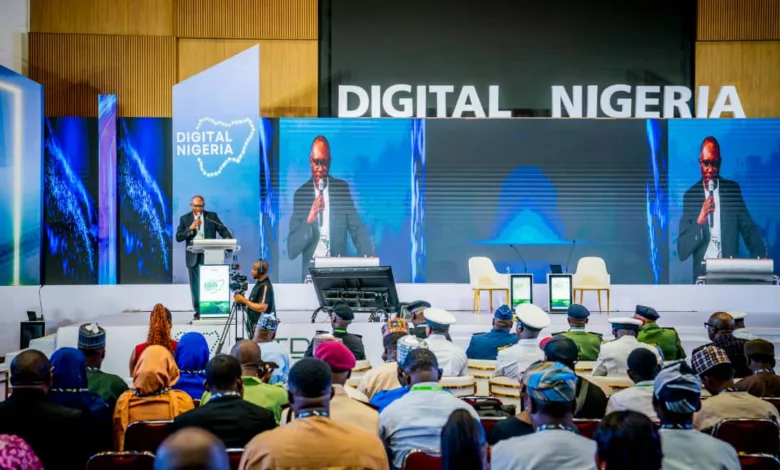
The Director-General of the Nigerian Association of Chambers of Commerce, Industry, Mines and Agriculture (NACCIMA), Engr. Olusola Obadimu, has said Nigeria’s ambition of building a $1 trillion economy by 2030 will depend on its ability to translate digital innovation into productivity, industrial growth, investment and job creation.
Obadimu stated this while delivering the keynote address at the Digital Nigeria International Conference and Exhibition (DNICE) 2026, held at the President Bola Ahmed Tinubu International Conference Centre, Abuja.
He challenged stakeholders to move beyond conversations about technology and focus on translating innovation into measurable economic outcomes.




According to him, the debate over whether digital technology can transform Nigeria’s economy is over, stressing that the priority should now be to deliberately integrate technology into productivity, industrialisation, export growth, job creation and national prosperity.
“We are no longer debating whether digital technology will transform our economy. It already is. The question is whether Nigeria will merely consume that transformation or deliberately connect it to productivity, industrialisation, jobs, exports and national growth,” he said.
The NACCIMA Director-General noted that achieving President Bola Ahmed Tinubu’s vision of a $1 trillion economy would require stronger alignment between technology, enterprise and investment.
He emphasised that sustainable economic growth would depend on productive businesses across agriculture, manufacturing, mining, trade and services rather than government intervention alone.
“The road to a one-trillion-dollar economy runs through productivity. That economy will not be built in government offices. It will be built on farms, in factories, in laboratories and through businesses that create value every day,” he said.
Obadimu identified Micro, Small and Medium Enterprises (MSMEs) as critical drivers of Nigeria’s economic transformation, arguing that digital policies would have limited impact unless they directly improved the productivity and competitiveness of small businesses.