2027: Nigeria’s challenges are not beyond competent leadership – SDP’s Adebayo
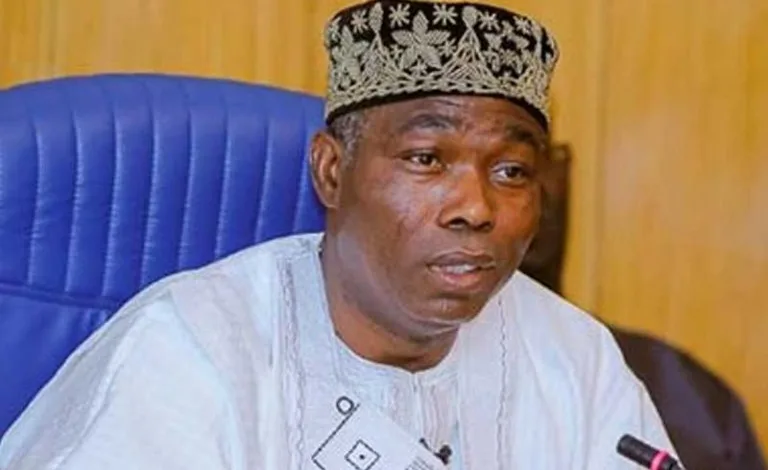
The presidential candidate of the Social Democratic Party (SDP), Prince Adewole Adebayo, has said Nigeria’s greatest problem is not the magnitude of its challenges but the failure of successive leaders to take responsibility and demonstrate the capacity to address them.
In a recent interactive question-and-answer session with Nigerians on Twitter Spaces, Adebayo acknowledged that the country was at a crossroads but maintained that its current difficulties were neither unprecedented nor beyond the reach of competent leadership.
Excerpts:
Many Nigerians believe the country is at its lowest point and that its challenges may be beyond fixing. Would you agree that Nigeria is at a crossroads?
There are two categories of people who should be interested in the future. The first are those who will actually be part of it, particularly the youths. The second are those who may not live long enough to witness it but are concerned about their posterity, their grandchildren and the generations that will come after them.
For us in the SDP, we have a few suggestions. First, we must embrace the crossroads rather than become frustrated by them.
It is like a student who wants to become a lawyer. He must embrace law school and the examinations that come with it. You cannot become a lawyer without going through the process.
Nothing is as dangerous and hazardous as childbirth. A woman giving birth takes a risk involving both her life and that of her child. In cases of multiple births, she may be putting her life and those of two or three babies at risk.
I become concerned when Nigerians approach every national challenge as though this country is uniquely burdened with problems. A little study of world history and the experiences of other nations will show that Nigeria has actually faced some of the easiest crossroads in the world. The problem is that our leaders appear incapable of managing challenges that should ordinarily be within their capacity.
A little child may struggle to pick up a small block of ice from the floor. An adult, however, can carry two bags of cement, place them in a wheelbarrow and still carry a baby on his back while making a telephone call. The difference lies in capacity, experience and strength.
The same principle applies to leadership. A challenge that appears insurmountable to an inexperienced or incapacitated person may be easily handled by someone with the requisite knowledge, experience and ability.
During Nigeria’s struggle for independence, the worst that could happen to some of our freedom fighters was that the British colonial authorities might take them to court for defamation or sedition, arrest them and detain them at Broad Street Prison or another correctional facility for some time.
Compare this with countries such as Kenya and South Africa, where freedom fighters were killed, disappeared or subjected to brutal repression. Throughout Nigeria’s struggle for independence, there were hardly reports of freedom fighters losing their lives on the scale witnessed in those countries.
That is why, on our Independence Day, we do not have the same kind of graves and monuments commemorating the thousands of freedom fighters killed during Kenya’s Mau Mau uprising or the struggle against apartheid in South Africa. This is not to diminish the sacrifices of our nationalists. Rather, it is to highlight the differences in our historical experiences. What we need today is the rule of law, a system that works, a police force that performs its duties professionally and an army that is strong, united, patriotic and committed to defending the country. We need schools that provide quality education and a healthcare system that works.
Consider our infrastructure. Nigeria is not an archipelago like Indonesia or Japan, where geographical separation by water makes transportation particularly challenging. We have a relatively straightforward landmass, yet we struggle to provide adequate bridges and maintain our roads. We have very few major bridges across some of our important rivers. If a major truck breaks down or blocks one of these bridges, the consequences can disrupt transportation across large parts of the country.
These are basic infrastructure challenges that competent engineering, proper planning and effective leadership should be able to address. Our founding fathers envisioned a continent that would become a global force, a launching pad for the aspirations of the black race and a symbol of African renaissance.
When independence came, many believed that the black man had finally demonstrated his capacity to govern himself and compete with the rest of the world.
But today, we are struggling with basic necessities. We are celebrating the photograph of a president on a bag of rice as though it were a major national achievement. That is certainly not what our founding fathers envisioned. Nigeria will continue to face crossroads, and thousands more lie ahead. Every civilisation faces defining moments. The real question is how we respond to them.
We can only secure our future by making wise choices in the present. The decisions we make today will ultimately determine the future we bequeath to the next generation. If you arrive at a six-way junction but are allowed to see only two roads, you will miss the other four. You cannot make the best decision when you are not adequately informed.
That is why citizens must educate themselves, remain open-minded and understand the alternatives available to them. Only then can they make informed choices about the direction in which the country should go.
During your recent engagement in Maiduguri, you reportedly compared voting for the APC to drinking poison. What exactly did you mean by that statement?
First, we all agree that drinking poison is dangerous. It is a useful analogy because everybody understands that no one should willingly consume poison.
However, when you make the wrong electoral choice, the consequences can extend far beyond you and affect everyone around you. Your neighbours may be kidnapped. People who did not vote for a particular government may still be killed by Boko Haram or other criminal groups. Thousands of citizens may end up in internally displaced persons’ camps or lose their lives to insecurity. Elections do not affect only those who vote; they have consequences for the entire society.
No matter how intelligent you are or how sound your personal choices may be, if the majority of citizens make the wrong choices, you will eventually bear the consequences. That is why democracy requires collective responsibility. Even a person who takes his own life must realise that his death will not affect him alone. His children may become fatherless, his wife a widow and his mother heartbroken.
That is the sense of responsibility Nigerians must develop when making electoral choices. The people who formulated this topic did not ask, ‘Who will save the future?’ They asked, ‘Who will save our future?’ That makes it a question of collective responsibility.
We are all in the same boat. If someone on a ship decides to commit suicide in a manner that brings down the entire vessel, you cannot dismiss it as a personal decision. Everyone on board will suffer the consequences. That is why we must be interested in how our neighbours vote, the choices they make and what they understand about the issues before them.
In a democracy, bad ideas are dangerous. Ignorance is dangerous. Apathy is dangerous. Intolerance is equally dangerous because it prevents the free exchange of ideas that is essential for making informed decisions.
You have repeatedly presented yourself as someone capable of leading Nigeria through its current crossroads. What gives you the confidence that you have what it takes to confront the challenges?
I have studied the crossroads Nigeria has passed through and the challenges we have faced. I can even anticipate additional crossroads the country is likely to encounter over the next 30 years. I have plans for each of them. I have also developed strategies for navigating one challenge in a way that makes the next one easier to overcome.
I have no time to waste, no resources to squander and no excuses to offer. I cannot retire from this responsibility, run away from it or abandon it. It is my destiny, and I have embraced it. Some people even exploit the country’s challenges, making them appear insurmountable so that Nigerians eventually accept hopelessness as their fate.
But we are not condemned to continue repeating the mistakes of the past. Neither are we compelled to remain passive in the face of our challenges. We are free to make up our minds, confront these challenges and stop complaining. What we need is the determination to take responsibility and act.
You made reference to the biblical story of the Walls of Jericho, suggesting that many Nigerian leaders fail because they are ill-prepared for the challenges they encounter after assuming office. Could you elaborate on this?
The biblical story of the Walls of Jericho provides a useful illustration of how people respond to challenges. When the Israelites left Egypt and spent years in the wilderness, they eventually arrived at what they believed was their promised destination. However, they still had to confront obstacles before they could take possession of the land. That is what happens in Nigeria. People campaign for public office, promise heaven and earth, but once they assume responsibility, they suddenly discover that there are challenges to overcome.
They begin telling Nigerians that the problems are too enormous and that they need another four years to address them. We have seen this pattern repeatedly. In 1982, the Shagari administration introduced austerity measures. Economists and other knowledgeable Nigerians warned that the measures would hurt the economy and undermine citizens’ ability to provide for themselves. The government presented the measures as temporary, asking Nigerians to be patient.
Nigerians were also told that the Structural Adjustment Programme (SAP) would fix the economy, but the expected transformation never materialised. Today, we have another administration that came into office with promises.
President Tinubu told Nigerians that removing the fuel subsidy would free up resources to address the country’s problems. There were promises of improved electricity supply, job creation, better living conditions and economic prosperity. We are approaching the end of the four-year tenure, yet Nigerians are still waiting for the promised transformation.
The lesson is that leaders must not continue asking for more time indefinitely. They must demonstrate from the outset that they understand the challenges confronting the country and have practical, workable solutions to address them.