Nigeria’s democracy remains fledgling despite periodic elections — Professor Oladeji
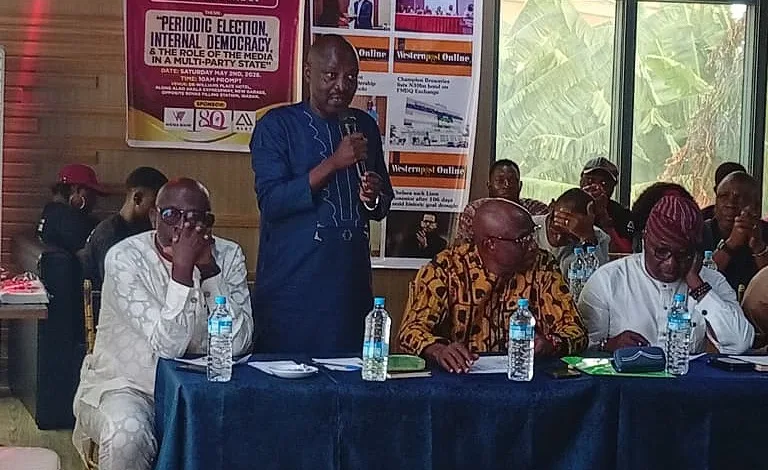
By Deborah Oladejo, Osogbo –
The Head of the Political and Governance Policy Department at the Nigerian Institute of Social and Economic Research (NISER), Professor Abubakar Oladeji, has said that Nigeria’s democracy remains “fledgling” and, at best, an “electoral authoritarian” system despite regular elections.
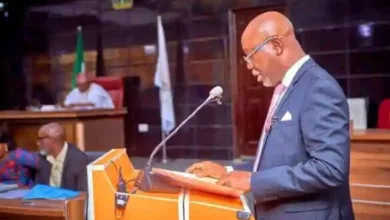
Oladeji stated this while delivering a keynote address at the Western Post 2026 annual retreat, themed “Periodic Elections, Internal Democracy, and the Role of the Media in a Multi-Party State”, arguing that periodic elections alone cannot guarantee democratic consolidation in a multi-party system.
He explained that elections only make sense where voters have real alternatives, stressing that the absence of credible choices renders any system undemocratic.
According to him, Nigeria typifies a system where elections are conducted regularly, yet the processes surrounding them undermine their democratic value, citing opaque party structures and elite-driven decision-making.
He identified widespread irregularities in party primaries, including vote-buying, delegate bribery, procedural violations, and “kangaroo primaries,” warning that such practices weaken candidate legitimacy and fuel intra-party conflicts.
Oladeji further argued that although elections remain the primary mechanism for political representation and accountability, their outcomes are often shaped by identity politics, economic pressures, and elite bargaining, limiting the extent to which they reflect genuine public preference.
“We therefore conclude that without transparent internal party processes and an independent press, elections fail to serve as genuine mechanisms for accountability and representation,” he said.
Speaking on the role of the media, Oladeji noted that while it plays a vital role in informing citizens, shaping public debate, and performing agenda-setting and watchdog functions, political ownership, disinformation, and financial dependence on political actors have undermined its independence, weakening its ability to hold leaders accountable.