Nigeria’s FX reforms ease dollar access for businesses, says BUA chairman
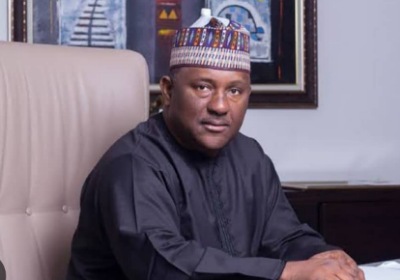
Chairman of BUA Group, Abdul Samad Rabiu, says Nigeria’s foreign exchange (FX) reforms have eased businesses’ access to dollars, reducing their dependence on allocations from the Central Bank of Nigeria (CBN).
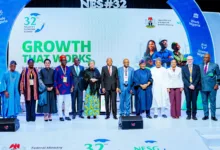
Speaking at the 32nd Nigerian Economic Summit on Monday, Rabiu recalled that companies previously had to visit the CBN every two weeks to obtain foreign exchange for purchasing machinery and raw materials, making long-term investment planning difficult.
“In the past, we had to make a pilgrimage every two weeks to the Central Bank of Nigeria here in Abuja,” he said, adding that businesses could now access dollars through the market at prevailing rates rather than rely on direct allocations.
“Today, I hardly need to go to CBN. In fact, since Yemi Cardoso assumed office as CBN governor, I think I’ve maybe seen him three or four times because I don’t need him for foreign exchange allocation. That is the truth,” he said.

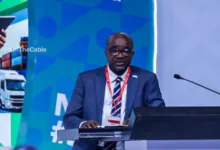

Rabiu described a transparent foreign exchange market as essential for business planning. He acknowledged that reforms introduced over the past three years, including petrol subsidy removal and fiscal and tax changes, had imposed significant costs on households and businesses, while high financing costs, infrastructure gaps and pressure on household incomes remained major challenges.
He called for the expansion of Nigeria’s industrial base, urging the country to create more large-scale businesses capable of investing in manufacturing, agriculture, mining and other productive sectors. “The question we must ask ourselves is not simply how BUA can continue to grow. It is how Nigeria can create another 100 BUAs,” he said.
Rabiu identified access to affordable, long-term capital and predictable government policies as essential to industrial growth. Citing Nigeria’s cement industry, he said local investment had helped the country move from importing almost 80 per cent of its cement to achieving self-sufficiency and becoming a net exporter.
He said BUA was extending the strategy through its cement plants in Sokoto and Edo states and an integrated sugar project in Lafiagi, Kwara State. He added that BUA Foods and BUA Cement, both listed on the Nigerian Exchange, had a combined market capitalisation of more than $17 billion, while expansion projects across the group’s food businesses were expected to double production capacity by 2027.
Rabiu proposed an economic accord involving government, businesses and citizens, centred on policy stability, productive investment, human capital development, long-term capital and shared prosperity. He also urged Nigeria to take advantage of the African Continental Free Trade Area by improving transport links, port efficiency, payment systems and cross-border movement of businesspeople.