Iwo: The powder keg mufti and his Oduduwanistan dream — by Bamidele Johnson
I have lived in this country long enough to recognise when religious preaching begins to curdle into dangerous mobilisation. I fear Yorubaland is accelerating towards that point. Pretending otherwise would be an act of collective recklessness.
Dawud Imran, who styles himself the Grand Mufti of Yorubaland, has threatened in a viral video to mobilise his followers to shut down Osogbo and make Osun State ungovernable if the government issues another warning to the Oluwo of Iwo over his conduct. He has boasted that his followers would occupy Osogbo until a state of emergency is declared, even if it takes a year.
Read that again. A cleric is threatening to paralyse an entire state because the government has dared to caution a traditional ruler over conduct capable of provoking religious and communal tension. This is not just outrageous. It is ominous.
This is not the first time Imran, an utter buffoon, has said stuff that should concern the authorities. In May, he threatened that Muslims would beat anyone who opposed the establishment of a Sharia Council in Oyo State. There is also a video circulating online in which he calls on Islamic clerics to teach students in their madrasas weapons handling.


These are not harmless theological propositions. They are expressions of intolerance, threats of physical violence and, potentially, invitations to organised confrontation. That the authorities have so far failed to confront this pattern has apparently emboldened him.
The Department of State Services (DSS) and the Police must take him seriously. He is not a bomb scare; he is a time bomb. Stonewall. His utterances, mobilisation rhetoric and influence warrant serious security scrutiny. He should be designated a cleric of particular concern.
History offers too many examples of what happens when authorities mistake dangerous religious mobilisation for harmless grandstanding. Nigeria has its own grim experience.
Muhammadu Marwa, the Maitatsine movement’s directing mind, was arrested in 1973 over his preaching and released under the 1975 general amnesty. Concerns about his confrontational movement and followers persisted, but the authorities failed to contain its growth.
In December 1980, Kano exploded. The resulting violence claimed thousands of lives, with further Maitatsine-inspired uprisings in other parts of the North. The warning signs had been visible for years.
Next up was Mohammed Yusuf and Boko Haram. Yusuf preached and built his following for years before his movement descended into armed insurgency. Earlier opportunities to confront the movement were missed, allowing it to grow into the murderous organisation whose consequences Nigeria is still battling.
The UK offers another cautionary example in Anjem Choudary, who spent years propagating extremist ideology and building an audience before his eventual conviction in 2016 for inviting support for ISIS. He was convicted again in 2024 for directing the proscribed organisation Al-Muhajiroun. His case raised serious questions about the cost of allowing extremist networks to consolidate while authorities hesitated.
The lesson is unmistakable. Dangerous movements rarely reveal their ultimate intentions at inception. They build constituencies, normalise intolerance, test institutional boundaries and discover how much they can get away with. That is precisely why Yorubaland must not dismiss what is happening.
One principle must be established. No religious text supersedes the Nigerian Constitution. We are not governed by the theological interpretations of clerics, however influential they may be. Section 38 of the Constitution guarantees freedom of thought, conscience and religion to Muslims, Christians, traditional religionists and those who subscribe to no faith.
Traditional religionists are not second-class citizens whose constitutional rights can be negotiated away at the insistence of an Islamic cleric. They are entitled to practise their beliefs without intimidation or threats of violence. Nobody has a monopoly on God’s approval.
Yorubaland is neither a caliphate nor a Christian territory and it is certainly not the private estate of traditional religionists. It is a region shaped by religious plurality, inter-faith marriages, shared ancestry and generations of people who have learnt to co-exist despite their differences. That equilibrium is precious, but it is not indestructible.
There are intolerant elements in Yorubaland whose prejudices are presently restrained by the prevailing culture of accommodation and the consequences of acting on their convictions. They have not disappeared. When influential religious figures legitimise hostility and suggest that public order can be held hostage to religious demands, they provide encouragement to those waiting for an excuse to act.
A reckless sermon can be followed by an inflammatory declaration, a neighbourhood confrontation and an act of retaliation. Before long, the grandstanding of a few individuals can become a full-blown religious crisis. Friendships, marriages and families will be among the first casualties. A confrontation in Iwo can have consequences in Osogbo, Ibadan, Abeokuta, Lagos and beyond.
Must Yorubaland wait for its own Maitatsine moment? Must we first count the dead, bury our neighbours and watch communities harden into hostile territories before understanding the consequences of giving religious extremists a free hand?
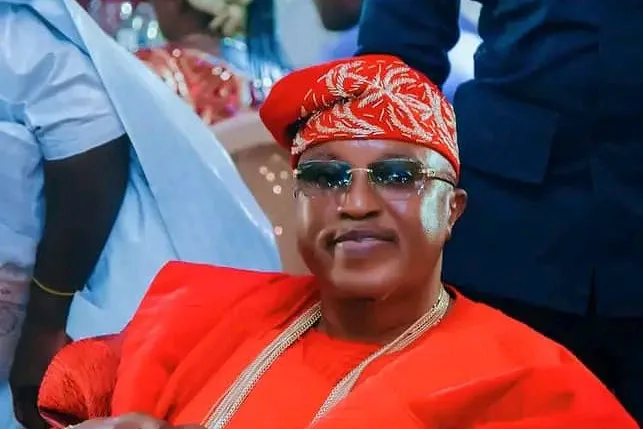
The emotionally and verbally incontinent Oluwo of Iwo must be reminded that traditional authority is not a licence to denigrate the religious beliefs of his subjects, undermine their constitutional freedoms or insult other traditional rulers. An oba is supposed to be a custodian of communal harmony, not an accessory to religious provocation. His stool does not place him above the Constitution and his association with the kooky Imran does not confer immunity from public accountability.
Imran is free to preach Islam, disagree with traditional religious practices and argue that his convictions are superior to those of others. What he cannot do is threaten the peace of an entire state, intimidate fellow citizens or demand that their constitutional rights yield to his religious preferences.
The time for polite appeals for restraint has passed. His reported threats, particularly the call for weapons-handling instruction in religious schools, deserve serious attention. Any conduct that crosses the threshold of criminality must be prosecuted under the law. Religious freedom is not a licence for intimidation, just as freedom of expression is not immunity for incitement.
Unfortunately, we have cultivated a dangerous habit of treating influential religious personalities with kid gloves because of the number of followers they command. Politicians fear offending them, security agencies sometimes hesitate to confront them, and society excuses their pronouncements as religious enthusiasm until the consequences become impossible to ignore.
That is how we manufacture monsters out of men we were too timid to confront when the warning signs were staring us in the face.
The South-West is at a dangerous crossroads. We can confront creeping extremism now or allow it to acquire the confidence, following and momentum to become something far more sinister. I fear we are witnessing the early stages of a crisis whose full dimensions we cannot yet imagine.
Religious conflagrations rarely begin with exploding bombs. They begin with words, the deliberate normalisation of intolerance and powerful men discovering that they can threaten society without consequence.
The authorities must act before the embers become a wildfire. They must not wait for another Maitatsine or Boko Haram or for communities to burn before acknowledging that the warning signs were always there.
The peace of the South-West must not become collateral damage in the religious ambitions of a few individuals. We cannot afford another theatre of religious bloodletting. Yorubaland is not Oduduwanistan.

 Follow our WhatsApp Channel