Justice Lifu’s judgment, Atiku’s fate and the road to 2027 — by Tunde Rahman
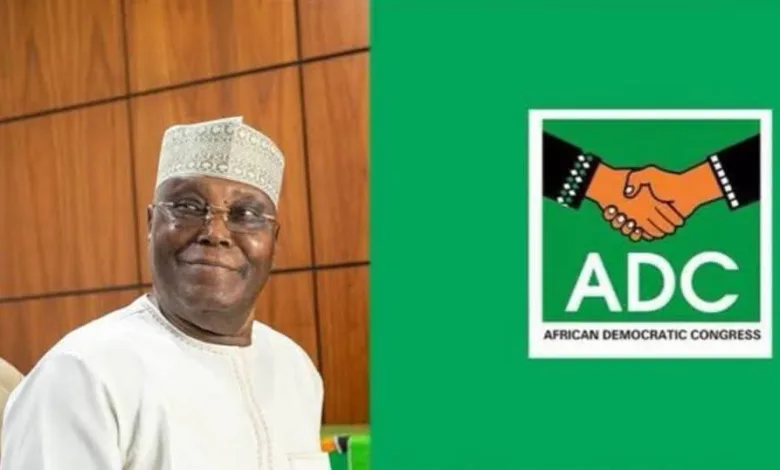
Some judgments settle a dispute. Some judgments can reorder a nation’s politics. The judgment delivered on November 5, 2026, by Justice Peter Lifu of the Federal High Court, Abuja, in Suit No. FHC/ABJ/CS/1819/2025 – Nafiu Bala Gombe versus African Democratic Congress and Others – belongs to the second category.
That judgment did not just decide who leads a party. It has placed former Vice President Atiku Abubakar’s presidential ambition and the future of the ADC in suspense, and perhaps created a crisis of perception for the 2027 general election.
What did the court actually decide? Let me state from the get-go that neither the All Progressives Congress nor President Bola Tinubu filed the case. A member of the ADC itself– Nafiu Bala Gombe, the former Deputy National Chairman (North-East), – filed it.
Gombe argued that after the former National Chairman, Ralph Nwosu, resigned, leadership should have devolved to him under the party’s constitution. Instead, he argued, a caretaker leadership led by former Senate President David Mark and former Osun Governor Rauf Aregbesola was imposed at the 99th National Executive Committee meeting on July 27, 2025, without a democratic election.
Justice Lifu agreed with him. Among other things, the judge held that David Mark’s emergence as National Chairman and Rauf Aregbesola’s emergence as National Secretary were unlawful. He also stated that Nafiu Bala Gombe’s purported resignation letter was fictitious. After comparing the signatures on the letter with Gombe’s sworn witness statements, the judge found material differences and held that the document could not be relied upon.




Justice Lifu then ordered that all actions, decisions, and steps taken by the David Mark-led National Working Committee from July 27, 2025, are null, void, and without effect, and that the Independent National Electoral Commission should not recognise the Mark-led leadership.
The legal anchor was Section 82 (3) of the Electoral Act 2022, which requires political parties to elect their officers democratically. According to Justice Lifu, neither a NEC resolution nor INEC’s administrative recognition could substitute for that statutory requirement.
This is how the judgment affects former Vice President Atiku Abubakar. Admittedly, Atiku was not a party to the suit, and his name, according to his lawyers, was not expressly mentioned in the operative orders after the Certified True Copy was finally released on Wednesday, November 11.
But this logic is consequential. If the leadership that conducted the ADC presidential primary was essentially invalid, then the primary it conducted is also called into question. That is why news media reports from the judgment concluded that the process that produced Atiku as the ADC presidential candidate for the January 16, 2027 election has been invalidated.
Expectedly, the ADC disagrees. Its lawyer, Kalu Kalu, SAN, argued on national television thus: “The judgment of Honourable Justice Peter Lifu does not in any way void the candidacy of Atiku Abubakar… No portion of that judgment voids the candidacy of Atiku Abubakar and other candidates of the party.”
That is now the central legal argument that will be tested at the Court of Appeal. The ADC filed its notice of appeal on November 6, alongside an application for stay of execution, and has urged INEC not to act until the appeal is determined.
INEC, for its part, has taken a cautious approach. Its National Commissioner, Mohammed Haruna, said the Commission would not act until it receives and studies the Certified True Copy. That delay – five days before the CTC was released – itself became a controversy, with ADC candidates protesting at the Federal High Court and petitioning the Chief Judge, Justice John Tsoho.
Two Conflicting Judgments, One Party
The crisis is also deepened by another fact: the ADC says it already had a judgment in its favour.
An earlier judgment by Justice Musa Liman of the same Federal High Court had, according to the party, affirmed the legitimacy of the Mark-led leadership. The ADC says it relied on that judgment.
The country now faces a familiar problem: two judgments from courts of coordinate jurisdiction, pointing in different directions, on the same party leadership tussle. Can a party or the electoral commission choose which of the two judgments to respect? Only the Court of Appeal – and ultimately the Supreme Court – can resolve which one stands.
This development is not new in Nigerian politics. From PDP to APC to Labour Party, internal leadership disputes have repeatedly been a deciding factor regarding who is on the ballot, not the voters, or who the voters actually voted for among warring candidates.
The law has apparently become the new primary election.
What does all of this mean on the road to the 2027 governorship election?
For President Bola Tinubu and the APC, the judgment is politically convenient, but it may also be legally delicate.
It removes – at least temporarily – APC’s most experienced challenger from the ballot. Atiku, contesting for the seventh and perhaps last time, was the anchor for some opposition figures who adopted the ADC as their platform. Without him, the coalition loses its centre of gravity.
That is why the ADC Presidential Campaign Council, through its spokesman Kola Ologbondiyan, has accused the APC of working towards a “coronation, not an election”, and seeking to ensure no strong opposition candidate stands against President Tinubu.
The APC rejects that charge. Its position is simple: the crisis is self-inflicted. The ADC broke its own constitution; a member went to court, and the court ruled.
President Tinubu and the APC cannot be blamed for a party’s internal failure to follow the Electoral Act.
Nonetheless, both parties’ narratives will dominate the campaign.
But a larger question goes beyond Atiku and President Tinubu, and is now being discussed in some circles: can a democracy be healthy if a court removes its main opposition rather than the ballot box?
Supporters of the judgment argue that the rule of law must apply to parties too. If a party does not elect its leaders democratically, it cannot claim to be democratic. Atiku and company failed to carry out sufficient due diligence in their quest to “privatise” another party. So, who should be blamed for that? Couldn’t they have formed their own new party?
For Atiku, though, there is something that seems just so poetic – or increasingly like the hand of Karma, in the conundrum he finds himself. It could indeed be described as a comeuppance of sorts for the former vice president who is busy moving from one court in Nigeria and the United States to another, seeking President Tinubu’s disqualification.
However, critics argue that the timing of the Justice Lifu judgment – barely two months to the election – and the consequential effect on all ADC candidates, from President to State Assembly, risks disenfranchising millions of voters who have already aligned with the party.
Rotimi Amaechi, Atiku’s running mate, warned that the judgment “could cause a civil war if not properly managed”. This statement seems unguarded and could be self-indicting even for the ADC, because the law is what it is: the law.
In the 2019 general elections, the Supreme Court ruled that Rivers APC had no candidate for the governorship and House of Assembly elections. The situation in Zamfara was even more dramatic. The APC had won every political contest in the state: governorship, the three Senatorial seats, the seven House of Representatives seats and the 24 seats in the State House of Assembly.
But when the matter got to the court, the Supreme Court thought otherwise. Even though the electorate had voted for the APC, the court ruled that since the party didn’t conduct primaries, it had no candidates in the election. The court awarded the victory to the PDP, which came second in the election. Yet, the heavens did not fall.
As it stands today, Atiku has three possible futures. One, victory at the Court of Appeal: if the Court of Appeal sets aside Justice Lifu’s judgment or grants a stay, Atiku returns to the ballot, and the ADC contest proceeds. The ADC and Atiku are banking on this scenario.
Two, a defeat at the Court of Appeal: if the judgment stands, Atiku would need a new platform – but with INEC’s timetable almost closed, defecting to another party and conducting a fresh primary would seem legally and logistically impossible.
Three, political settlement: Nigerian politics has a long history of out-of-court settlements in party crises. Nafiu Gombe could withdraw, or a fresh, court-supervised convention could be ordered. This is the least talked-about outcome.
None of these is certain. And that uncertainty is itself the story.
In the final analysis, in my view, Justice Lifu’s judgment is a test of two principles that must co-exist if our democracy is to have a firm root: party discipline and democratic competition.
The court was right to insist that parties must obey the Electoral Act. A party that cannot conduct a democratic election for its own chairman cannot be trusted to conduct a democratic election for Nigeria.
But the courts must also be mindful that judgments delivered on the eve of an election have consequences far beyond the parties in the suit. They affect voters and candidates, and carry a heavy burden of legitimacy for the outcome.
For Atiku, this is perhaps the most consequential legal battle of his long political career. For President Tinubu, who is the odds-on favourite to win a second term, the absence of a major political party on the ballot, especially of a major opposition figure like Atiku Abubakar, could cast unnecessary controversy on the outcome of the election.
Rahman, Senior Special Assistant to the President on Media and Special Duties, is a Fellow of the Nigerian Guild of Editors.