ANALYSIS: With direct allocations, LGs in south-west may be on the verge of progress, development
When Nigeria returned to democratic rule more than two decades ago, the 1999 constitution, as amended, established three tiers of government – federal, state and local – each intended to operate autonomously.
However, state governments have controlled the funds of many local governments in the country, forcing them to perform poorly. To exert their control on local governments, governors were in the habit of sacking elected chairpersons and imposing their “caretaker committees”.
Without its own autonomy, many have argued that the lowest tier of government has been used as an “automated teller machine (ATM)” by state governors, making development and governance far from the people at the grassroots. State governments had received the funds of the local governments in purses known as “joint accounts.”
After taking office on May 29, 2023, President Bola Tinubu embarked on a series of reforms, one of which was to ensure that the country’s 774 local governments have proper financial autonomy. In a swift and dramatic move, he took the states to the Supreme Court in July 2024.


SUPREME COURT VERDICT
A seven-man panel of Supreme Court Justices led by Justice Garba Lawal agreed with the president that the local governments should have full financial autonomy. The verdict was as a result of a suit marked SC/CV/343/2024 and filed by Lateef Fagbemi, Attorney-General of the Federation (AGF). The states, however, opposed the suit on various grounds, but lost.
While striking out the states’ preliminary injunction, the panel of the apex court held that the funds of the local governments are meant for democratically elected local government administrations, and not caretaker committees.
The court held that allocations from the federation account intended for local governments must be directly paid to them, abolishing the joint purses operated by state governments.
SHARING FORMULA
Under the Federation Account Allocation Committee or FAAC, the sharing formula from crude oil and other federal revenues is; federal government, 52.68%; state governments, 26.72%; and local governments, 20.60% as well as 13% derivation for oil-producing states.
Revenue from the value added tax (VAT) has its own sharing formula which is as follows; Federal government, 10%; state governments, 55%; and local governments, 35%.
Despite the Supreme Court verdict, N4.478 trillion in disbursed funds to the local governments remained largely underutilised due to administrative bottlenecks and structural resistance, Dataphyte said in an analysis released in 2025, adding that allocations to LGAs have surged owing to an increase in VAT revenue made possible by Tinubu’s tax reforms.
The organisation said total disbursements rose from N2.26 trillion (2022–2023) and N3.09 trillion (2023–2024) to N4.48 trillion (2024–2025). It said Lagos LGAs dominated the allocation charts with Alimosho having N25.3 billion in 2025 alone.
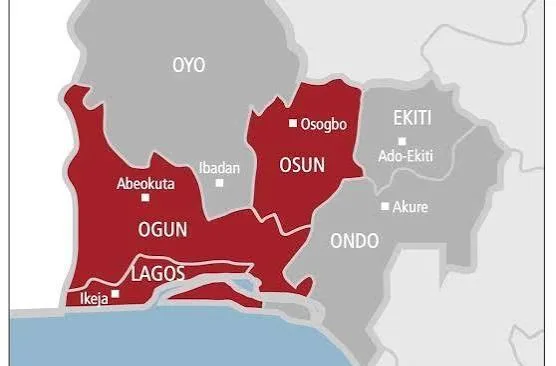
LGS’ FAAC ALLOCATION INCREASE IN SOUTH-WEST
Using 2025 as the first full year of implementation of the financial autonomy upheld by the Supreme Court, many local governments in the south-west recorded more than a twofold increase in FAAC allocations compared with 2023, when Tinubu took over from former President Muhammadu Buhari.
Five random local governments chosen from Lagos, Ogun, Osun, and Ekiti states saw FAAC allocations rise to more than 130% in some cases. Here are some of the figures provided by Agora Policy.
Lagos
There are 20 officially recognised Local Government Areas (LGAs) in Lagos State, alongside 37 Local Council Development Areas (LCDAs). However, WesternPost highlights a selection of LGAs, comparing the allocations they received in 2023 with those in 2025. The figures show that allocations to these five LGAs increased by an average of approximately 137 per cent between 2023 and 2025.
Alimosho: ₦34,672,837,210.04 (2025), up from ₦15,110,226,646.25 (2023) — 129.47% increase
* Ajeromi-Ifelodun: ₦27,460,092,270.66 (2025), up from ₦11,604,806,268.08 (2023) — 136.63% increase
* Kosofe: ₦27,121,086,366.39 (2025), up from ₦11,432,691,726.94 (2023) — 137.22% increase
* Ikeja: ₦23,117,766,596.72 (2025), up from ₦9,503,429,574.08 (2023) — 143.26% increase
* Ikorodu: ₦25,885,293,128.72 (2025), up from ₦10,855,930,047.16 (2023) — 138.44% increase
Ogun
Similarly, Ogun State has 20 constitutionally recognised Local Government Areas (LGAs), including Abeokuta North, Abeokuta South and Ado-Odo/Ota. A comparison of allocations received by selected LGAs in 2023 and 2025 shows an average increase of 93.5 per cent.
Ewekoro: ₦4,639,686,443.54 (2025), up from ₦2,241,866,388.95 (2023) — 106.96% increase
* Ifo: ₦7,325,035,843.18 (2025), up from ₦4,951,036,112.87 (2023) — 47.95% increase
* Ijebu East: ₦6,813,072,665.45 (2025), up from ₦2,758,901,447.04 (2023) — 146.95% increase
* Ijebu North: ₦5,757,627,002.82 (2025), up from ₦3,620,140,575.63 (2023) — 59.04% increase
* Ijebu Ode: ₦5,828,659,971.83 (2025), up from ₦2,818,977,939.73 (2023) — 106.77% increase.
Oyo
Oyo State has 33 local government areas (LGAs). The five councils highlighted—Afijio, Atiba, Egbeda, Ibadan North and Ibadan South East—are among the state’s 33 LGAs and all recorded significant increases in statutory allocations between 2023 and 2025 at 106.5 per cent over the two years.
Ibadan South East: Allocation rose from ₦3.79 billion to ₦7.83 billion, a gain of ₦4.04 billion (106.79%).
Afijio: Allocation rose from ₦3.10 billion in 2023 to ₦6.40 billion in 2025, an increase of ₦3.30 billion (106.45%).
Atiba: Allocation increased from ₦3.43 billion to ₦7.05 billion, representing a ₦3.62 billion (105.59%) rise.
Egbeda: Allocation climbed from ₦3.88 billion to ₦8.02 billion, up by ₦4.15 billion (106.84%).
Ibadan North: Allocation grew from ₦4.00 billion to ₦8.28 billion, an increase of ₦4.28 billion (106.98%), the highest among the five.
Osun State
Osun State is made up of 30 constitutionally recognised Local Government Areas (LGAs), spread across its three senatorial districts. A comparison of allocations received by selected LGAs in 2023 and 2025 shows an average increase of 77.7 per cent.
Ife Central: ₦2,818,977,939.73 (2025), up from ₦2,808,357,418.90 (2023) — 0.38% increase
Ejigbo: ₦5,431,894,070.36 (2025), up from ₦2,629,773,912.70 (2023) — 106.55% increase
Boripe: ₦5,551,419,029.86 (2025), up from ₦2,689,691,101.91 (2023) — 106.40% increase
Orolu: ₦5,077,656,430.16 (2025), up from ₦2,459,120,409.22 (2023) — 106.48% increase
Osogbo: ₦5,692,127,844.15 (2025), up from ₦2,756,493,008.13 (2023) — 106.50% increase
Ondo State
Oil-rich Ondo State has 18 constitutionally recognised Local Government Areas (LGAs), including Akure South, Akoko North-East and Owo. A comparison of allocations received by selected LGAs in 2023 and 2025 shows an average increase of 102.9 per cent.
- Idanre: ₦5,846,170,458.57 (2025), up from ₦2,782,362,133.50 (2023) — 110.11% increase
- Okitipupa: ₦6,767,333,153.66 (2025), up from ₦3,395,263,759.91 (2023) — 99.32% increase
- Ilaje: ₦7,654,450,821.09 (2025), up from ₦3,712,610,754.50 (2023) — 106.17% increase
- Irele: ₦6,097,316,990.44 (2025), up from ₦2,776,388,311.39 (2023) — 119.61% increase
- Owo: ₦7,035,688,040.58 (2025), up from ₦3,424,548,798.10 (2023) — 105.45% increase
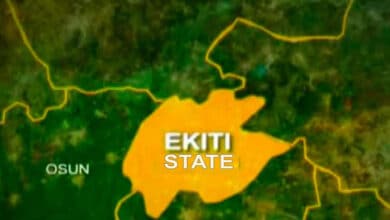
Ekiti State
Ekiti State has 16 constitutionally recognised Local Government Areas (LGAs), including Ado-Ekiti, Ikere and Oye. A comparison of allocations received by selected LGAs in 2023 and 2025 shows an average increase of 107.4 per cent.
- Ado Ekiti: ₦7,724,596,606.73 (2025), up from ₦3,712,862,884.48 (2023) — 108.03% increase
- Ijero: ₦6,731,390,445.66 (2025), up from ₦3,232,243,761.96 (2023) — 108.25% increase
- Ikere: ₦5,854,200,359.35 (2025), up from ₦2,807,485,087.88 (2023) — 108.52% increase
- Ikole: ₦6,189,828,695.94 (2025), up from ₦2,975,269,405.19 (2023) — 108.04% increase
- Oye: ₦5,684,690,641.90 (2025), up from ₦2,725,146,691.04 (2023) — 108.60% increase
HOW SOUTH-WEST LGS CAN BENEFIT FROM DIRECT ALLOCATIONS
Public affairs analyst Jide Ojo said the Supreme Court’s ruling alone is not enough to guarantee local government autonomy, arguing that “a whole lot” of additional reforms are needed before councils can fully control and effectively deploy their resources, despite the significant increase in federal allocations.
“Whatever the quantum of resources or however incremental or however large the outcome it may not mean much in terms of grassroots development,” Ojo said.
“Until when we have that alteration to Section 162 where there is provision for joint state local government accounts – whatever the quantum of resources may not mean much in terms of grassroots development.
“If it’s the local government that actually recruits their own staff, that promotes them, that disciplines them. It’s a different ball game. There are still so many avenues by which the state government is still exercising stranglehold on local governments, and that’s why we are not seeing development.”
Citing Nigeria’s commercial capital as an example, Ojo said: “Look at Lagos. There are 20 local governments recognized by the Constitution, but there are 37 LCDAs making 57, so these 20 children are working to feed another 37 children. It won’t be much for you to run the local governments.”
Editor’s Note: Oyo State was subsequently included in this report. The allocation figures for the selected local government areas were obtained from the FAAC allocation records available on the LGA Portal