As Dangote goes guns-a-blazing, by Simbo Olorunfemi
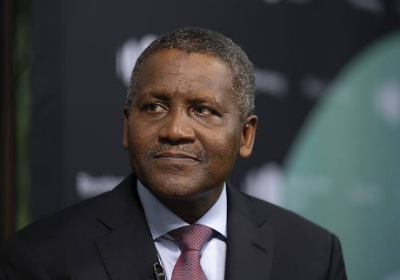
“We cannot rely on one refinery to feed the nation, because Dangote is requesting that we suspend or stop imports, especially of AGO and DPK, and direct all marketers to his refinery. That is not good for the nation in terms of energy security, and it is not good for the market because of the monopoly”
- Farouk Ahmed, CEO, NMDPRA,
July 18, 2024.
On June 21st, 2024, Mr Devakumar Edwin Vice President, Oil and Gas at Dangote Industries Limited (DIL), while addressing the press, lamented the activity of the Nigerian Midstream and Downstream Petroleum Regulatory Authority (NMDPRA), in granting licences, indiscriminately to marketers to import dirty refined products into the country.
He also accused International Oil Companies (IOCs) in Nigeria of doing everything to frustrate the survival of Dangote Oil Refinery and Petrochemicals by “deliberately and wilfully frustrating the refinery’s efforts” to buy local crude by jerking up the price above the market price, thereby forcing it to import crude from countries as far as the United States, with its attendant high costs.
In response to the allegations by the Dangote Refinery, NMDPRA shot back through its spokesperson. “There is no dirty fuel that we would encourage to come into Nigeria. And there is no dirty fuel being brought in,” he said.

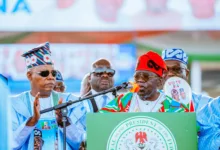

Farouk Ahmed, the CEO of the NMDPRA would take it further saying,“Dangote Refinery, as well as some modular refineries like Watersmith Refinery and Aradel Refinery, are producing between 650 and 1,200 PPM. Therefore, in terms of quality, their products are inferior to imported ones.”
This was 18 months ago, and that to me was the watershed moment. In the days following that, Alhaji Dangote spoke and two things became quite clear – the relationship between the Refinery and the Operator had broken down, just as that between Mr Farouk Ahmed and Alhaji Akiko Dangote. Secondly, there was no going back until one of the parties falls on the sword.
It would appear that efforts were made to patch up the differences between the operator and regulator, with both finding a way to accommodate one another, but whoever has been paying attention would have known that whatever truce there was barely went beyond the surface.
On one hand is the Dangote Refinery claiming that it has the capacity to meet local demand for PMS, and that the plug should be pulled on importation of refined products by big-time marketers who have been in the business for ages.
Only recently it assured us of its “commitment to ensuring steady and uninterrupted supply of Premium Motor Spirit (PMS) and Automotive Gas Oil (diesel) nationwide, with a daily production capacity exceeding the domestic demand,” citing capacity to deliver 45 million Litres of Petrol and 25 million Litres of Diesel daily.
On the other hand is the data from the Regulator, which puts PMS supply from the Dangote Refinery for the month of November at an average of 23.52 million litres of petrol per day. According to the data, Nigeria’s daily petrol consumption dropped to an average of 52.9 million litres in November 2025, compared to 56.7 million litres recorded in October 2025.
Within the period, 52.1 million litres of petrol were imported daily to the country while domestic refineries supplied 19.5 million litres per day.
On the back of this trend, the NMDPRA believes it is under obligation, in line with its responsibility to ensure energy security that it has continued to issue licences to importers for supply, especially because of “the need for boosting national stock levels to meet the peak demand period of end-of-year festivities.”
That is what is driving the folks at Dangote Refinery crazy. Dangote says, “They normally issue licences in the middle of the month. So, they are now ready to issue licences for about 7.5 billion litres for the first quarter of 2026, despite the fact that we have guaranteed to supply enough quantity.’
That is why Dangote is fighting on all fronts. That is why Dangote Refinery took the NMDPRA, the Nigeria National Petroleum Corporation Limited (NNPC), along with five oil firms to court, praying for the nullification of the import licences issued by NMDPRA to NNPCL and the five other companies, arguing that the agency violated Sections 317(8) and (9) of the Petroleum Industry Act (PIA). It also sought ₦100 billion in damages against NMDPRA.
That suit, which was filed in September last year was dismissed last month following a request to withdraw the suit. Coincidentally perhaps, that was 2 weeks after the announcement of the controversial 15% duty on imported petrol and diesel ‘to align import costs with domestic market realities’,
It must have left Dangote highly disappointed that the policy was cancelled just before it was to take off last month.
So, this has been one long, rough and bitter battle.
Seeing Alhaji Dangote going all out throwing the kitchen sink and whatever else at Farouk Ahmed should not be a suprise. It only speaks to the fact that his frustration is boiling over. A few times in the past, he had come out guns-a-blazing. Once it was about the blending plant said to be located in Malta, purportedly owned by top people in NNPC.
Alhaji Dangote has obviously had enough of what he sees as shenanigans in the industry. He seems to have adopted the philosophy of werey la fi’nwo werey, going in guns-a-blazing, first with a drastic price cut, reducing its ex-depot petrol price to N699 per litre from N828. That has sent shockwaves into the downstream industry, with operators who had already stocked up products at a high price, at the time that is usually the peak period for sales, are on their knees now, lost on what to do.
He has now gone full blast for Farouk Ahmed, accusing him of vested personal interest, querying his source of income, and calling for his prosecution.
The battle is now personal. Alhaji hardly ever loses. No matter what the situation is, there is always a way to spin the narrative and hang it on the neck of some fall guys. He is definitely not looking at losing this one. What that win will mean for the industry, and the consumers, in the long run, no-one can tell for sure. Who can blame him, with his life-worth on the line.
It is now war. Dangote has declared: “We are going to use whatever resources that we have to make sure that we crash the price down. We will get these sales; maybe it will take us a week to 10 days. But first of all, within a week to 10 days, we will be able to deliver. For this December and January, we don’t want people to sell petrol for more than N740 nationwide. Those who want to keep the price to sabotage the government, we will fight as much as we can to make sure that these prices are down.”
Good as that is, it has to be about what benefits the people in the long run.
Responding to the price cut last week, one of the most authoritative figures in the industry, Professor Emeritus of Petroleum Economics and energy expert, Wumi Iledare, called for caution and vigilance. According to him, the sector is “fast becoming an oligopoly,” stressing that strong regulatory measures are urgently needed to prevent market concentration from undermining fair competition.
“A single dominant supplier setting the pace in a highly concentrated market demands immediate and uncompromising vigilance,” he stated.
I agree with him.