How NFF’s procedural errors allegedly cost Nigeria crucial FIFA eligibility case
By Tosin Omojola
It is no more news that the Federation of International Football Association (FIFA), has ruled against Nigeria in the players’ eligibility protest filed by the Nigerian Football Federation (NFF), against the Democratic Republic of Congo.
However, it has been revealed that Nigeria did not lose the case because it does not hold ground, but due to the NFF’s failure to adhere strictly to laid down procedures guiding protes.
According to source within the world football governing body (FIFA), Nigeria’s protest failed to meet the procedural requirements for it to be considered by FIFA’s judicial bodies.

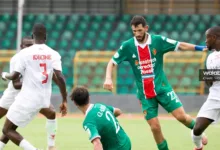

According to the source, the NFF’s complaint was received by FIFA on November 28, 2025, nearly two weeks after the match in Rabat.
Under the Regulations Governing the Preliminary Competition for the 2026 FIFA World Cup, protests regarding player eligibility must follow strict timelines.
“Article 8 of the FIFA World Cup Preliminary Competition Regulations outlines the strict procedures for filing match protests.”
Article 8 of the regulations stipulates that any protest must first be communicated to the match commissioner within two hours of the completion of the match, and then followed by a detailed written submission within 24 hours.
The article states:
“Protests regarding the eligibility of players selected for matches in the preliminary competition shall be submitted in writing within two hours of the match and followed by a full written report within 24 hours.”
Because Nigeria’s protest was submitted on November 28 for a match played on November 16, it fell well outside the allowable window.
The source further revealed that the mandatory protest fee of 1,000 Swiss francs, which must accompany such submissions, was also not paid. As a result, the case was not formally processed by FIFA’s judicial bodies.
“The appeal that was widely reported was never actually entertained by the FIFA judicial authorities because it did not meet the procedural requirements,” the source explained, adding that the NFF was formally informed of the situation on March 9, 2026.
It took another week before the body made the decision known, indirectly with a claim of appeal of the judgment.
Under FIFA regulations, a protest must not only meet the deadline but must also include clear reasons, supporting evidence, and the relevant regulatory provisions before the Disciplinary Committee can examine the case.
Because the submission failed to satisfy these procedural conditions, FIFA dismissed the complaint without examining the substance of Nigeria’s allegations regarding player eligibility.
Had the protest been properly filed and proven that DR Congo fielded ineligible players under FIFA rules, the consequences could have been severe. Under the FIFA Disciplinary Code, the offending team could face a 3–0 forfeiture of the match, along with possible fines or additional disciplinary sanctions.