Jos, insecurity, and Tinubu’s AI-enabled security cameras — by Aderemi Ogunpitan
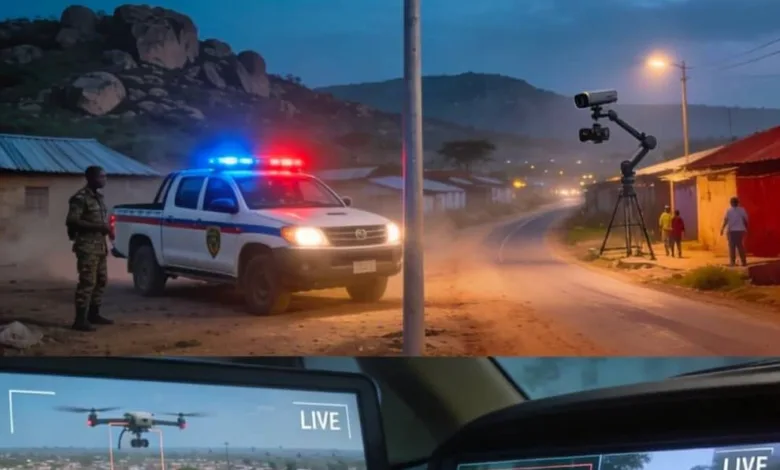
President Tinubu’s announcement of more than 5,000 AI-enabled digital cameras for Plateau should not shock anyone, or be seen not as a political talking point, but as an important security conversation.
It shows that government recognises that technology must now play a stronger role in public safety. That is a welcome step. But understanding how the technology works is another thing.
AI-enabled cameras and real first-responder security systems are not the same thing. Fixed AI camera networks are designed for persistent monitoring.
They watch, record, detect, flag suspicious activity, and help build evidence trails.
They are useful for roads, junctions, public spaces, government facilities, transport corridors, and other high-risk locations.

They improve deterrence, widen visibility, and support investigation after an incident.
The limitation is that fixed cameras do not respond. They do not move with an attack. They do not follow events into remote areas, side roads, forests, or fast-changing conflict zones.
They do not automatically create a shared live operational picture for commanders, responders, and partner agencies. A camera can detect. A response system must also transmit, coordinate, redirect, and support decisions in real time.
This is where mobile bonded-video systems such as our LiveU become important. Unlike fixed surveillance, they are built for dynamic incidents. They can take live video from drones, vehicles, body-worn cameras, portable units, or temporary field positions and send it securely in real time to a central control room.
That means command centres in Jos and Abuja can see the same incident as it unfolds, guide teams on the ground, allocate resources faster, and reduce the dangerous gap between field reality and headquarters understanding.
So the real answer is not AI cameras versus LiveU. It is AI cameras plus mobile real-time situational awareness.
One provides persistent surveillance. The other provides operational mobility. One helps authorities watch continuously. The other helps them manage a live incident.
For Jos, the strongest solution would be a layered system: fixed AI-enabled cameras across flashpoints and strategic locations, supported by rapid-deployment mobile video units linked to central control in Jos, with escalation visibility into Abuja when necessary.
That is how surveillance becomes command and control.
The best response, therefore, is not to dismiss the President’s idea, but to strengthen it. AI cameras are valuable sensors, but they are most effective when integrated into a broader real-time response ecosystem.
