
NEMSA champions safety compliance for sustainable renewable energy growth in Nigeria
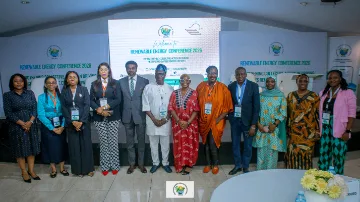
Managing Director, Nigerian Electricity Management Services Agency (NEMSA) Olusegun Adesayo has called for strict adherence to safety and technical standards to ensure sustainable growth of Nigeria’s renewable energy sector.
Adesayo, in his keynote address at the Renewable Energy Association of Nigeria (REAN) 2026 Conference hosted in Lagos with the theme “Strengthening Collective Action in Driving Nigeria’s Renewable Energy Growth,” said expanding electricity access without adequate attention to safety, quality, and technical standards could undermine the country’s energy transition.
According to him, Nigeria has enormous renewable energy resources, particularly solar energy, which offer opportunities to expand electricity access, create jobs, attract investment and stimulate economic growth.
He identified the Presidential Power Initiative, the Distributed Access through Renewable Energy Scale-up (DARES) Project, and other power sector reforms as initiatives promoting private-sector participation and sustainable energy development. GoSolar




According to him, the initiatives demonstrate the Federal Government’s commitment to building an electricity sector capable of supporting industrialisation, economic growth and improved living standards.
He warned, however, that poor-quality equipment, substandard installations and non-compliance with technical requirements posed serious risks to lives, property, investments and public confidence in renewable energy technologies.
Adesayo said that NEMSA remained committed to ensuring that renewable energy infrastructure deployed across the country met prescribed safety and technical standards.
“Our responsibility is to ensure that solar installations, mini-grids, electrical equipment and other associated infrastructure are not only functional and efficient but also safe, reliable and compliant with applicable standards. At NEMSA, we firmly believe that electrical safety is not an option; it is a fundamental requirement for sustainable development,” he said.
He urged renewable energy developers, contractors, manufacturers and investors to prioritise compliance at every stage of project development, from conception and installation to commissioning and operation.
In her welcome address, the Chief Executive Officer, REAN , Motunrayo Akinfala said it has identified three key areas critical to drive Nigeria’s renewable energy growth, stating that the next phase of growth will require stronger coordination, deeper collaboration and a shared commitment to addressing the challenges that continue to constrain the sector.
She expressed that renewable energy represents more than an alternative source of electricity.
“It is an opportunity to address persistent energy access gaps, strengthen local enterprise, create jobs, stimulate innovation, attract investment and support a more productive and resilient Economy,” she said.
According to Akinfala, the first key area to drive Nigeria’s renewable energy growth is to build a competitive renewable energy industry through domestic value creation, safety and standards.
She questioned how much of the value generated by this growth can be retained within Nigeria and how stakeholders strengthen local businesses, develop technical capabilities, encourage investment in manufacturing and assembly, and create more opportunities for Nigerian companies across the renewable energy value chain.
“At the same time, growing the domestic industry must go hand in hand with quality, safety nd consumer protection. We must ensure that products meet appropriate standards, installations are carried out by competent professionals, and consumers can have confidence in the systems being deployed.
“Our ambition should be to build a Nigerian renewable energy industry that is not only larger, but also more competitive, reliable and capable of meeting market demand,” she said.
The second key area she listed was financing renewable energy projects.
She said, “Access to affordable and appropriate financing remains one of the major barriers to scaling renewable energy in Nigeria. Businesses need capital to grow, developers need financing to deliver projects, and consumers need solutions that are affordable and accessible.
“Yet, many projects continue to face challenges around bankability, high financing costs, risk allocation and access to long-term capital.”
She urged participants at the conference to explore how renewable energy businesses can become more investment-ready, how financial institutions can better understand the sector, and what innovative financing instruments, partnerships and risk-sharing mechanisms can unlock more capital for the industry.
She added that third area that addresses renewable energy data and energy access.
According to her, participants cannot effectively address a challenge when they do not fully understand or measure.
She said, “As Nigeria continues to pursue broader electricity access, reliable data is essential to understanding where the gaps exist, what solutions are being deployed, who is being reached and where further investment is required.
“We need stronger coordination in how renewable energy deployment and energy access are tracked, better information to guide policy and investment decisions, and more consistent approaches to measuring progress.
“Better data will help government, investors, development partners and industry players make more informed decisions and direct resources where they can have the greatest impact.
She added that, “These three areas are closely connected. A stronger domestic industry requires investment and predictable demand. Effective planning and investment depend on credible data.
“And scaling deployment sustainably requires quality standards, technical capacity and financing that works for both businesses and consumers.
“We cannot make meaningful progress in one area without paying attention to the others.”