Oyo intensifies campaign against FGM in 35 communities
By Adejayan Gbenga
The Oyo State Government has intensified efforts to eliminate Female Genital Mutilation (FGM), engaging 35 communities across seven local government areas in a campaign to discourage the harmful traditional practice.
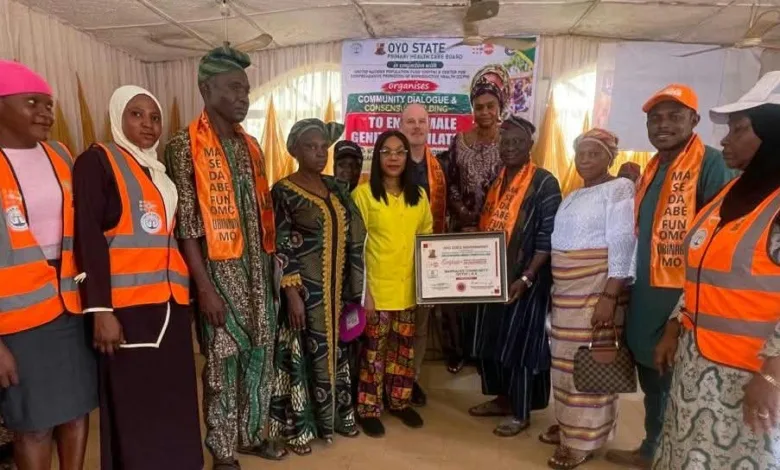
The initiative was implemented by the Oyo State Primary Health Care Board (OYSPHCB), in collaboration with the United Nations Population Fund (UNFPA) and the Centre for Comprehensive Promotion of Reproductive Health (CCPRH), through a Community Dialogue and Consensus Building programme. This was disclosed in a statement by the state Commissioner for Information, Prince Dotun Oyelade, on November 27, 2026.
The programme covered Saki West, Surulere, Lagelu, Afijio, Oyo East, Iseyin and Kajola local government areas, with five communities selected from each council area. It was designed to educate residents on the dangers of FGM, challenge harmful cultural beliefs and encourage collective action to end the practice.


Speaking at the engagement, the Executive Secretary of OYSPHCB, Dr. Muideen Olatunji, described FGM as a harmful practice that threatens the health, dignity and well-being of girls and women. He stressed that its elimination required the collective commitment of traditional rulers, religious leaders, parents, women’s groups and other community stakeholders.
Olatunji urged residents to preserve positive cultural values while abandoning traditions that expose girls and women to health risks, reaffirming the board’s commitment to reproductive health awareness, sustained advocacy and the protection of vulnerable groups. Similarly, Emeritus Professor Oladosu Ojengbede, Director of the Centre for Comprehensive Promotion of Reproductive Health, University College Hospital, Ibadan, represented by Emmanuel Yelotan, emphasised community ownership and collective agreement as essential to achieving lasting behavioural change.
Representing UNFPA, Uzoma Ayodeji described the dialogue as an important step towards eliminating FGM in the state. She noted that although culture remained an important part of society, no tradition should be upheld at the expense of the health and safety of girls and women. Ayodeji also commended the state government, OYSPHCB, CCPRH, traditional leaders and community champions for supporting the campaign.
In a presentation, the Programme Officer, Mrs Bilikis Olawoyin, educated participants on female genital anatomy, the health complications associated with FGM and Nigeria’s legal framework for addressing the practice. She highlighted its immediate and long-term consequences, including severe pain, excessive bleeding, infections, childbirth complications and psychological trauma, while urging residents to report cases, speak out against the practice and support survivors without discrimination or stigmatisation.
The dialogue also featured discussions involving traditional rulers and other community stakeholders on cultural beliefs sustaining FGM and practical ways to discourage it at the grassroots. A major highlight was the presentation of Certificates of Public Declaration for the Abandonment of Female Genital Mutilation to the participating communities, symbolising their collective commitment to ending the practice. The initiative forms part of the ongoing collaboration among OYSPHCB, UNFPA and CCPRH to promote reproductive health, protect the rights of women and girls, and ensure that the communities’ declarations translate into lasting behavioural change through sustained advocacy and grassroots participation.