SDP pushes grassroots strategy for 2027, says Adebayo
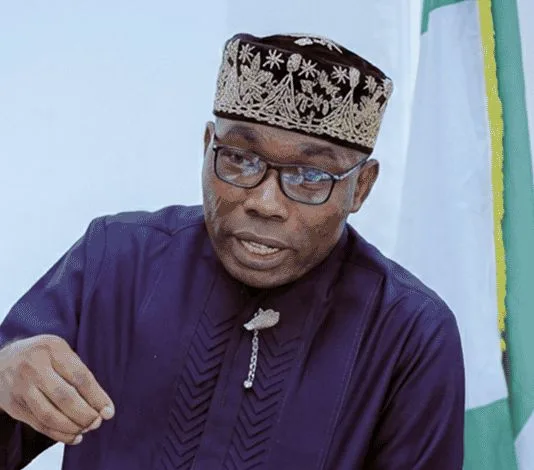
As political realignments quietly gather momentum ahead of the 2027 general elections, debates over opposition coalition-building have taken centre stage in Nigeria’s evolving democratic landscape. In this interview with journalists, Prince Adewole Adebayo of the Social Democratic Party (SDP) dismisses elite-driven alliances as fundamentally flawed and outlines the party’s strategy of building what he describes as a “people-powered coalition.” Excerpts
Politics is often described as a game of strategy, alliances, and numbers. There is a view that any party not part of a coalition is indirectly supporting the ruling party, as it can be difficult to defeat an incumbent without broad alliances. Why, then, is the SDP choosing to go it alone?
Alliances and coalitions, in our view, should be built with strategic partners in an election and those partners are not limited to politicians. They include key segments of society. Within the political class, there are clear disagreements, especially since the ultimate goal of politics is to form a government and govern. If you are serious about accountability and tackling corruption, you lose credibility by aligning with individuals whose words, actions, or records do not reflect those values. That would be inconsistent. Moreover, when you look at those who determine election outcomes, a significant majority have not been participating. In the last election, there were about 93 million registered voters, yet nearly 80 per cent did not turn out. Any meaningful coalition must therefore focus on engaging this silent majority—understanding their concerns and why they stayed away. These are the areas where the SDP is concentrating its efforts by working with strategic partners across society.
We remain open to dialogue with other political parties, but such engagements are not always productive. In some cases, individuals who have made serious mistakes in government over the past two decades appear not to have learned, but are simply seeking another opportunity to repeat those same errors. We will not support that. Additionally, some within coalition talks seek roles they are not suited for, driven purely by ambition. For us, the real alliance is one that ensures Nigerians—those who bear the consequences of bad governance and benefit from good governance—are actively involved. The SDP’s focus is on bringing more of these people into the political process.

Your party’s activities do not appear to be widely covered in the media. Can you shed some light on what the party is currently doing?
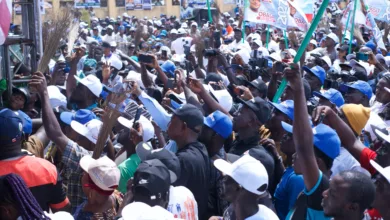
What we are doing is focused on expanding our membership base. If you go around the country, you will see clear physical evidence of this growth. In some ways, the underreporting of our activities is a mixed blessing. For instance, we were in Kano where thousands of people joined the SDP, but it was not widely reported. On the other hand, we ask ourselves what difference it makes—on election day, the outcome will speak for itself. Those we are ultimately trying to displace already have access to the instruments of state, including security structures, and they are aware of what we are building. But if you are a Nigerian hoping that some coalition will come and rescue you, that is a serious mistake. What is required is individual and collective civic action: talk to your neighbours, engage in informed debates, join a political party that you believe is speaking truthfully, and ensure you participate in elections. Do not align yourself with anyone who promotes despair or says hope is lost—you must come out and get involved.
We also have religious, civic, and professional organisations that sometimes believe they can benefit from a flawed electoral system instead of working to improve it for the good of the country. Our approach is to ensure that support for the SDP is not based on verbal assurances alone. We are insisting on real participation and membership engagement. In the past few months, data suggests that in several remote parts of the country, we are seeing close to 100,000 new members joining regularly. This used to be about 100,000 per month, and we are now working to ensure that this is not just a matter of numbers submitted to INEC, but genuine, quality participation.
We are not closing the door to members of the political class who are willing to learn from past mistakes and engage in coalition discussions. However, meaningful cooperation will only properly begin after party primaries, because different political parties currently have varying levels of internal order.
In one recent discussion, for example, we encountered a situation where there were about seven competing aspirants from a party. We had to advise their representatives not to bring your virus into the conversation. They should first resolve and streamline their own processes before coming to engage with us. That is the kind of structure needed if the process is not to become a free-for-all.
There have been some recent high-profile defections from your party. Is this a sign that people are losing confidence in the party’s capacity to drive its 2027 agenda?
No, not really. What I see is that if, in a situation where 5,000 people leave the SDP, it may not even be noticeable, especially when we are bringing in 50,000 to 100,000 members every week.
If, for instance, 5,000 people decide to leave because they are loyal to a particular aspirant who is not favoured by zoning and who knows he may not get the party’s ticket, and he then moves to another party with them, we cannot complain especially if he has the resources to publicise it.
You don’t seem concerned that the party is now left with only one senator….
Not really. One of our senators passed away, and we also had another situation, although he has not formally resigned. We have to be careful with the legal implications, because he has not officially informed us that he is leaving, even though there are rumours that he is aligning with the ruling party. There is not much we can do about that. He is reportedly interested in becoming a governor, and while we already have credible candidates for that position, he may have concluded that he will not secure the party’s ticket due to zoning arrangements and therefore chooses to pursue his ambition elsewhere. If that is the case, we respect his decision.
However, the party is not built around individual ambition. For every person who announces their departure, thousands more are joining us. What matters to us is that Nigerians begin to understand why the SDP is in this race. We are focused on the substance of Chapter 2 of the Constitution and on the idea that governance is not a contest of personalities, but a contest of principles.
If that understanding spreads and a broad coalition is built across the country on that basis, even those who are currently undecided or scattered politically will eventually align with us. That is the real coalition. Many will join once they realise that Nigerians are beginning to receive and embrace this message—and that message is crucial. If we fail to get it right now, we risk getting the transition wrong. I must state clearly that the objective of the SDP is deeper than that of some of the individuals currently involved in what is called a coalition.
Do you think INEC will be able to conduct a credible election in 2027?
I don’t think they are necessarily working towards that, because you first have to be convinced that this is truly the objective before you can judge whether it can be achieved. Someone who is not committed to the work cannot be expected to deliver productivity. At this point, the responsibility is not only on INEC but on all of us. Remember, the INEC Chairman did not appoint himself; he was appointed by the President, and I am not sure that conducting a free, fair, and credible election is at the top of that administration’s priorities.
Beyond that, the President did not act alone. There is the Council of State, which includes former leaders and experienced national figures, and they all approved the appointment without objection. It also went through the National Assembly, which represents all Nigerians, and it was confirmed without significant resistance.
From what I can see, there was not much public uproar at the time. In fact, some of those who are now criticising the INEC Chairman were, only months ago, praising the appointment. In my view, we have already missed a major opportunity to strengthen the credibility of the electoral process. If there was a serious commitment to reform, it would have been done through initiatives like the Uwais Panel recommendations. Unfortunately, several key opportunities to guarantee free, fair, and credible elections have been lost along the way.
It is as if those who were initially opposed to strong electoral reforms are now becoming the victims of the same system…
Yes, because at that time, the poor and manipulated elections tended to favour those in power, and there was a prevailing assumption similar to what you see with President Tinubu and the APC today that they would remain in control indefinitely.
Right now, however, the key actors who can genuinely push for free, fair, and credible elections are the politicians themselves, the media, the voters, and law enforcement agencies. As for INEC, I think that opportunity has largely been eroded.
Do you think the opposition is ready?
What is opposition? Opposition is defined by what you do, not merely what you say. Some people in opposition behave like mercenaries or saboteurs, and in some cases, they also create problems for themselves.
The key issue is that if we are to oppose President Tinubu, there are three important things we must do. First, the way we run our political party must be guided by order and principle, not lawlessness. Second, we must oppose in principle and mobilise Nigerians around the values and ideas that underpin that opposition, focusing on saving the country and ensuring good governance—because Nigerians are not invested in anyone’s personal ambition to attain power. Third, we must present a clear contrast. We should not resemble what we are trying to replace; instead, we must offer a sharp distinction—like day and night, black and white—so that Nigerians can clearly see a viable alternative.