Segun Awolowo: Ode to quiet influence and public vision, by Olajide Olutuyi
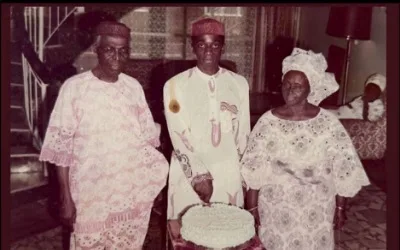
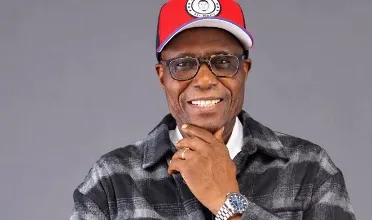
The recent passing of Segun Awolowo Jr. has once again brought the Awolowo family into national conversation, reminding Nigerians how legacies are not only inherited, they are also built. For decades, he was known to many simply as the elegant, soft-spoken grandson of Chief Obafemi Awolowo, Nigeria’s most influential politician of the 20th century. Yet in death, as tributes poured in from political leaders, business figures, and ordinary citizens, a much deeper portrait emerged: Segun Awolowo Jr. was not merely a carrier of a famous name; he became a bridge between the Awolowo legacy of political thought and a modern agenda of economic transformation.
Born into one of Nigeria’s most respected families, Segun was not a stranger to national expectations. He met his legendary grandfather, Chief Obafemi Awolowo, but fate dealt him a different kind of family loss, he never knew his own father, who died months before Segun was born. That early absence shaped a life marked by quiet resilience, personal discipline, and a commitment to proving that legacy is not only inherited but earned.
In many ways, aside from Dr. Tokunbo Awolowo-Dosunmu, the last daughter of the Awolowo patriarch, and Dolapo Osinbajo, whose public profile largely stemmed from her role as wife of the former Vice President, no other descendant of the scion has been as consistently visible as Segun. Over the years, he became the most recognizable male figure of his generation in the family, not because he pursued politics, but because he embodied a newer style of leadership rooted in diplomacy, idea-driven development, and public administration.
It is easy to assume that anyone with the Awolowo name would naturally enter electoral politics. Chief Obafemi Awolowo’s life was defined by ideological struggle, political organization, and national debate. His weapons were parties, manifestos, and public mobilization.
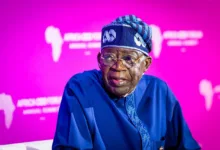
Segun Awolowo Jr. chose a completely different path.
Where his grandfather argued on political podiums, Segun worked quietly in government offices, conference rooms, and international summits. He was a technocrat, not a politician, an administrator rather than a campaigner. He served under four different Nigerian presidents in various capacities, a rare achievement that reflected both competence and trust. Segun understood power but never chased applause. He navigated high-level government spaces with grace, intelligence, and discretion.
And while he moved comfortably in elite social circles from Lagos to Abuja, the weddings, diplomatic receptions and corporate events, those close to him describe a man who was calm, disciplined, and deeply intentional about helping people behind the scenes.
He minded his business yet touched lives everywhere he went.
Segun’s most defining tenure may have been at the Nigerian Export Promotion Council (NEPC), where he led efforts to reposition Nigeria’s trade outlook. Colleagues describe a leader who was calm in presence and deliberate in action, one who held meetings with clarity, valued research, and discouraged showmanship. He was widely regarded as an administrator who understood both government bureaucracy and global markets.
It was at NEPC that Segun championed the now widely recognized Zero Oil initiative. Long before diversification became an urgent national conversation, he asked one unsettling question:
He believed Nigeria could win in textiles, cocoa derivatives, technology services, leather products, cultural exports, fashion, and processed food markets if the right institutions were built and supported. The most important part of the Zero Oil message was not fear, it was preparedness. It asked a simple but urgent question: “What would Nigeria become the day the world no longer needs our crude oil?”
The initiative encouraged government and private sector players to prioritize export development in sectors such as agro-processing, leather, textiles, manufacturing, services, and the creative economy. Segun believed Nigeria’s future lay not in raw exports, but in value-added enterprise. He pushed for partnerships, data-driven planning, and youth involvement in export-based entrepreneurship. Today, “diversification” is mainstream economic language. When Segun first raised it, it was a lonely argument.
Beyond policy, Segun Awolowo Jr. earned enormous respect for how he treated people. Those who worked with him describe a leader who listened, who encouraged younger professionals, who opened doors instead of closing them.
He managed relationships across business, diplomacy, philanthropy, and politics with unusual maturity. Whether in Abuja, Lagos, London, Addis Ababa or Dubai, he built a network based on reputation rather than force of personality.
His passing has stirred something familiar in Nigerian public life:
the sudden realization that an Awolowo has left the stage, and with it, a body of ideas worth revisiting.
Funeral activities, commentaries, and tributes have shown one thing very clearly, Segun Awolowo Jr. was not just “cool” or “well-connected.” He left impact in public service, in economic policy thinking, and in personal relationships.
His death has reopened the national memory of the Awolowo lineage. Chief Obafemi Awolowo is remembered for political ideas and regional reform. Segun Awolowo Jr. may be remembered for economic ideas and national development planning.
At a time when Nigeria is once again facing revenue stress, foreign exchange shortages, and questions about economic vision, many of Segun’s arguments sound prophetic. The question remains: will policymakers and institutions continue the work he began? Will the Zero Oil blueprint be expanded beyond documents and conferences into industrial parks, processing plants, and export-driven jobs?
The future of the Awolowo legacy may not be another political campaign or ideological movement, but a generation of young Nigerians pushing forward the work of reform, diversification, and long-term economic thinking. Segun Awolowo Jr. carried a famous name, but he also carried an important message: Nigeria can do better, beyond oil.
Segun Awolowo Jr.’s life was never defined by noise. It was defined by quiet influence, steady service, and smart ideas. In a nation that often rewards noise over substance, his life stands as a quiet reminder that careers in public service can change a country, even without holding public office, his story offers something refreshing:
Legacy is not only inherited.
Legacy is earned, in offices, in policies, in relationships, and in the lives of people one quietly helps along the way.
@jideolutuyi