Striking a balance between food supply and farmers income, by Kayode Oyedeji
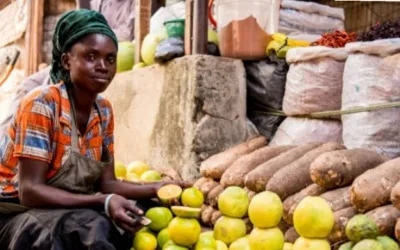
Food Inflation fell from 39.93% in 2024 to 11.08% in 2025, a remarkable and gladdening feat. However, this has sparked debates on likely impact on farmers profitability in view of goverment’s flexibility to food supply.
Policies have consequences. When you raise tax or reduce tax, there are consequences. When you increase or reduce tariff, there are consequences.
Polxy makers do Cost- Benefit analysis, choosing what is in to the benefits of the greater majority, not just in the short run, but also in the long run.
When government decides to save a Country of over 200m people from hunger and food crisis in the short run through flexibility in food supply, there will be consequences that may affect some operators in the food value chain.


Singapore was not stupid to allow for almost 90% food supply from abroad. They weighed the options. Yes, Nigeria’s case may be different, we have the arable land, large unskilled labour. But would that translate to comparative advantage in agriculture? No.
Away from Singapore to Netherlands. Nethalands is using less to produce more and is currently the second largest exporter of of food in the world. The size of Netherlands is probably lower than that of Niger State. But Netherlands has skills and tech-driven comparative advantage that has made it a global food basket and leader.
Comparative advantage in agriculture is not just about land and large pool of unemployed people, it is about skills, advanced biology and science and technology that will lead to high yield and technologically driven, value adding processes and transformation.
Our rice yield is just about a third of what we have in Thailand, India and China. Same goes for most crop and livestock items. Yet, we have protruding and rapidly rising population to feed.
PMB wrongly placed food embargo on Nigeria, good vision but poor evaluation.the current government has rightly reversed this, embracing a more flexible approach to ease debilitating supply crisis.
When you limit food supply to a poor Country with low agricultural skills and yield, you have the disaster of food shortage and crisis, rapidly rising inflation to manage. That is the terrible and frightening situation that Tinubu inherited and has done everything possible to change.
If not, by now, people will be dropping dead out of hunger every moment, especially when you factor in the likely impact of other difficult but inevitable macro economic adjustments like subsidy removal and exchange rate reforms.
Can Nigeria achieve comparative advantage in agriculture? Yes, we can in the medium to long term, not in the immediate, and provided we deal with the problem of land access, make serious and concerted investments for mechanised and advanced technology in agriculture
Equilibrium adjustment is a continuous process.Analysts should focus on advocating for the right interventions to reduce the unintended consequences of the inevitable policy shifts in agriculture on farmers. One of which may require further, more investment in agriculture by FG and State Governments aimed at reducing the cost of fertilizer and mechanised equipment, funding research and development to have ehanced yields and boosting storage to reduce post harvest waste.
Tinubu is on some strategic infrastructural development moves, aimed at making logistics to connect markets seamless, with the building of the Lagos- Calabar and Lagos- Sokoto Super Highways.
Direct subsidy to farmers is key and needed especially in the new year to deal with likely apathy from farmers who enjoyed excess profits when demands significantly outweighed supply, a circumstance that government must ensure that it does not occur again.
Government may consider a form of ” Agricultural Equalisation Fund” in the future to absorb possible occurrence of agricultural loss making or low level of profit. Agriculture insurance should also be deliberately enhanced.
This government’s efforts and strategy has achieved good results in 2025 as shown by drastic reduction in food inflation.. There are rooms for improvement. The Sub-Nationals must devote part of their massive economic reform gains to developing agriculture and infrastructure. State governments are the custodians of lands, going by the land Use Act. It is also important for Federal Ministry of Agriculture to be overhauled for more capacity to coordinate and drive government agricultural programs and coordinate works of Sub-Nationals in agriculture.