Yemi Osinbajo and the prosperity gospel — by Deji Yesufu
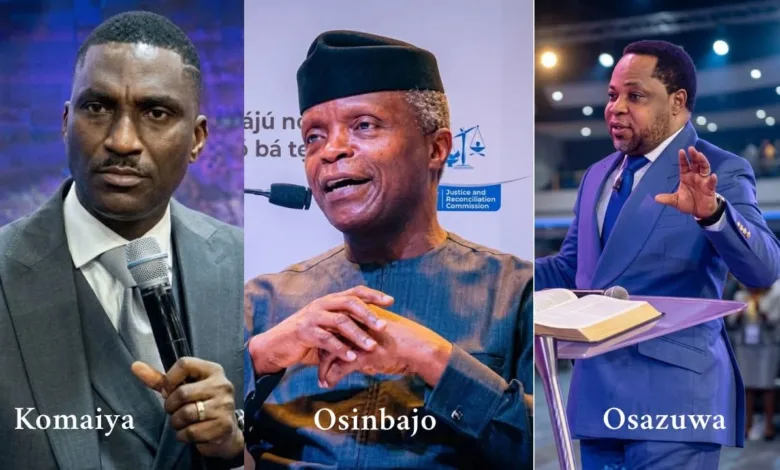
The day is Sunday, 5th March, 2026. The venue is the Rock of Ages Christian Assembly in Benin, Edo State. The preacher is Prof. Yemi Osinbajo, the former Vice President of Nigeria under the Muhammadu Buhari administration, which led the country from 2015 until 2023. Yemi Osinbajo also contested the All Progressives Congress (APC) presidential primaries in 2023, in which Asiwaju Ahmed Bola Tinubu emerged as the party’s presidential flagbearer. The topic that was given to Osinbajo to speak on by the minister of the church, Pastor Charles Osazuwa, was “Christian Leadership – The Need for Capacity Building”.
Those who have followed Osinbajo’s speaking engagements in recent times, particularly when he has the opportunity to speak to Christians, would realise that the Professor of Law has been making certain emphasis that appears to drum at the heart of the challenges that have befallen the Nigerian nation. Osinbajo appears to have discovered puritanism and the work ethic that they employed in their day-to-day lives, which led to the building of the great economic powers that Europe and America have today.
Prof’s doctrine is essentially this: Christians must be both light and salt to the Nigerian nation. We must rediscover the spirit of work, industry, honesty, integrity, trust, altruism, and especially the care of the poor, that has always tended to make Christian nations prosperous in the past. The last time Prof made a similar speech, he criticised the preaching that suggests that Christians should not give to the poor. In this message, again, Osinbajo makes the point that early Christians were known for their charity and care of the poor. He added that the social welfare schemes many Europeans and American nations practice today have their roots in the Bible.
Osinbajo points at the clear fact that giving to the poor was at the heart of the gospel Jesus preached and lived. He even stated that Jesus showed from the story of Lazarus and the Rich Man, and Matthew 25, that those who despise the poor will end up in hell.

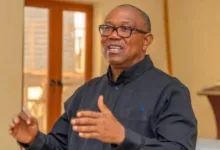
If the discussion for that day had ended with Prof. Osinbajo’s speech, that would have been the end of that conference. No one would have probably heard of that speech. But Providence had other plans. Following the various speeches presented that day, the key speakers, Yemi Osinbajo, Korede Komaiya, and Olumide Emmanuel, joined the host, Charles Osazuwa, on the podium to answer some questions in a panel discussion.
Pastor Charles asked Osinbajo to answer this question: “When a country has a government, why should the church be burdened with the care of the poor?” Osinbajo replied that it is because Jesus commanded that the Church should care for the poor. He added that Christians influence government either directly, while serving in government, or indirectly through worthy examples. Pastor Korede Komaiya was obviously unhappy with Prof. Osinbajo’s message, and he commented that it is clear to him that the implication of Jesus’ death and resurrection, with soldiers being bribed to hide the truth of the resurrection, is that we despise money at our own peril. He added that “biblical prosperity is correct, original, and godly…” He said he could never understand why anyone would speak against the prosperity gospel.
Pastor Olumide mediated the discussion by explaining that obviously, what is needed is a balance. And Prof. Osinbajo added that there was really nothing like a prosperity gospel. He made it very clear that a prosperity gospel was a perversion of the gospel of Jesus. The discussion was not meant to be a debate; it was clearly a panel discussion. When preachers join a panel discussion at a conference, open disagreements do not happen often. Even where there has been obvious disagreement, the moderator tries to do damage control and finds a middle ground for the congregation to follow. But it was not difficult for some of us to observe that Osinbajo and Komaiya were clearly not on the same page that day.
The last time Korede Komaiya was in the news, it was concerning his arrest of another pastor. Pastor Festus Alilu had had a wave of inspiration and had gone to social media to excoriate Korede Komaiya for his blatant Prosperity Gospel preaching. Mr Komaiya had Alilu arrested, and he was in detention for a number of days. Komaiya claimed that Alilu had been cyber-bullying him, and since the Nigerian Police can so easily be moved by pecuniary means, it was not difficult to have Alilu detained. The matter became a national storm; Omoyele Sowore and a few other people waded into the issue, and Alilu was finally released.
Following his release, Alilu made a public apology to Komaiya, practically retracting his earlier statement. It was obvious that some big papas in the Pentecostal movement had spoken to Alilu and encouraged him to apologise, and also brokered peace. That is how that matter died down. What was not killed from that matter is these facts: Korede Komaiya is a “son” of David Oyedepo. He learnt his trade from him, and he preaches full-blown, blue-eyed, prosperity gospel. He believes that money is the central factor in Christian ministry, and the one person who needed to hear what Yemi Osinbajo was saying that day was Korede Komaiya. It was not surprising that he objected to Osinbajo, regardless of the respectable manner in which he did it. Komaiya would never have left Benin without objecting to what Osinbajo said because Komaiya is a Prosperity Gospeller. He is not a preacher of the gospel of Jesus.
The good news that came out of the exchange between Komaiya and Osinbajo is that respectable persons and people with voices are now beginning to warn against the dangers of the Prosperity Gospel in Nigeria. Some of us have been raising this alarm forever. We have been chased out of churches because we warned congregations against the gospel of prosperity. Our families have been attacked. We have become the butt of jokes in many circles.
One person suggested that I seek psychiatric help because I had the audacity to say that David Oyedepo, Enoch Adeboye, and Chris Oyakhilome do not teach the gospel of Jesus, but the gospel of prosperity. Alas, now that someone like Yemi Osinbajo is saying the same thing, our God has very graciously justified the stance we have taken for decades now.
The chief point in Osinbajo’s message must not be lost. Osinbajo is not primarily a pastor; he is today primarily a politician. Osinbajo has joined politics to bring God’s kingdom principles to reform Nigeria. At the heart of his politics is the bettering of the lot of the poor. If there is anything that is conspicuous about Nigeria today, it is the sheer number of poor people in this country. Nigeria’s poor are amassed in the midst of the plenty this country has. It is a criminal thing.
Yemi Osinbajo must have read Chief Obafemi Awolowo’s books and seen what the sage did with the very little income he got from Cocoa and Palm Kernel to develop the South-West region between 1952 and 1959. Obafemi Awolowo led the finances of Nigeria during its thirty-month war without borrowing a dime from the International Monetary Fund. At the heart of Osinbajo’s politics is “Afenifere”, the same politics that Awolowo practised. And Osinbajo knows Awoism well because he is married to Awolowo’s granddaughter.
Nigerian elites have a problem with greed, and corruption is eating into the very life of this country. Alas, a gospel has arisen within many churches in Nigeria that legitimises that greed. That gospel is called the Prosperity Gospel. Whether Osinbajo becomes president of Nigeria or not, it does not matter anymore. The man has done his bit; he has told this country, especially Christians, what we must do to save the nation from the abyss it is heading into. Government serves the people.
The church must find a gospel message that has the concern of the poor at heart, and she must first live this gospel and then teach it to the Nigerian government. Until then, things will not be any better for us in this country. And it is not a curse.
–Yesufu is the pastor of Providence Reformed Baptist Church Ibadan. He is the author of HUMANITY. He can be reached at [email protected]