Seun Okinbaloye: The unraveling of a low-budget CNN Wolf Blitzer — by Demola Adetunji
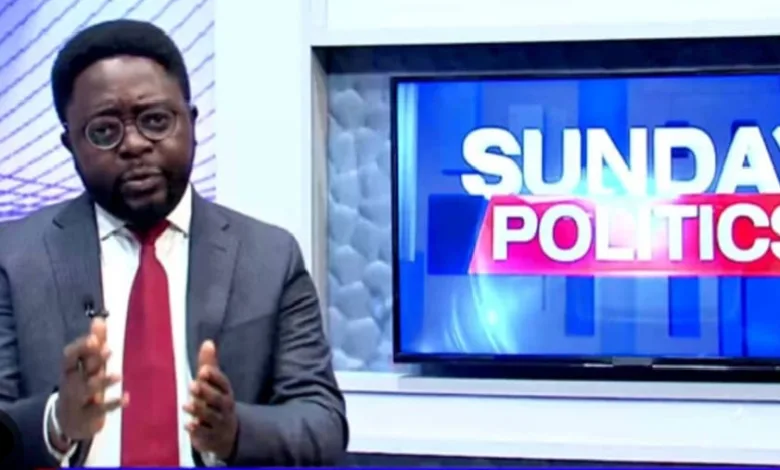
The famous exchange between Babatunde Fashola and Seun Okinbaloye on Politics Today was more than just another tense television interview. It exposed a weakness that has increasingly become evident in Seun’s brand of journalism: an inclination towards populist narratives at the expense of serious economic inquiry. Rather than confronting a politician with a deep understanding of policy details, viewers witnessed an interviewer whose assumptions themselves became the subject of scrutiny.
That moment has remained significant because it reflects a broader problem. Over the years, Seun has built a reputation as one of Nigeria’s most recognisable political broadcasters. Yet the more one watches Politics Today and his personal podcast, the more difficult it becomes to ignore a recurring pattern.
Complex economic and political issues are frequently reduced to emotionally appealing talking points designed to resonate with public frustration rather than illuminate public understanding.
In many ways, Seun appears to be modelling himself after the aggressive, personality-driven style of American cable news anchors. But unlike the best political journalists, who combine sharp questioning with extensive subject mastery, he often appears more interested in the performance of accountability than in the substance of accountability itself.


A good example is his repeated reliance on the question, “Are you better off than you were four years ago?” It is an effective political slogan because it appeals directly to personal experience. Rising prices, declining purchasing power, and economic hardship make the question instantly relatable. It produces a simple narrative: if people are struggling, then government policy has failed.
The difficulty is that economies are rarely so simple.By framing public discussion through such slogans, Seun frequently encourages viewers to evaluate national performance through sentiment alone. The result is a style of journalism that often confuses economic pain with economic analysis.
Nigeria’s reality between 2023 and 2026 demonstrates why this approach is inadequate. When the current administration assumed office, the country faced deep structural distortions that had accumulated over many years. Fuel subsidies had become fiscally unsustainable. The foreign exchange market was fragmented. Investor confidence was weak. Government revenue remained severely constrained relative to national needs.
These were not abstract challenges but longstanding economic problems that demanded difficult choices.The reforms that followed produced immediate hardship. Fuel prices increased. The naira depreciated sharply. Inflation accelerated.
Ordinary Nigerians felt the impact in their homes, businesses and personal finances. These experiences are real, and any journalist who ignores them would be guilty of abandoning the public interest.
Yet there is an equally important side to the story that often receives far less attention in much of Seun’s commentary. Economic reform is not judged solely by the pain it creates in the short term. It is also judged by whether it addresses underlying distortions and produces greater stability over time. Improvements in growth, investor confidence, fiscal sustainability, reserve accumulation and macroeconomic stability matter because they shape a country’s long-term prospects.
A journalist committed to informing the public should be capable of discussing both realities simultaneously. Instead, Seun’s analysis frequently appears driven by the mood of the moment. Public frustration becomes the primary lens through which national developments are interpreted. Statistics are often introduced selectively, reinforcing an existing narrative while leaving little room for competing interpretations. The audience is encouraged to feel informed while often being given only a partial picture.
This is the hallmark of populist journalism.
Populist journalism thrives on public anger because anger attracts attention. It converts complicated policy debates into moral dramas with heroes and villains. It rewards certainty over nuance and soundbites over substance. Most importantly, it allows journalists to position themselves as the voice of the people without doing the harder work of explaining difficult realities.
The danger is that it creates a citizenry rich in outrage but poor in understanding. Journalism should challenge governments. It should expose incompetence and demand accountability. But there is a difference between holding power accountable and constantly feeding public dissatisfaction without adequate context. One is a public service; the other risks becoming a form of political entertainment.
This is where Seun Okinbaloye increasingly resembles a low-budget version of Wolf Blitzer. The comparison is not a compliment. Like many cable-news personalities, he often excels at generating confrontation and amplifying prevailing political narratives. Yet unlike the strongest practitioners of political journalism, his work too often lacks the depth of economic understanding necessary to separate short-term public sentiment from long-term national realities.
The consequence is a style of broadcasting that generates heat far more effectively than light.
Nigeria deserves better. At a time when the country faces difficult economic transitions, citizens need journalists who can move beyond slogans, social-media talking points and imported political rhetoric. They need journalists who are willing to interrogate both governments and popular opinion with equal rigour.
The true test of journalism is not whether it echoes what audiences already believe. It is whether it equips them to understand what they do not yet know.
For all his strengths as a broadcaster, that remains the challenge that Seun Okinbaloye has yet to overcome.