𝙅𝙖𝙜𝙪𝙣-𝙅𝙖𝙜𝙪𝙣: N𝗼𝗹𝗹𝘆𝘄𝗼𝗼𝗱 e𝗽𝗶𝗰 d𝗿𝗮𝗺𝗮𝘁𝘂𝗿𝗴𝘆 𝗼𝗳 v𝗶𝗼𝗹𝗲𝗻𝗰𝗲 𝗮𝘁 𝘁𝗵𝗲 c𝗿𝗼𝘀𝘀𝗿𝗼𝗮𝗱𝘀, By 𝗥𝗮𝘀𝗵𝗲𝗲𝗱 𝗢𝘁𝘂𝗻
“𝗧𝗵𝗲 𝗹𝗮𝗯𝗼𝗿 𝗼𝗳 𝗼𝘂𝗿 𝗵𝗲𝗿𝗼𝗲𝘀 𝗽𝗮𝘀𝘁,
𝘀𝗵𝗮𝗹𝗹 𝗻𝗲𝘃𝗲𝗿 𝗯𝗲 𝗶𝗻 𝘃𝗮𝗶𝗻”
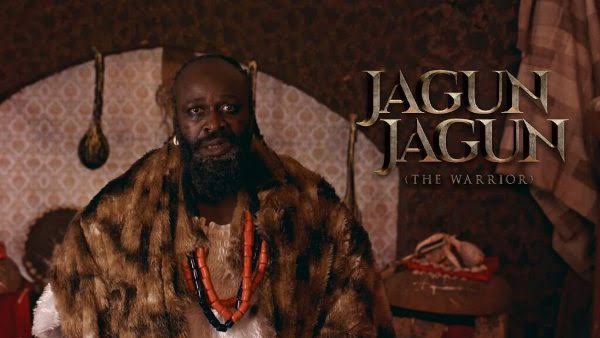
The above iconic 5th and 6th lines of the National Anthem of Nigeria captured my feelings after watching Femi Adebayo’s epic play, 𝙅𝙖𝙜𝙪𝙣-𝙅𝙖𝙜𝙪𝙣 (2023) which was released on 10th August 2023 on Netflix. Without doubt, the labours of the late Hubert Ogunde (1916-1990), Moses Olaiya (1936-2018), Kola Ogunmola (1925-1973), Duro Ladipo (1926/31-1978), Adeyemi Afolayan (1940-1996), and living legends such as Charles Olumo (1923-), Lere Paimo (1939-), Adebayo Salami (1952-), Jide Kosoko (1954-), Yinka Quadri (1959) and others are never in vain. With 𝙅𝙖𝙜𝙪𝙣-𝙅𝙖𝙜𝙪𝙣, all the exponents, proponents, and promoters of drama, stage plays and films in Nigeria can relax with a sigh of relief and fulfillment. The movie affirms my position that the Nigerian film industry has moved from the days of quantity over quality, and it has taken another huge stride forward beyond quality toward perfection. Towards perfection does not mean flawless. It is also important to quickly state that being ‘historical’ is not being a slave to historical truth. 𝙅𝙖𝙜𝙪𝙣-𝙅𝙖𝙜𝙪𝙣 is an epic historical action movie par excellence in all ramifications judging from its brilliant scenographic designs and its virtuoso performance by the arrays of outstanding actors (I am tempted to name names. This is a great improvement for Lateef Adedimeji and a big hug for Femi Adebayo as well as other characters who create distinctive signatures to highlight, emphasize and aestheticise their characterizations.) and to its directorial inputs as well as a blend of the African/Yoruba total theatre aesthetics. It makes a 2hours and 14 minutes seem like a few seconds while keeping viewers on the edges of their seats with appropriate shots to aid believability and willing suspension of disbelief. Just like Kunle Afolayan’s 𝐴𝑛𝑖́𝑘𝑢́𝑙𝑎́𝑝𝑜́, 𝙅𝙖𝙜𝙪𝙣-𝙅𝙖𝙜𝙪𝙣 ends with a brilliant cliffhanger suggesting a sequel.
As I stated after watching Kunle Afolayan’s 𝐴𝑛𝑖́𝑘𝑢́𝑙𝑎́𝑝𝑜́ (2022) and Biyi Bandele’s 𝐸̣𝑙𝑒̣𝑠̣𝑖𝑛 𝑂̣𝑏𝑎: 𝑇ℎ𝑒 𝐾𝑖𝑛𝑔’𝑠 𝐻𝑜𝑟𝑠𝑒𝑚𝑎𝑛 (2022), I need to reiterate that the artist is an artist and not a historian. Therefore, 𝙅𝙖𝙜𝙪𝙣-𝙅𝙖𝙜𝙪𝙣 should be critiqued as a work of art and not as a historical document. It is not a testament to any historical truth or any truth for that matter. So, those seeking any validation of truth or history should go to watch documentaries or read historical books. 𝙅𝙖𝙜𝙪𝙣-𝙅𝙖𝙜𝙪𝙣 is an epic play not claiming to be a strictly period play. To Yoruba scholars and Yoruba historians, this movie is not claiming a depiction of Yoruba history. Criticising the movie from the perspective of history or its relationship to any historical event or legend is a departure and a disservice to artistic criticism. The fact is not sacred when it comes to artistic interpretations. The fact can be creatively toyed with in the process of artistic recreation and the producer of 𝙅𝙖𝙜𝙪𝙣-𝙅𝙖𝙜𝙪𝙣 obviously exploit their artistic license in many scenes. Plato dealt with this issue in his “𝑅𝑒𝑝𝑢𝑏𝑙𝑖𝑐” (375 or 380 BCE) when he examined arts and the artists from the perspective of morality claiming the artists take society twice removes from the Truth. The artist is an artist. The artist may recreate history, but the artist is not a historian in the strict sense of a historian. The artist is an entertainer. The danger of criticism of artistic works from perspectives that take away attention from the art itself to history and other extraneous factors has been a major concern of scholars from John Crowe Ransome’s “𝐶𝑟𝑖𝑡𝑖𝑐𝑖𝑠𝑚 𝐼𝑛𝑐” (1937), Susan Sontag’s “𝐴𝑔𝑎𝑖𝑛𝑠𝑡 𝐼𝑛𝑡𝑒𝑟𝑝𝑟𝑒𝑡𝑎𝑡𝑖𝑜𝑛” (1966) to other critical essays by formalists and New Critics. The directors of 𝙅𝙖𝙜𝙪𝙣-𝙅𝙖𝙜𝙪𝙣 toy with their directorial liberty by introducing some stereotypical combat styles.
𝙅𝙖𝙜𝙪𝙣-𝙅𝙖𝙜𝙪𝙣 reminds me of my intention when I decided to write “You Must Be Mad, Yes, You”. My intention was simply to explore the dramaturgy of violence and flood the audience with images of violence. This seems to be one of the dreams of Femi Adebayo. It is as if he is fascinated with movies such as 300 Spartans (1962), Troy (2004), and 300 (2007). Therefore, 𝙅𝙖𝙜𝙪𝙣-𝙅𝙖𝙜𝙪𝙣 is an action-packed film with a spectrum of violence and all the typologies of violence creatively portrayed. Violence has always been a staple of the performing arts from time immemorial. Advancements in technology and cinematographic techniques have increased the stageability of gory violence in contemporary movies. As Nancy Snow in “Social Implications of Media Globalization.” Media, Sex, Violence, and Drugs in the Global Village (2001) rightly noted;
𝐇𝐮𝐦𝐚𝐧𝐤𝐢𝐧𝐝 𝐦𝐚𝐲 𝐡𝐚𝐯𝐞 𝐡𝐚𝐝 𝐦𝐨𝐫𝐞 𝐛𝐥𝐨𝐨𝐝𝐭𝐡𝐢𝐫𝐬𝐭𝐲 𝐞𝐫𝐚𝐬, 𝐛𝐮𝐭 𝐧𝐨𝐧𝐞 𝐰𝐚𝐬 𝐚𝐬 𝐟𝐢𝐥𝐥𝐞𝐝 𝐰𝐢𝐭𝐡 𝐢𝐦𝐚𝐠𝐞𝐬 𝐨𝐟 𝐯𝐢𝐨𝐥𝐞𝐧𝐜𝐞 𝐚𝐬 𝐭𝐡𝐞 𝐩𝐫𝐞𝐬𝐞𝐧𝐭. 𝐖𝐞 𝐚𝐫𝐞 𝐚𝐰𝐚𝐬𝐡 𝐢𝐧 𝐚 𝐭𝐢𝐝𝐞 𝐨𝐟 𝐯𝐢𝐨𝐥𝐞𝐧𝐭 𝐫𝐞𝐩𝐫𝐞𝐬𝐞𝐧𝐭𝐚𝐭𝐢𝐨𝐧𝐬 𝐬𝐮𝐜𝐡 𝐚𝐬 𝐭𝐡𝐞 𝐰𝐨𝐫𝐥𝐝 𝐡𝐚𝐬 𝐧𝐞𝐯𝐞𝐫 𝐬𝐞𝐞𝐧. 𝐈𝐦𝐚𝐠𝐞𝐬 𝐨𝐟 𝐞𝐱𝐩𝐞𝐫𝐭𝐥𝐲 𝐜𝐡𝐨𝐫𝐞𝐨𝐠𝐫𝐚𝐩𝐡𝐞𝐝 𝐛𝐫𝐮𝐭𝐚𝐥𝐢𝐭𝐲 𝐝𝐫𝐞𝐧𝐜𝐡𝐞𝐝 𝐨𝐮𝐫 𝐡𝐨𝐦𝐞𝐬 (𝟐𝟑-𝟐𝟒).
Without a doubt, viewers will get a good dose of violent-ridden and expertly choreographed brutality from watching 𝙅𝙖𝙜𝙪𝙣-𝙅𝙖𝙜𝙪𝙣. Therefore, 𝙅𝙖𝙜𝙪𝙣-𝙅𝙖𝙜𝙪𝙣 is a movie for those who love to see violence, blood, combat scenes, and sword. 𝙅𝙖𝙜𝙪𝙣-𝙅𝙖𝙜𝙪𝙣 is an advancement of the dramaturgy of violence in Nollywood, the Nigerian film industry. It is a classic testament to the contributions of the Nigerian movie industry to the aesthetics of violence and epic movie. It is an epic historical action film in the class of Stanley Kubrick’s 𝑆𝑝𝑎𝑟𝑡𝑎𝑐𝑢𝑠 (1960), Mel Gibson’s 𝐵𝑟𝑎𝑣𝑒ℎ𝑒𝑎𝑟𝑡 (1995), Ridley Scott’s 𝐺𝑙𝑎𝑑𝑖𝑎𝑡𝑜𝑟 (2000), Nuam Muro’s 300: 𝑅𝑖𝑠𝑒 𝑜𝑓 𝑎𝑛 𝐸𝑚𝑝𝑖𝑟𝑒 (2014), and Edward Berger’s 𝐴𝑙𝑙 𝑄𝑢𝑖𝑒𝑡 𝑜𝑛 𝑡ℎ𝑒 𝑊𝑒𝑠𝑡𝑒𝑟𝑛 𝐹𝑟𝑜𝑛𝑡 (2022).