17-year high FX reserves: ‘Tinubu administration will continue to prove cynics wrong’ — TMSG
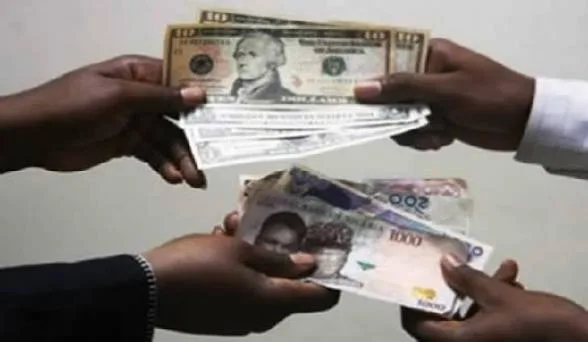
The Tinubu Media Support Group (TMSG) has said that the administration of President Bola Tinubu will continue to “prove cynics wrong,” following the rise in Nigeria’s foreign exchange reserves to a 17-year high.
In a statement issued on Friday and signed by its chairman, Emeka Nwankpa, and secretary, Dapo Okubanjo, the group said the latest reserves figure reflects the effectiveness of ongoing economic reforms.
“We recall that when the foreign reserves recorded a slight dip in April after initially hitting the $50bn mark, former Vice President Atiku Abubakar, who was silent during the upward movement, claimed that it was a result of poor economic decisions,” the group said.
“Now the external reserves have not only bounced back, but they are at their highest in 17 years, even more than where they were when they dipped to about $48bn,” it added.

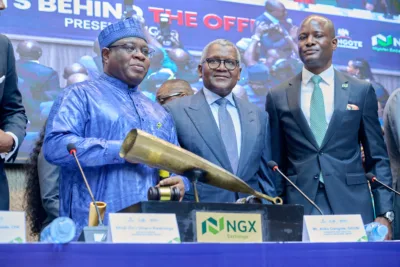


TMSG said the reserves have crossed the $50bn mark for the second time under the current administration, with the latest figure standing at $50.12bn.
“This is about $350m short of the $50.58bn mark set in January 2009, but seeing the manner in which the federal government grew the reserves in the last two years, we dare say it won’t be long before the Central Bank of Nigeria (CBN) announces a further increase,” the group stated.
According to the statement, the increase in reserves is linked to reforms in the foreign exchange market, improved oil production, stronger diaspora remittances, reduced fuel import demand, and efforts to attract foreign capital inflows.
“We are not surprised that the external reserves have once again breached the $50bn mark, and that is because of the manner in which the government has managed the economy,” it said.
TMSG added that reserves rose steadily over the past months, moving from $37.21bn in June 2025 to $39.36bn in July, $41.31bn in August, and $42.35bn in September, before reaching $45.50bn in December 2025.
It said the reserves further climbed to $46.69bn in January 2026 and $49.69bn in February before crossing $50bn in March, with a brief dip in April.
The group also cited Central Bank of Nigeria data showing a recent rebound from $48.98bn on May 22 to $50.11bn on June 5.