Trump’s approval ratings plummet: what that means for the US midterms
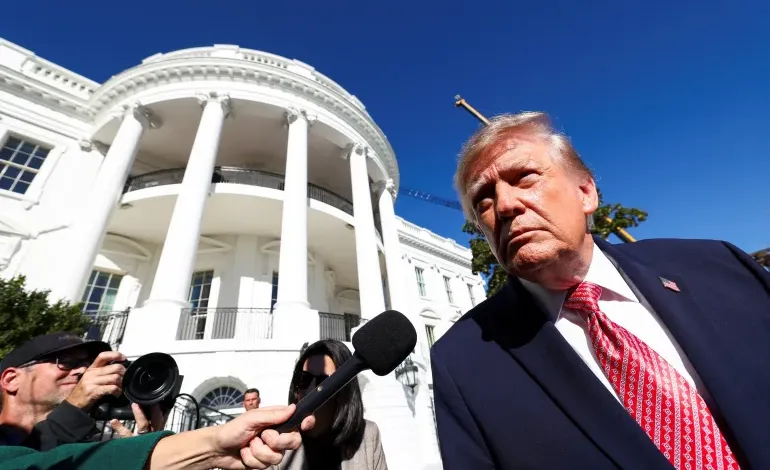
United States President Donald Trump’s approval ratings have fallen to a record low, a sign that Americans angry about rising living costs amid the deeply unpopular US-Israel war on Iran could punish his party at the upcoming midterm elections.
Most Americans are unhappy with Trump’s performance, according to a Reuters/Ipsos poll published on Monday, with more people saying they plan to vote for Democrats on November 3.
Sitting US presidents have traditionally seen a dip in approval ratings around the midterms, and that has often coincided with their parties losing seats in Congress.
With Trump’s ratings lower than any of his predecessors, experts say Democrats could reach their goal of flipping both the US House of Representatives and the Senate in the congressional vote.




All 435 districts in the House and 33 of the 100 Senate seats are up for election.
Republicans currently hold a slim majority of 218-214 seats in the House and are also leading in the Senate, with a 53-47 majority. However, Democrats are campaigning hard to seize majorities in both houses, a scenario that could prove a major headache for Trump.
Here’s what the latest polls might mean for these elections:
What do the latest polls show?
About 31 percent of Americans polled by Reuters/Ipsos said they were happy with Trump’s performance – the lowest-ever figure during Trump’s two terms as president. Two weeks earlier, the number stood at 32 percent.
When asked which party they would vote for if the midterms were held today, 47 percent chose Democrats, while 35 percent opted for Republicans. That represents a 12-point advantage for the Democrats, the widest ever in the current cycle, and is up from the seven-point lead two weeks ago.
The slide in support for Republicans came from the growing number of women choosing Democrats, with about half of those polled favouring the party. More voters – 40 percent – also said Democrats were better at managing the economy, compared with 33 percent who selected Republicans.
The poll surveyed 1,679 adults. It was a generic ballot measuring overall voter sentiment rather than providing a state-by-state breakdown, meaning the results could still differ from the eventual election outcome.
What is the history of presidential polling ahead of the midterms?
The president and the party in control of the White House usually face some backlash during the midterm elections.
Supporters of the party not holding the presidency are often more motivated to vote in the midterms than their counterparts, according to the University of Virginia’s Center for Politics.
The think tank found that in 12 of the 20 midterm elections held since 1946, the sitting president’s approval ratings worsened between July and November, the months leading up to the elections. Approval ratings improved in seven instances, while they remained unchanged in one case, during the 2006 midterms under President George W. Bush.
What has that pattern meant for midterm results?
Although a decline in presidential approval ratings is common, a more favourable public view of the president often correlates with the governing party losing fewer seats during the midterms, according to researchers.
When presidential approval ratings are particularly low, the party in power often suffers greater losses.
In 18 of the 20 midterm elections held since 1946, the governing party lost seats in the House of Representatives, according to data from The American Presidency Project at the University of California, Santa Barbara.
For example, Americans’ favourable view of President George H. W. Bush, whose approval rating stood at 75 percent during the 1990 midterms, helped Republicans limit their losses to eight seats across the two houses of Congress.
Research analysing the university’s data found that when presidents have approval ratings below 50 percent, their parties are more likely to perform poorly in midterm elections.
In 1994, when President Bill Clinton’s approval rating stood at 46 percent during his first midterm elections, Democrats lost 52 seats in Congress.
However, when Clinton’s approval rating rose to 66 percent by the 1998 midterms, Democrats lost only five seats.
What does that mean for Trump?
Researchers say Trump’s falling approval ratings amid the US-Israel war on Iran are likely to hurt Republicans in the midterm elections.
With Trump’s ratings described as the lowest of any president in US history in the University of California, Santa Barbara’s aggregate data, researchers say Republicans face a difficult task in retaining their narrow congressional majorities.
The question, however, remains how badly the party could be affected by Trump’s policies.
Republicans may still have some hope. According to the Center for Politics, presidential approval ratings recorded in exit polls during the past five midterm elections have generally been slightly higher than figures from pre-election polls, partly because exit polls survey people who have actually voted.
This suggests that the outcome will depend partly on how effectively the parties mobilise their supporters to cast their ballots.
How many seats could the Democrats take?
According to NBC News, which conducts its own polling and provides state-by-state breakdowns, Senate Democrats are likely to win North Carolina and Maine from Republicans. Alaska, Iowa and Texas are also considered competitive states.
In the House of Representatives, NBC predicts possible Republican-to-Democratic flips in 15 districts. It rates four districts currently held by Republicans and three held by Democrats as toss-ups.
If Democrats win all those close contests without losing any of their current seats, they could gain 22 seats in the House of Representatives and five in the Senate.
Credit: Al Jazeera