Trump’s Russia sanctions waiver eases India’s energy woes, lifts trade deal chances
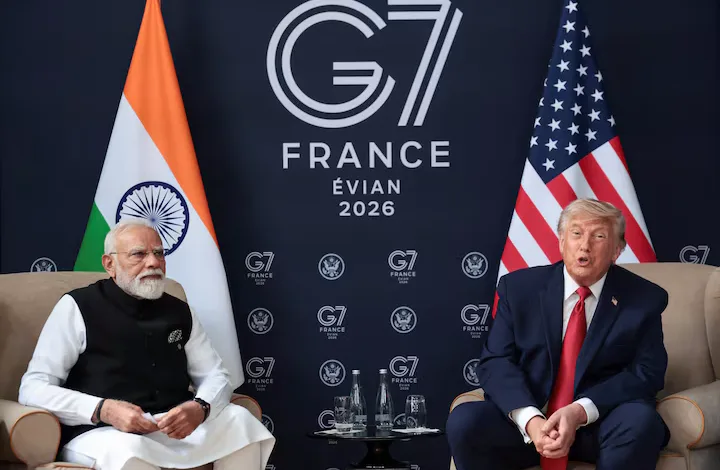
US President Donald Trump’s decision to waive sanctions related to Russian oil and gas eases energy concerns for India, one of the world’s largest importers of Russian oil, and could improve the chances of New Delhi and Washington reaching a trade deal.
An executive order issued by Trump on Friday waived key Russia-related US sanctions and tariffs, including duties on Russian goods and penalties for countries purchasing its oil and gas. The measures had been scheduled to take effect this week under legislation known as the Graham Act.
Trump said the waiver was in the national interest of the United States.
The legislation would have exposed Indian goods to tariffs of up to 100 per cent, as India is among the five largest importers of Russian oil, posing a significant challenge to the Asian country’s energy policy.

Prime Minister Narendra Modi’s administration warned last month that the new tariff measures against Russia could damage bilateral relations, adding to existing diplomatic tensions and uncertainty over trade.
Rubio says trade deal ‘very close’
US Secretary of State Marco Rubio, who is scheduled to arrive in India on Tuesday, said ongoing trade negotiations with New Delhi were among the factors considered in Trump’s decision.
“We are trying to finalise a trade deal with India right now and we are very close to doing that. So, that’s one of the things we take into consideration when the President makes a decision about national security waivers,” Rubio told reporters in Uzbekistan on Monday.
India is the world’s third-largest oil importer and consumer. Russia accounted for nearly half of India’s oil imports earlier this year, although purchases declined in August and have continued to fall.
A sustained reduction in Russian oil imports to avoid new US tariffs could increase fuel prices ahead of regional elections in India or put additional pressure on government finances.
“For some countries it is very difficult to acquire energy from alternative sources,” Rubio said.
Rubio’s two-day visit to India will include a meeting with Foreign Minister S. Jaishankar on Tuesday to discuss bilateral cooperation, including energy, trade, investment and defence.
A trade agreement between India and the United States has been under negotiation for months but has yet to be finalised, partly because of complications arising from the threat of additional tariffs.
Michael Kugelman, a senior fellow at the Atlantic Council in Washington, said the suspension of the sanctions measures could help the two countries overcome the remaining obstacles to an agreement.
“The decision to pause on Russia sanctions could be the confidence-building measure that gives the two sides the negotiating space to get over the final hump,” Kugelman said.
The trade deal has also been delayed because Washington is yet to complete a Section 301 trade investigation into several countries, including India, over alleged excess manufacturing capacity. Section 301 is a US trade law that permits retaliatory measures against unfair foreign trade practices.
Earlier this month, India joined a US-led initiative aimed at addressing structural overcapacity, alongside several other countries.
Indian trade officials said last week that an agreement with the United States was nearly complete. They also expressed optimism that India would secure a tariff rate lower than those imposed on competing countries, a longstanding expectation of New Delhi.
Kugelman said the waiver provided an important opportunity to improve relations at a critical moment, following renewed tensions over the sanctions legislation and new US visa policies.
He said those developments had put bilateral relations “in danger of falling into even harder times.”
Credit: Reuters