How Houthis are helping Iran turn Saudi Arabia into a pressure point
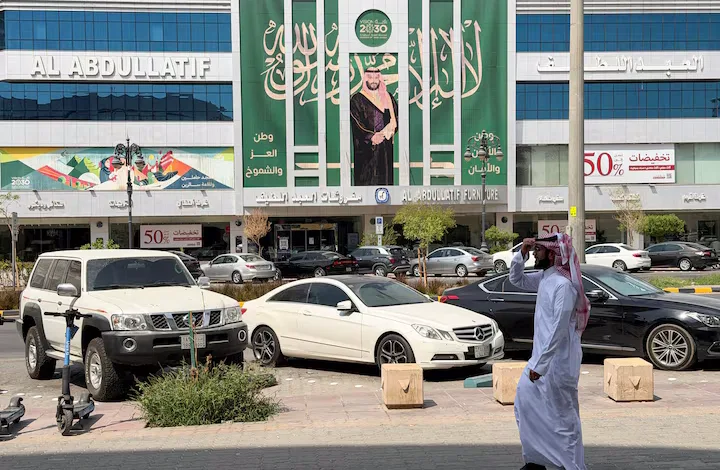
Houthi attacks on Saudi Arabia are aimed at more than the conflict in Yemen, as the group seeks to pressure Saudi Crown Prince Mohammed bin Salman to meet its demands and persuade United States President Donald Trump to ease the American blockade on Iran, according to Saudi, Iranian and regional sources.
The attacks have targeted infrastructure and disrupted investment events central to Saudi Arabia’s economic ambitions. The strategy reflects a calculation by Iran and the Houthis that Saudi Arabia’s prosperity, investment plans and vulnerability to disruption make it a pressure point in a confrontation stretching from the Strait of Hormuz to Bab el-Mandeb in the Red Sea.
Iran, facing mounting economic and military pressure following the war launched by the US and Israel on February 28, is seeking to increase the cost of Washington’s strategy by targeting its regional partners, said Michael Knights of strategic advisory firm Horizon Engage.
“The Iranians are in a chokehold,” Knights said, adding that Tehran and the Houthis were targeting Saudi Arabia’s economic vulnerabilities and desire for stability because they could not directly force Washington to change course.

The Houthis also have their own demands, including an end to Saudi military operations and restrictions on Yemeni ports and airports, regular flights to Iran, restored salary payments, war compensation and an end to Riyadh’s support for Yemen’s internationally recognised government. The demands, according to sources familiar with Saudi thinking, would strengthen Houthi control over much of Yemen.
A senior Iranian official said the attacks formed part of a broader strategy by Iran and its allies to reshape the regional balance of power by targeting energy infrastructure and key shipping routes. The official said Riyadh could not rely on US protection and should pursue negotiations, adding that the attacks would continue unless Saudi restrictions were lifted. Houthi spokesperson Mohammed Abdulsalam, however, denied that the group was acting at Iran’s behest, saying its demands concerned humanitarian issues in Yemen.
Flagship conferences disrupted
Saudi Arabia has faced an escalating wave of Houthi attacks over the past week, including deadly strikes on Riyadh’s King Khalid International Airport and an attack on Saudi Aramco, the world’s largest oil exporter, which sparked a fire that spread across several floors.
The attacks disrupted Riyadh’s flagship oil conference, prompting senior oil executives to withdraw, and forced organisers of the Future Investment Initiative, an annual global investment forum, to offer remote participation.
The Houthis have previously struck deep inside Saudi Arabia. In 2019, attacks on Aramco facilities temporarily disrupted about five per cent of global oil supply. The strikes followed Saudi Arabia’s intervention in Yemen in 2015 after the Houthis seized the capital, Sanaa. The conflict eventually reached a bloody stalemate before a ceasefire in 2022.
However, Saudi leaders now view military pressure as their only viable option, said Abdulaziz Sager, chairman of the Saudi-based Gulf Research Center. “They reached a point of NO negotiations,” he said. “They have no other choice except military action.”
Fawaz Gerges, a Middle East analyst at the London School of Economics, said the Houthis increasingly believed they were negotiating from a position of strength and wanted recognition of their authority in Sanaa alongside an easing of restrictions on Yemen. “What the Houthis are asking now is a victor’s peace,” he said.
Saudis have more to lose
The United States has shown little appetite for another sustained military campaign against the Houthis since bombing them last year over attacks on Red Sea shipping and subsequently agreeing to a ceasefire, sources familiar with Saudi thinking said. Washington’s reluctance has left Riyadh facing a conflict in which military pressure alone may not deliver a decisive outcome.
Sources told Reuters last month that Mohammed bin Salman had asked Trump for assistance in fighting the Houthis at the start of the latest campaign, but the US president did not agree to American strikes. Washington instead offered targeting assistance and intelligence-sharing. Trump later said he was considering possible action against the Houthis but appeared to defer any response until after the US midterm elections.
With drones and missiles exposing vulnerabilities in Saudi defences, analysts warned that the conflict could develop into a war of attrition in which the Houthis believe time and geography favour them. Former US negotiator Aaron David Miller said the group’s advantage lay in its position near the Bab el-Mandeb chokepoint and the disparity in what both sides stood to lose.
“Saudi infrastructure is much more valuable than Houthi infrastructure,” Miller said. “They have so much less to lose than the Saudis.”
Yemen analyst Farea al-Muslimi said the campaign against Riyadh was an attempt by the Houthis to assert regional dominance, with the risk of triggering a much wider conflict across the Arabian Peninsula.
He said the crisis had been fuelled by the collapse of a 2023 Saudi-backed peace roadmap that offered the Houthis a path towards political legitimacy and reconstruction funding. Under the plan, Riyadh was expected to help fund public sector salaries and reconstruction, but the Red Sea conflict derailed the process as the Houthis strengthened their alignment with Iran.
“We’re heading towards the worst outcome imaginable,” al-Muslimi said. “A war worse than 2015. This time it will be bloodier, and Saudi Arabia will enter it with fewer allies.”
He added that a successful campaign against the Houthis would require unity among Gulf countries, particularly Saudi Arabia and the United Arab Emirates.
“The Houthis are not a threat to Saudi Arabia alone,” he said. “They threaten the entire Gulf and the wider region. This is not simply a Saudi war. It is a Gulf war.”
Credit: Reuters