Hormuz could be ‘redundant’ in five years, replaced by new routes, HSBC CEO says
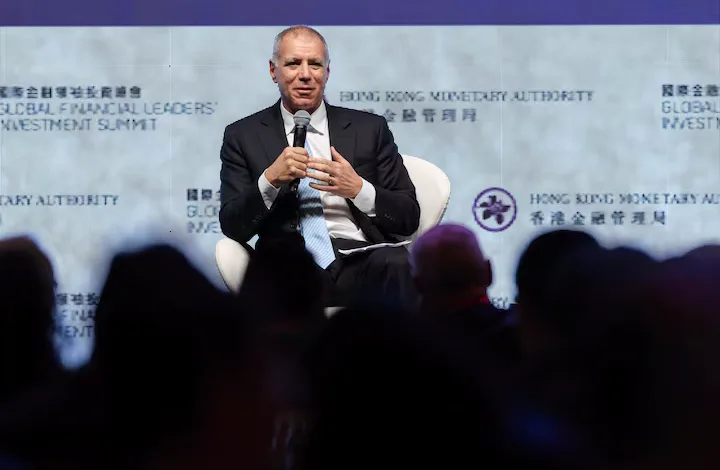
Investment in alternative logistics routes in the Gulf to mitigate the impact of the Iran war could make the Strait of Hormuz “redundant” in the next five years, HSBC Group Chief Executive Georges Elhedery said on Tuesday.
The conflict has highlighted the world’s heavy reliance on the strategic waterway, through which a fifth of global oil and liquefied natural gas trade previously passed.
The crisis is prompting Gulf nations to channel resources towards developing energy pipelines connecting production areas to ports, investments that Elhedery said would help the region withstand the fallout from the conflict.
“We do see this region being able to recover and then continue growing. It will mean a lot of investment,” the bank CEO said during the HSBC Future Forum event in Dubai.




“Of course, we do wish and hope to see a resolution to the conflict … But Hormuz, probably in five years’ time, may become redundant,” he added.
The Middle East, North Africa and Turkey are offering $872 billion in individual project packages, forming part of a wider $1.4 trillion pipeline of planned infrastructure projects yet to be awarded, HSBC said in a report on Monday, citing data from Dubai-based construction industry intelligence platform MEED.
A recent HSBC survey of more than 1,600 business leaders and about 820 global institutional investors found that respondents continued to regard the Gulf as an attractive investment destination.
However, after recording growth of 3.3 per cent in 2025, the World Bank last week forecast that the Middle East, North Africa and Pakistan region would experience a 1.3 per cent economic contraction this year due to the war, followed by a strong but uneven recovery in 2027.
Elhedery was among global financiers expected to attend Saudi Arabia’s flagship investment conference, which was scheduled for next week but postponed to 2027 on Monday following deadly strikes in Riyadh by Yemen’s Iran-backed Houthis.
Credit: Reuters