The economics of illusion; and the price Nigeria paid for believing it — by Olabode Opeseitan
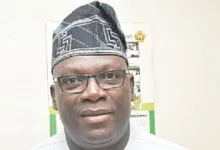
Let us settle one incontrovertible truth. Nigeria’s crisis did not begin with Tinubu, nor with subsidy removal, nor with currency reform. It began the moment we mistook neoliberalism for our problem and subsidy for our salvation. The tragedy is that many intellectuals still cling to this illusion. Among them is Prince Justice Faloye, the National Publicity Secretary of the Afenifere faction led by Oba Oladipo Olaitan. An advocate of Social Democracy, Prince Faloye is propagating a system that is not merely wrong; it is extremely dangerous because it reinforces a myth that has already wrecked the economy. This rebuttal is therefore not for him alone but for the millions who still do not understand what subsidy became, why Nigeria could no longer fund it, and how the reforms by President Bola Tinubu prevented a sovereign collapse.
What follows is a compact, unflinching presentation of what triggered Nigeria’s devastating fuel subsidy crisis, and how to avoid repeating these grievous errors. It is written for clarity, not comfort.
- What Subsidy Actually Is, And Why Societies Use It
Subsidy is not evil. It is simply a government absorbing a cost on behalf of citizens. Nations subsidise agriculture, education, housing, transport and energy. But they do so from surplus. The United States subsidises farmers because its tax to GDP ratio is 27%. Sweden funds universal healthcare because its tax to GDP ratio is 42%. These countries defend their currencies, maintain strong reserves and run productive economies. A subsidy is a tool, but only when the treasury can carry the weight. When a poor country subsidises consumption with borrowed money, it is not welfare; it is fiscal suicide. - Nigeria’s Fuel Subsidy Was Never a Social Programme, It Was a Fiscal Sinkhole
Nigeria’s subsidy was not designed to help the poor. It became a mechanism that consumed the entire oil revenue base. By 2022, subsidy payments swallowed 100% of net oil earnings. NNPC remitted zero to the federation. Debt servicing consumed 90 to 97% of federal revenue. The government was printing money through Ways and Means, devaluing the naira and fuelling inflation. Oil production had collapsed to barely 1 mbpd, yet subsidy calculations were still based on fantasy volumes. This was not Keynesian economics. It was a Ponzi scheme, borrowing today to fund yesterday. - The Twin Reforms Were Not Ideological, They Were Emergency Surgery
Tinubu did not remove subsidy because he is a neoliberal. He removed it because the treasury was empty. Nigeria could not borrow, could not pay its bills, could not fund salaries, could not defend the naira, could not maintain reserves. Floating the currency was not dogma; it was necessity. You cannot run a fixed exchange rate when you do not have the dollars to defend it. You cannot subsidise petrol when you do not have the revenue to pay for it. The alternative was sovereign default, the kind that forces IMF intervention, freezes accounts and collapses banks. - Why the Reforms Prevented Total Economic Collapse
The reforms stopped the bleeding. NNPC Limited began remitting again. FX distortions reduced. Smuggling declined because arbitrage disappeared. The government regained fiscal space to pay salaries, fund capital projects and stabilise the macro framework. It is not comfort, but it is survival. A country cannot grow when 100% of its revenue is swallowed by subsidy and debt. Nigeria was weeks away from that cliff. The reforms pulled it back. - The Analogy Nigerians Must Understand
Imagine a household that earns ₦100,000 monthly but spends ₦120,000 on fuel alone. It borrows ₦20,000 every month just to keep the lights on. It has no savings, no investments, and no emergency fund. Its roof leaks, its children are out of school, and its generator is broken. Yet, it insists fuel must remain cheap. That household is Nigeria. The cheap fuel was the subsidy. The monthly borrowing was the national debt. The leaking roof was our decaying infrastructure. The out-of-school children were our neglected education system. The broken generator was our failing healthcare. No household survives that way. No nation does either. - Europe and America Subsidise, But They Also Balance
Faloye cites Western subsidies but ignores the balancing mechanisms:
- High tax to GDP ratios
- Strong currency defence
- Productive manufacturing bases
- Efficient public institutions
- Transparent fiscal systems
Nigeria had none of these. Our tax to GDP ratio was 9.5% in 2025 now projected to rise to 10.2% in 2026 after tax reforms, and further to 12.5% in 2027. Our currency was artificially defended. Our manufacturing base collapsed decades ago. Our institutions were weak. You cannot copy Sweden’s welfare model with Somalia’s revenue profile.
- What Nigeria Was Doing Wrong, And What It Is Doing Right Now
Nigeria’s mistake was simple. We subsidised consumption instead of production. We subsidised petrol instead of refineries. We subsidised smuggling instead of mass transit. We subsidised importation instead of manufacturing. We defended the naira artificially instead of building reserves. Today, the correction is painful but necessary.
- FX is being priced by market reality.
- NNPC is remitting again.
- Fiscal leakages are shrinking.
- States are receiving higher allocations.
- Investment signals are clearer.
This is not perfection. But it is progress.
- Areas of Improvement, The Work Still Ahead
Nigeria must now do what successful nations do.
- Expand tax revenue without punishing the poor.
- Expand oil production and build competitive refining capacity to secure national energy independence and eliminate market monopolies.
- Invest in mass transit to reduce petrol consumption.
- Subsidise production, CNG, agriculture and manufacturing.
- Strengthen institutions to prevent leakages.
- Protect the vulnerable through targeted welfare.
Reform is not an event. It is a journey. The first step was cutting out the fiscal cancer; the next is healing and restoring the body to full health.
- The Counter Factual: Why Faloye’s Argument Collapses
Faloye’s thesis rests on a false premise: that subsidy is inherently pro poor. It was not. It was pro smuggler, pro cartel, pro corruption. He argues that subsidy has multiplier effects. It did, for Niger Republic, Benin Republic and black market operators. He claims neoliberalism is the enemy. It is not. The enemy is fiscal irresponsibility. He says subsidy removal caused poverty. No. Subsidy masked poverty while deepening it. His argument is emotionally appealing but economically hollow. - The Hard Truth Nigerians Must Finally Accept
Nigeria did not become poor because subsidy was removed. Nigeria became poor because subsidy existed. It drained revenue, destroyed institutions, crippled states, collapsed the naira and forced the country into unsustainable borrowing. The reforms are not perfect, but they are the first honest attempt to confront reality in decades. If Nigeria returns to subsidy, it will return to insolvency. If Nigeria embraces production based welfare, it will rise. - The Facts Do Not Support Faloye’s Apocalypse. They Support Stabilisation and the Beginning of Recovery
Faloye paints a picture of endless decline, but the data tells a different story. Nigeria has stopped the free fall. Real GDP grew by 4.43% in Q2 2026, outpacing population growth for the first time in years. Productivity is rising across key sectors, with agriculture strengthening, oil production recovering to 1.72 million barrels per day, and a significant expansion in utility revenues. Driven by these structural reforms, Nigeria climbed four places to 8th on Bloomberg’s 2026 Investment Risk O Meter, the highest improvement among 19 African economies. Currency volatility has eased, giving businesses predictability. Most importantly, the World Bank’s October 2026 Nigeria Development Update confirms that poverty has stabilised for the first time since 2019, with a projected decline beginning in 2027 to 2028 as growth continues to outpace population expansion. These are not signs of a nation sinking deeper; they are signs of a nation that has finally found the floor and is preparing to rise.
The debate is not between neoliberalism and social democracy. It is between fantasy and economic reality. Nigeria cannot subsidise fuel, defend the naira, borrow endlessly, maintain low taxes, import everything and still expect prosperity. The laws of economics do not bend for sentiment. Faloye’s argument is a comforting illusion. Nigeria’s reality is harsher. The reforms were not ideology; they were survival. And survival, not the illusion peddled by Faloye and politicians like Atiku Abubakar and Mr. Peter Obi, is the first duty of any nation.