Kaduna: The road to continuity and prosperity — By Stanley Nkwocha
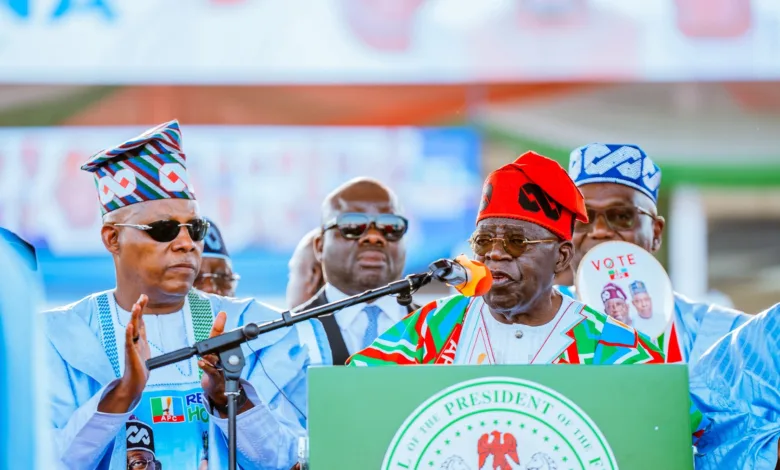
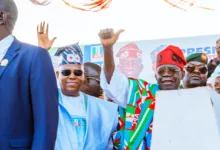
History does not merely look at Kaduna; it waits for it. On Saturday, October 24, 2026, this legendary crucible of Nigerian politics became the epicentre of a looming national showdown. Before a roaring sea of party faithful, President Bola Ahmed Tinubu, flanked by Vice President Kashim Shettima, officially drew the battle lines for the 2027 general elections.
Igniting the All Progressives Congress (APC) presidential campaign on the very soil where empires and republics have been forged, the Tinubu administration sounded a definitive battle cry: the march to tomorrow has officially begun.
The campaign flag-off became an epicentre of raw political parley as governors, ministers, and lawmakers converged with party faithful from every corner of the federation. In that charged political atmosphere, the sheer scale of the APC’s machinery was undeniable. Fuelled by a roaring base, the administration sent an unmistakable message to the nation: as the next electoral storm gathers, the governing party is mobilised, locked in, and ready to consolidate its democratic gains for the future.
Beyond the crowds, colours and excitement, Kaduna offered an opportunity to demonstrate how the Tinubu administration is connecting difficult but necessary economic reforms with infrastructure development, improved public services and the long-term prosperity of Nigerians.
The Renewed Hope Agenda has entered a phase in which the foundations laid through reform are increasingly being complemented by investments and programmes with direct implications for citizens’ livelihoods. That is the work of national development, and it is the responsibility to which the administration has committed itself.
One of the most significant highlights of the presidential campaign flag-off was President Tinubu’s symbolic inauguration of the completed 81-kilometre section of the Abuja–Kaduna–Zaria–Kano Dual Carriageway. The project marks an important milestone in the administration’s commitment to improving Nigeria’s transport infrastructure and strengthening economic connectivity.
For decades, the Abuja–Kaduna corridor has served as a major route connecting the Federal Capital Territory with commercial and agricultural centres across Northern Nigeria. Farmers depend on the corridor to transport produce to markets. Manufacturers rely on it to move raw materials and finished goods, while traders, transport operators and other businesses require efficient road networks to sustain their activities.
The President’s decision to inaugurate the project during the campaign flag-off brought infrastructure delivery into the national political conversation. It demonstrated the place of transport connectivity in the administration’s strategy for building a more productive and competitive economy.
President Tinubu assumed office in May 2023 amid serious economic challenges, including fiscal pressures, foreign exchange distortions, infrastructure deficits, and longstanding structural weaknesses. His administration responded with reforms designed to address these difficulties and establish a more sustainable foundation for growth. The removal of petrol subsidies and changes to the foreign exchange system were among the most consequential decisions.
While these sweeping policies demanded painful sacrifices from families and enterprises alike, the administration remains unyieldingly committed to a singular mission: ensuring the hard-won victories of reform directly transform Nigerian lives with revitalised services, soaring investment, and unprecedented economic opportunity. Today, the latest economic indicators offer undeniable proof—the tide is turning, and progress is real.
Nigeria’s economy recorded growth of 4.43 per cent in the second quarter of 2026, compared with 4.23 per cent in the corresponding period of 2025. The Federal Ministry of Finance also reported headline inflation of 15.39 per cent in August 2026, while external reserves reached approximately $54.7 billion in September. These developments strengthen the conditions under which businesses can invest, governments can plan, and citizens can pursue opportunities with greater confidence.
Progress is also taking shape through interventions across critical sectors. The Nigerian Education Loan Fund (NELFUND) is expanding access to tertiary education financing, while the Nigerian Consumer Credit Corporation (CREDICORP) is working to improve access to consumer credit.
The Presidential Initiative on Compressed Natural Gas is supporting the transition to alternative transportation fuels, with the potential to reduce operating costs for transport providers and commuters. In healthcare, the administration is pursuing the revitalisation of primary healthcare facilities, improved financing and expanded access to essential services. Agricultural interventions, investments in food production and ongoing road projects, including the Lagos–Calabar Coastal Highway and Sokoto–Badagry Superhighway, form part of a broader effort to strengthen domestic productivity, connect markets and create economic opportunities across the federation.
The task ahead is to consolidate these gains while addressing the cost-of-living pressures that continue to affect many families. This explains the emphasis the Renewed Hope Agenda places on infrastructure, agriculture, healthcare, education, transportation and other sectors with direct consequences for household welfare.
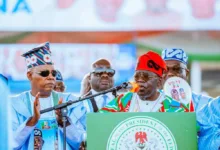
The Ranchers Bees Stadium in Kaduna was a boiling cauldron in which these Renewed Hope policies were explained, the air thick with the dust of a thousand stomping feet and the deafening roar of the APC faithful. President Tinubu, launching his bid for a second term, waited for the thunderous cheers to subside. When he spoke, he did not offer a defensive shield. He drew a sword.
“I hear my opponents talking about hunger and poverty,” the President’s voice cut through the stadium, sharp and unyielding. He leaned into the microphone, pausing just long enough to let the weight of the accusation hang over the crowd.
“Who created it?” He didn’t wait for the opposition to answer. He pointed a finger straight into the political ether, directly at the legacy of his rivals. “They did!” he thundered. “They created the hunger. They created the poverty. And we are trying to eradicate it!”
The crowd erupted. Behind him, the political elite watched the raw theatre of a President aggressively shifting the battleground of the 2027 election. He implored the sea of supporters not to be swayed by the sudden empathy of past leaders, specifically targeting those who now weaponise the cost-of-living crisis against his administration.
“Don’t let them lie to you,” he declared, drawing a definitive line in the sand over his economic overhauls. “What is past is in the past. Fuel subsidy is in our past: no more corruption, no more lies, no more smuggling!” It was a deliberate, high-stakes gamble. Facing severe public anxiety over inflation, President Tinubu chose not to soften his rhetoric, but to weaponise the narrative, challenging his critics to look in the mirror before speaking of the nation’s pain.
His remarks brought into focus the structural problems inherited by successive administrations and the responsibility of leadership to confront them. The Tinubu administration has chosen reforms intended to address the underlying conditions that have constrained economic growth. The President’s message in Kaduna was that these efforts must be sustained to achieve the broader objectives of economic stability, productive investment and poverty reduction.
Vice President Kashim Shettima reinforced the political and historical significance of the gathering by recalling President Tinubu’s longstanding relationships with leaders from Northern Nigeria. In his speech, he highlighted the President’s support for northern presidential candidates across different electoral periods, citing former President Muhammadu Buhari, former Vice President Atiku Abubakar and Mallam Nuhu Ribadu as examples of political relationships built over time.
These dynamics underscore a fundamental truth: a nation defined by its diversity requires constant, active engagement across regional and religious divides. Unity demands cooperation, mutual respect, and deliberate political understanding. Throughout his journey, President Tinubu has consistently forged strategic alliances far beyond his immediate constituency—proving that national objectives are best achieved by building common ground.
The Vice President also acknowledged Kaduna State’s contribution to the APC’s political development and commended its people for their support.
Governance thrives on these connections. Nigeria cannot develop without regional cooperation and political institutions focused on a shared national agenda. In this federation, the prosperity of one region is inextricably linked to the opportunities of another.
This core understanding anchored the remarks of Kaduna State Governor Senator Uba Sani, who lauded President Tinubu for supporting states as they execute critical development agendas.
Governor Sani reported progress in reopening schools and primary healthcare centres previously affected by insecurity. He also highlighted investments in transport infrastructure and other development initiatives. Such interventions are especially important in communities where insecurity has disrupted education, healthcare and economic activity. Restoring these services helps families regain the confidence to rebuild their lives and plan for the future.
Governor Uba Sani deserves commendation for his remarkable sense of collectivism and inclusive leadership, which many observers credit for the peaceful atmosphere that characterised the Kaduna campaign flag-off. By building bridges across political, religious and ethnic divides, the governor has demonstrated that political differences need not undermine social harmony.
At its core, the promise of Renewed Hope is more than a vision; it is a strategic blueprint. Real hope demands both the fierce determination to pursue meaningful goals and the clarity to build credible pathways toward them. When people can trace a direct line from their current sacrifices to a better tomorrow, uncertainty fades, and confidence takes its place.
National development follows a similar principle. Ambition must be supported by clear priorities, functioning institutions and sustained implementation. President Tinubu’s reform programme seeks to address structural conditions that have constrained Nigeria’s economic potential, while investments in roads, education, healthcare, agriculture and other productive sectors provide practical pathways towards achieving the administration’s development objectives.
These efforts are deeply interconnected. Infrastructure fuels commerce, education empowers the workforce, healthcare drives productivity, and investment unlocks enterprise. Together, they create a powerful compounding effect—building a resilient economy capable of sustaining higher living standards and truly inclusive growth.
The Kaduna presidential campaign flag-off marks a pivotal milestone in Nigeria’s democratic journey. Beyond the political energy of a single Saturday, the true significance of this gathering lies in its vision for the future. It bridges the bold reforms already underway, the strategic investments being delivered, and the boundless opportunities being unlocked for all Nigerians.
Development demands patience, but patience requires proof. Citizens will only endure today’s hardships if they can clearly see tomorrow’s opportunities. This makes policy continuity vital. True progress relies on the unwavering, long-term execution of major reforms and infrastructure projects.
In the future, the Renewed Hope Agenda will be assessed by the extent to which its reforms and investments improve livelihoods, strengthen institutions and expand opportunities for Nigerians. The administration’s responsibility is to continue converting economic stability into productive growth and ensuring that the benefits reach communities across the federation.
As President Tinubu leads the ongoing work of national development, with the unalloyed support of his deputy, Vice President Shettima, Nigeria’s ultimate ambition remains clear. The administration envisions a nation where true economic progress is reflected in the vast opportunities open to the people, the enduring strength of institutions, and the shared confidence of citizens looking forward to a brighter tomorrow.
- Nkwocha is Senior Special Assistant to the President on Media & Communications (Office of the Vice President).