Nigeria’s water crisis stems from poor governance, not scarcity — Ondo don
By Boye Oyeyemi
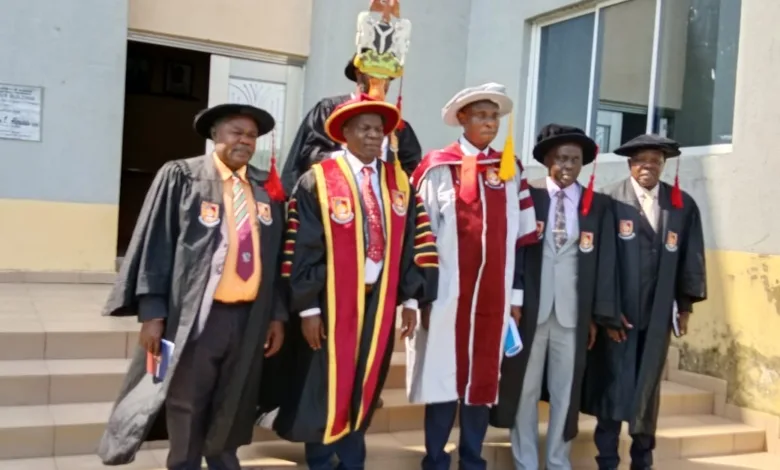
A professor at the Olusegun Agagu University of Science and Technology (OAUSTECH), Okitipupa, Ondo State, Isaac Oladejo Olaniyan, has blamed poor governance and mismanagement for Nigeria’s persistent water crisis, insisting that the country has sufficient water resources to meet its needs.
Olaniyan made this submission while delivering the university’s 15th inaugural lecture, titled, “Water Resources: Navigating the Paradox of Availability, Deficit and Potential Maximization Through Governance”.
He lamented that despite the abundance of rivers, rainfall and underground water across the country, millions of Nigerians still struggle to access clean and safe water, forcing many households to depend on water vendors, private boreholes and distant water sources.



According to the don, the situation is largely driven by corruption, poor infrastructure, inadequate maintenance, weak policies, uneven distribution and climate change, describing Nigeria’s water deficit as an institutional, technical and financial problem rather than a shortage of natural resources.
To illustrate the country’s water potential, Olaniyan disclosed that Nigeria has an estimated 279.2 billion cubic metres of renewable surface water annually, comprising 214 billion cubic metres from rainfall and about 65 billion cubic metres from neighbouring countries.
To address the crisis, he urged the government to strengthen the 12 River Basin Development Authorities, improve water infrastructure, establish a national water data system and enforce effective groundwater management.
He also called for increased investment in dams, irrigation facilities, urban water networks and wastewater recycling. In addition, he advocated compulsory climate risk assessments for new water projects and improved manpower development in the water sector.
The Vice-Chancellor of the university, Prof. Temi Ologunorisa, commended Olaniyan for his research, noting that his findings had exposed weaknesses in the country’s water management institutions and policies. He urged the Federal Ministry of Water Resources to adopt the recommendations to improve access to potable water for present and future generations.