The silent revolution Nigerians missed — by Olabode Opeseitan
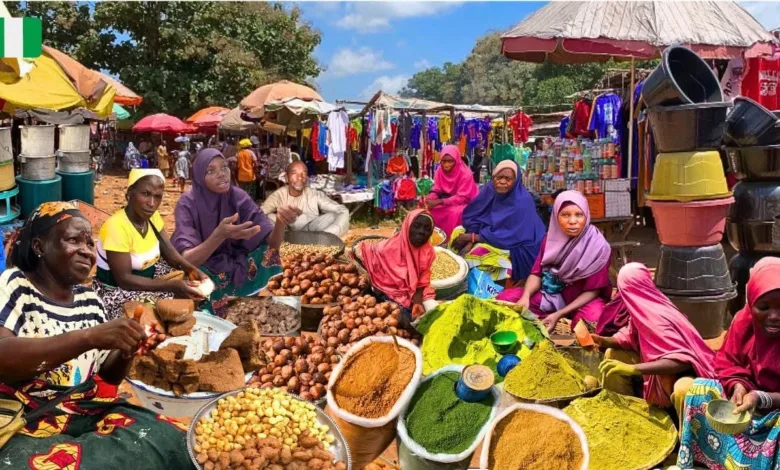
There is a woman in Kura, a farming community on the outskirts of Abuja, who used to travel a long distance simply to receive her own customers. Not to meet them. Not to deliver goods. Just to download their orders. To participate in the economy, she first had to leave it. In a narrative by Bosun Tijani, Nigeria’s Minister of Communications, Innovation and Digital Economy, that small inconvenience is actually a map of a larger national challenge: millions of Nigerians remain disconnected from the networks that increasingly determine who prospers and who gets left behind. Most of those people live in rural communities that have been overlooked by Nigeria’s telecommunications revolution, where investment decisions have largely been driven by commercial returns.
For decades, infrastructure in Nigeria has been imagined in concrete and steel: highways, bridges, airports and power plants. The Tinubu administration is trying to expand that definition. Its wager is that in the twenty-first century, digital infrastructure belongs in the same category. Fibre optics, data systems, artificial intelligence and connectivity are not luxuries layered atop development. They are becoming development itself.
What many Nigerians may have missed is that one of the country’s most consequential infrastructure revolutions is already underway, unfolding not in concrete and steel, but in fibre, data, code and telecommunications towers.
The centrepiece of that vision is Project Bridge, an ambitious plan to deploy 90,000 kilometres of fibre-optic cable across Nigeria. The scale is difficult to picture. Imagine a network of digital highways stretching through every state, local government and ward, carrying information the way roads carry people and goods. The goal is remarkably simple: where a Nigerian lives should no longer determine the quality of opportunity available to them.

Most people do not wake up wishing for more fibre-optic cable. They wake up wanting a bank transfer to go through, a doctor’s appointment to happen on time, an online class not to freeze, or a customer to find their business. That is the point. Digital infrastructure is valuable precisely because ordinary people rarely think about it. Like electricity or running water, its greatest achievement is becoming invisible while making everything else work.
Tijani often compares today’s connectivity challenge to water delivery. Much of Nigeria’s internet arrives like a sprinkler, inconsistent and scattered. Fibre, by contrast, functions like a hose: stronger, faster and far more reliable. To citizens, that technical difference translates into something human. A student in Katsina can access the same educational resources as a student in Lagos. A fashion entrepreneur in Aba can serve customers globally. A farmer can check prices before selling produce rather than accepting whatever middlemen offer.
The woman in Kura is precisely the kind of citizen these projects are designed to reach. While Project Bridge lays the fibre backbone, a sister initiative, the Nigeria Universal Communication Access Project (NUCAP), plans to deploy 3,700 telecommunications towers into underserved communities. One project carries the data. The other ensures people can actually receive the signal.
The administration’s communication strategy is notable because it does not frame technology as an abstract achievement. It consistently translates infrastructure into stories. More than 20 million Nigerians currently live in areas with limited or no connectivity. For them, connection is not about streaming videos faster. It is about entering the modern economy for the first time. It means being visible to markets, financial institutions, healthcare providers and government services.
Equally significant is how the project is being funded. Rather than relying entirely on public expenditure, the government is positioning itself as a catalyst. Under an NLNG-style model, the government holds a minority stake while private investors supply most of the capital. The signal this sends is important: development is no longer portrayed as a choice between state and market. It is being presented as a partnership where public leadership mobilises private confidence.
That confidence appears substantial. According to Tijani, the roughly $2 billion project has attracted strong interest from investors, with multiple companies competing to participate. Rollout is expected to commence in the fourth quarter of 2026, with completion targeted between 2028 and early 2029. For ordinary Nigerians, the significance is not merely financial. Markets vote with money. When investors commit capital to decades-long infrastructure, they are expressing confidence that tomorrow’s Nigeria will be larger, more connected and more productive than today’s.
The vision extends beyond internet access. The government’s efforts to modernise national addressing and postcode systems may sound mundane until one considers how much economic activity depends on knowing where people actually live. In many parts of Nigeria, finding a building can feel less like navigation than detective work. A functional digital addressing system means deliveries arrive faster, businesses operate more efficiently, emergency services respond more accurately, and citizens gain easier access to credit.
The same logic underpins Nigeria’s emerging artificial intelligence ambitions. Rather than treating AI as a foreign technology to be consumed, the administration wants Nigeria to help build it. Government-backed initiatives around local language models, AI research and computing infrastructure aim to ensure that future technologies understand Nigerian realities, Nigerian accents and Nigerian languages. That ambition is already taking shape. A foundation model known as N-ATLAS, developed by more than 120 Nigerian AI experts drawn from across the world, was officially launched in September 2025. For a country of Nigeria’s scale, participation matters. Nations that build foundational technologies shape the future; nations that merely use them inherit someone else’s design.
Perhaps the most interesting aspect of the Tinubu government’s communication is that it asks Nigerians to think differently about prosperity itself. Prosperity is not only the factory that opens today or the road completed tomorrow. It is also the invisible network that allows entirely new industries to emerge five years from now. Nobody celebrated electricity because of the wires. They celebrated it because of everything those wires made possible. Digital infrastructure works the same way.
The ultimate test of this vision will not be found in kilometres of fibre laid, towers erected, AI rankings achieved, or investment commitments announced. It will be found in the life of that woman in Kura and millions like her. The day she no longer has to leave her community just to receive an order, the day opportunity travels to her instead of the other way around, Nigeria will have crossed an important threshold. At that moment, technology ceases to be a government project and becomes what it was always meant to be: a bridge between potential and prosperity. That is where the real revolution lies. The Federal Government has partnered with the private sector to build a national communications backbone that could make digital access more available, connectivity more affordable, and prosperity more widely shared.