A night in Ikoyi: When racism met power in Lagos, by Kio Amachree
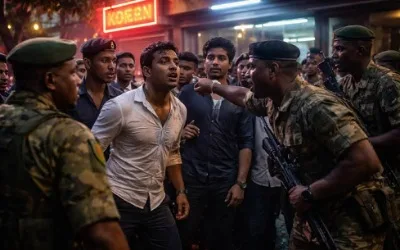
It happened in a Korean restaurant on Awolowo Road in Ikoyi, one of those Lagos nights where money, alcohol, and arrogance collide.
At the next table sat about ten young, rich Indian kids. Loud. Drunk. Rude to the Nigerian waiters. At first I ignored them. In Lagos you learn to mind your business. But as the bottles emptied, the boasting grew louder. They talked openly about how they “controlled Nigeria,” how money bought anything and anyone.
Then it happened.
One of them, angry that a waiter got his order wrong, shouted across the room: “You dumb nigger.”


In my Nigeria.
An Indian calling a Nigerian that word on Nigerian soil.
That was the moment restraint left me.
I stood up and told him, clearly and calmly at first, that he was not allowed to use that language in this country. That Nigeria was not the place for that kind of disrespect. He looked at me—drunk, smug, emboldened by numbers—and told me to go fuck myself.
The next seconds were pure chaos.
I lunged across the table and grabbed him by the throat. Ten against one. A Wild West bar fight in a Korean restaurant in Ikoyi. Chairs moved. Bottles smashed. Voices rose. And in a moment that still angers me to this day, the Nigerian waiters—trained by years of conditioning to protect foreigners at all costs—held me back. They grabbed my arms, restrained me, and allowed the men who had just used racist slurs to smash me in the face.
I left with a black eye and fury burning in my chest.
I drove straight to Dodan Barracks, then the seat of real power in Nigeria. I asked for a friend of mine, a senior military officer commanding the Guards. When he saw my face and heard what had happened, there was no debate. No committee. No lecture.
We went back.
This time with soldiers. Armed. Angry. Very angry.
Those young men spent the night in the guardroom. And I can say with absolute certainty that none of them has ever again used that word against a Nigerian. Power, in Nigeria, still understood certain languages clearly.
The aftermath was predictable.
The Indian community was furious. Headlines whispered. Phone calls flew. I was branded an “Indian hater,” which was nonsense. The irony was almost comedic: my late father, Chief Godfrey Kio JaJa Amachree, was at the time the largest shareholder in Chellarams, then one of the most powerful Indian-owned companies in Nigeria. I sat on the board representing him.
That was the part no one wanted to talk about.
This was never about Indians versus Nigerians. It was about power, arrogance, and the dangerous belief some foreigners develop in Africa—that money makes them untouchable and that Black dignity is optional.
It isn’t.
Nigeria has many problems. But one thing remains true: when lines are crossed too openly, too arrogantly, the country has ways of reminding people where they are. That night in Ikoyi was one of those reminders.
And it is a story worth telling, because too often racism in Africa is dismissed, internalized, or excused in the name of commerce and “foreign investment.” Respect is not negotiable. Not anywhere. Not ever.