Angela Merkel’s reputation has taken a big hit in Germany in recent weeks
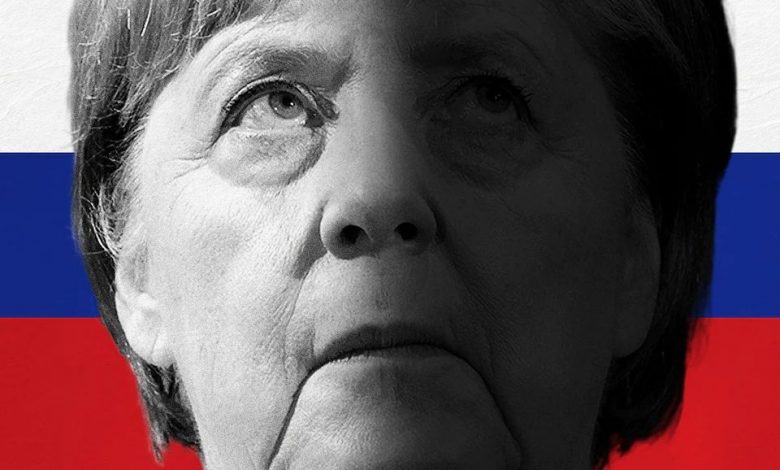
Former ministers who served under her have been lining up to repudiate her foreign policy since the invasion of Ukraine.
“In my lifetime, I would never have thought it possible to enter into such a crisis with Russia,” said Wolfgang Schäuble, Merkel’s former finance minister.
“I too thought that we should cooperate with Russia. Today, I know: I was wrong, we were all wrong.
“We face a bitter toll,” said German President Frank-Walter Steinmeier, who served as Merkel’s foreign minister.

“We clung to bridges that Russia no longer believed in and that our partners had warned us against,” he said. “I was wrong, but I wasn’t the only one.”
But the woman at the center of it all was defiant. Merkel issued a terse statement condemning the invasion and saying she “stands by her decision” to block Ukraine’s NATO membership in 2008.
Beyond that, she remained silent, letting Germany split her record just months after sending her into retirement with applause as one of its greatest chancellors.
“The toxic legacy of the Merkel era will occupy this country for a long time to come”, thundered Alexandre Marguier, editor of the conservative newspaper Cicero magazine and long-time critic of Mrs. Merkel.
Faced with the question of whether Ms Merkel has fatally misunderstood Vladimir Putin during her 16 years in power, CDU deputy Bundestag leader, Johann Wadephul said on Saturday it was time for the former chancellor to explain.
“I hope that Angela Merkel will soon find the time and the opportunity to comment in more depth on her policy towards Russia,” Wadephul told a local newspaper.
The war in Ukraine has not so much undone Mrs. Merkel’s legacy as it has cast an unflattering light on parts of it that most Germans preferred to ignore.
The achievements she was celebrated a few months ago remain intact. She took a struggling German economy and made it the powerhouse it is today.
She guided the European Union through the euro crisis and Brexit, and the bloc remains united.
But the war in Ukraine has thrust less successful areas of Merkel’s legacy into the spotlight.
The former chancellor was so popular that Olaf Scholz stood as a continuity candidate to succeed her last year despite being from a rival party. He even adopted her trademark pose.
But he tore up many of her key policies within days of Russia’s invasion of Ukraine.
Exit the Nord Stream 2 gas pipeline and an energy policy that has made Germany dependent on Russian gas.
Gone are the years of defense underfunding as he announced a 100bn euro (£83bn) military buying spree and promised Germany would finally meet NATO spending targets .
But no one has ever singled out Nord Stream or a German army forced to use brooms instead of guns among Ms Merkel’s accomplishments.
Germany’s allies began to shout hoarsely to warn of the dangers of an overreliance on Russian gas and a large economy that could not defend itself.
Criticism was not limited to foreign allies either. Mr. Schäuble, Mrs. Merkel’s former finance minister, was quick to point out that he had “never hidden my opposition to the Nord Stream”, and the German Greens opposed it.
But these were not issues that dominated German political conversation. On the contrary, they were things polite German society preferred not to talk about.
Ms Merkel has said nothing so far about military spending or Russian gas, and it seems likely that history will judge her policy flawed on both.
Tellingly, the only issue she has chosen to defend herself on is her decision to oppose Ukraine’s NATO membership in 2008.
The third tenet of her policy that has come under fire in recent weeks is her perceived appeasement of Putin.
On this point at least, one of her former ministers came to her defense. “If you say we misjudged the aggressiveness of this man, then I agree with you. But that doesn’t mean the policies of the past 20 years have been bad,” said Thomas de Maizière, who served as Ms Merkel’s interior minister.
“At the time, people said that Angela Merkel was too tough on Putin and Russia. Compared to France or Italy, for example, she was one of the toughest in the talks with Putin.
For most of her term, Ms. Merkel was the privileged interlocutor of the West with Putin. She was never afraid to confront the Russian leader, and on one occasion they negotiated all night on Ukraine.
But she had to play the hand that was dealt to her. In the wake of the annexation of Crimea in 2014, there was condemnation from the West, but little appetite for a real confrontation with Russia.
If Mrs. Merkel has spent hours trying to find common ground with Putin, she has done so with the support of her Western allies.
The perception of her as an appeaser hinges on when in 2008 she dissuaded President George W Bush from putting Ukraine and Georgia on the path to NATO membership.
Putin opposed the plan to establish the alliance in what he considered Russia’s backyard. Backed by then French President Nicolas Sarkozy, Ms Merkel argued that ignoring her concerns would destabilize the region.
The fact that Ms Merkel is still defending the move suggests she is among those who believe NATO’s expansion to Russia’s borders has contributed to the current crisis.
What would have happened had she not intervened remains one of history’s unanswered questions, but it is far from certain that Ukraine would have become a full member of NATO – as this is now clearly shown by the reluctance of the alliance to intervene.
“I invite Mrs. Merkel and Mr. Sarkozy to visit Bucha, to see what the 14-year policy of concessions to Russia has achieved,” Volodymyr Zelensky said this week.
“They thought that by refusing Ukraine they could appease Russia, convince it to respect Ukraine and live normally with us.”
Source: The Telegraph UK