Defending Tinubu and a case for fairness in an age of cynicism — by Folabi Ogunleye
“Fairness is not the absence of criticism. It is the willingness to judge with the same honesty we demand of others.”
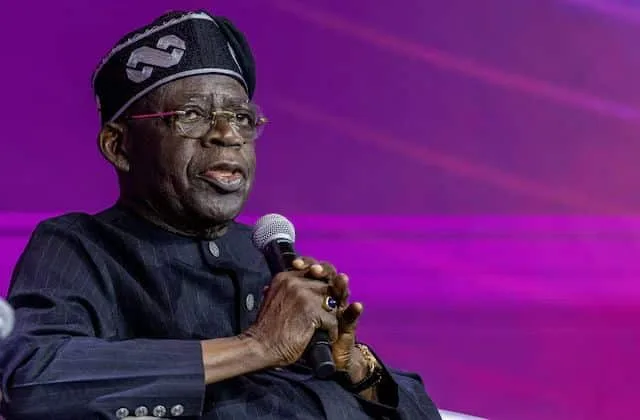
When next the perpetual critics ask you why you are always defending Tinubu, let that question boomerang. Ask them, too, why they are always attacking Tinubu. Ask them why they so rarely extend any goodwill towards the man. Ask them why they find it so difficult to grant him even the slightest benefit of the doubt.
Many may not even realize it, but the question itself often springs from an assumption that persistent criticism is perfectly legitimate while consistent support must somehow be suspicious. They freely exercise their right to criticize the same public figure relentlessly, yet are often uncomfortable with another person’s equally genuine right to arrive at a different conclusion.
Too many have become like a dog with a bone. They simply cannot entertain the possibility that President Bola Tinubu may genuinely mean well for Nigeria. Their opinions of him were formed years ago and have become so firmly settled that almost nothing he does is capable of changing their minds. Consequently, they struggle to understand why anyone could sincerely hold a consistently different perspective. Yet disagreement, by itself, is neither abnormal nor dishonest. It is one of the hallmarks of a healthy democracy.

You, on the other hand, know why you see things differently, and you make no apology for it. Your convictions did not emerge from blind loyalty but from observation, reflection and a willingness to question prevailing assumptions. You have chosen not to be driven by the emotional pendulum that often dominates political discourse. Instead, you strive to judge issues on their merits, celebrating what deserves praise while remaining open to legitimate criticism where necessary.
You are where you are today because you dared to be different. You had had enough. You chose your own path after deciding that you had arrived at your bus stop. And so you disembarked from that miserable bus where everybody simply cursed the darkness without holding up a light for the journey ahead. You took a clean break from that endless cycle of despair and negativity.
For far too long, we have lived with a national habit of talking ourselves down. Too many among us have become conditioned to believe that very little that is authentically ours can ever be truly good. Our culture, our institutions, our values and even our possibilities are too often measured against foreign standards without sufficient regard for our own peculiar realities.
It is therefore unsurprising that when a leader with proven intellectual, managerial and political credentials emerges, many are unable to look beyond long-held perceptions about his imperfections. Rather than weigh the totality of his record or assess the direction of his policies, they remain fixated on allegations, rumours and controversies that have long shaped their opinions of him.
None of this suggests that President Tinubu is beyond criticism. No democratic leader should ever be. But criticism should be anchored in fairness, evidence and consistency rather than permanent hostility or predetermined conclusions.
In the three years since he assumed office (against enormous political resistance and after inheriting structural economic challenges decades in the making) his administration has undertaken reforms that many previous governments acknowledged but lacked either the courage or the political capital to implement.
Patient Nigeria required more than cosmetic treatment. She needed emergency surgery. The operations were painful. They were never going to be otherwise. Surgeons do not heal patients by avoiding the knife. They heal by confronting the disease. Patient Nigeria remains in recovery, but recovery is not the same as failure. It is a process.
You observed the end of an artificially sustained exchange rate that had outlived its usefulness. You welcomed the difficult but necessary decision to remove distortions that enriched a privileged few while imposing enormous costs on the nation. You understood that genuine reform would inevitably produce temporary pain before lasting recovery.
You also witnessed the removal of the petroleum subsidy, which is a tumour that had drained public resources for decades. Painful as that decision was, it released significantly greater resources to the states and strengthened the financial foundation upon which local governments can begin to function more independently.
Across the federation, the responsible among the governors and local government leaders are putting these new funds to work through debt reduction, infrastructure development and investments capable of stimulating local economies. Simultaneously, major road projects and other legacy infrastructure are opening up new opportunities for commerce and long-term economic growth.
Nigeria’s solid minerals sector, long exploited by criminal interests and informal networks, is gradually receiving greater institutional attention. New investments in local mineral processing across states such as Jigawa, Nasarawa, Lagos and Osun point towards the possibility of adding greater value to our natural resources at home rather than merely exporting raw materials abroad.
Likewise, reports of sustained military operations against t3rrorists, kǐdnappers and bandits continue to emerge with increasing regularity. While much work remains, these developments offer encouragement to Nigerians who believe that security can improve through sustained effort rather than perpetual despair.
Our acknowledgment of and support for all these efforts, ultimately, is why we are accused of “always defending Tinubu.”
The accusation itself misunderstands our position. We do not defend perfection because no leader is perfect. We defend fairness. We defend the principle that reforms should be judged over time rather than dismissed before they have an opportunity to bear fruit.
We defend the idea that criticism should never become so habitual that it loses the capacity to acknowledge progress whenever progress genuinely occurs.
Most importantly, we refuse to surrender hope.
At a time when cynicism has become fashionable and pessimism is often mistaken for intelligence, we choose a different path. We believe Nigeria can recover. We believe difficult decisions can produce better outcomes. And yes, we believe President Tinubu deserves to be judged not by entrenched prejudice or popular sentiment, but by the totality of his leadership and the enduring consequences of the choices he has made.
That is why we defend him. Not because we are blind. But because, ‘Tí a bá ńké, àá ma ríran.’ Even amid the tears of our challenges, we still take care to be observant.
–Ogunleye wrote from New York