Discipline, debt relief, and execution: Why power sector reforms are gaining traction — by Rufai Oseni
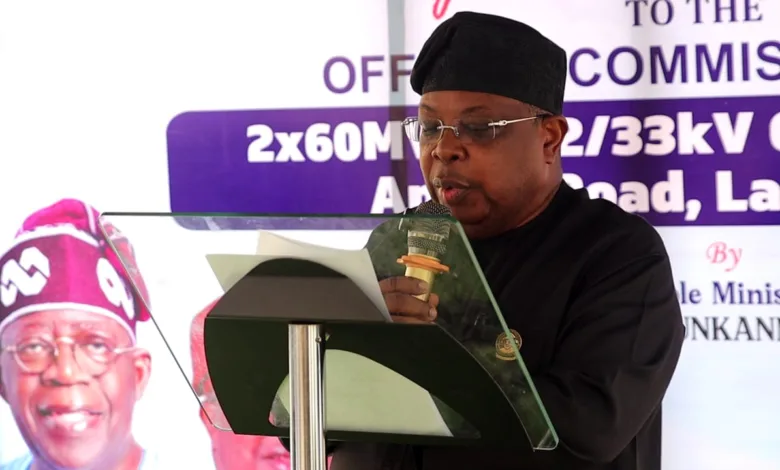
For decades, Nigeria’s electricity sector has been trapped in a cycle of ambitious policy documents, unfulfilled promises, and chronic grid instability. Since assuming office as Minister of Power in mid-2026, Chief Joseph Olasunkanmi Tegbe—a civil engineer and former Senior Partner at KPMG Africa—has shifted the ministry’s focus from drafting new policies to enforcing execution, financial discipline, and operational accountability.
Early indicators suggest this pragmatic approach is beginning to address the root causes of Nigeria’s power crisis. Here is a look at why Tegbe’s reforms are resonating across the energy value chain.
- Diagnosing the “Human” Element Over Purely Technical Fixes
One of Tegbe’s most notable shifts in strategy is his diagnosis of the sector’s core problem: arguing that Nigeria’s power crisis is 20 percent technical and 80 percent human. Rather than simply throwing money at isolated infrastructure projects, his administration has targeted poor teamwork, institutional silos, governance lapses, and weak coordination among operators. By aligning key agencies—including the Transmission Company of Nigeria (TCN), the Nigerian Electricity Regulatory Commission (NERC), and the Rural Electrification Agency (REA)—around shared, measurable milestones, the ministry is reducing the bureaucratic friction that historically stalled progress.
- Clearing Legacy Debts to Restore Liquidity
A power sector cannot function if generation companies (GenCos) and gas suppliers are not paid. When Tegbe took over, mounting debts owed to GenCos were choking liquidity and discouraging investment. Under the Federal Government’s debt-resolution framework, legacy gas and generation debts—originally estimated at ₦6 trillion—were audited and negotiated down to ₦3.3 trillion. With over ₦1.23 trillion already disbursed and a clear timeline to settle the remainder by 2027, GenCos are regaining the financial breathing room needed to maintain turbines and secure steady gas supplies.
- Prioritizing High-Impact Economic Corridors
Instead of spreading limited transmission and distribution resources too thinly across the country, Tegbe introduced a targeted strategy centered on three priority economic energy corridors:



- Lagos–Ogun
- Benin–Enugu–Port Harcourt
- Abuja–Kaduna–Kano
By deliberately matching power generation and transmission upgrades with distribution readiness in these major industrial and commercial hubs, the reforms aim to deliver immediate, reliable power where it can quickly boost manufacturing, lower business operating costs, and drive broader economic growth.
- Closing the Metering Gap and Enforcing Commercial Viability
Estimated billing has long eroded public trust and fueled revenue collection losses for Distribution Companies (DisCos). With Nigeria facing a metering gap of roughly 40 to 44 percent, the ministry has doubled down on aggressive meter rollouts through the Presidential Metering Initiative (PMI), the Meter Acquisition Fund (MAF), and the Distribution Sector Recovery Programme (DSRP). Coupled with plans to transition away from blanket government tariff subsidies toward bilateral commercial agreements, these initiatives ensure that tariffs reflect actual service delivery and that suppliers can reliably collect revenue for the electricity they generate.
- Protecting Infrastructure and Managing Expectations
Infrastructure vandalism has consistently undermined grid expansion. Tegbe’s roadmap pairs physical grid upgrades with a coordinated anti-vandalism campaign backed by security agencies and a strengthened legal framework. At the same time, his candid communication style—rejecting unrealistic promises of instant 24-hour electricity in favor of transparent timelines and incremental, visible improvements—has helped rebuild credibility with both investors and everyday Nigerians.
The Road Ahead
While deep-seated challenges such as ageing transmission lines and gas supply constraints cannot be erased overnight, Joseph Tegbe’s background in corporate advisory and infrastructure management is bringing much-needed rigor to the Ministry of Power. By prioritizing execution over rhetoric, clearing industry debts, and focusing on commercial sustainability, the reforms are laying a practical foundation for a more stable and reliable Nigerian electricity market.