FG launches Net-Zero Investment Plan, reaffirms commitment to climate action
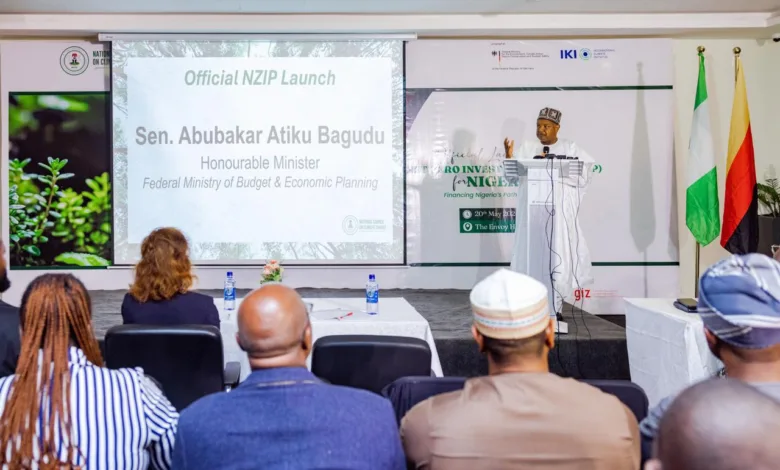
The Federal Government has launched Nigeria’s Net-Zero Investment Plan (NZIP) and reaffirmed its commitment to climate action and environmental protection, with a target of achieving net-zero greenhouse gas emissions by 2060 while promoting sustainable economic growth.
The plan was launched in Abuja on Wednesday by the Minister of Budget and Economic Planning, Senator Abubakar Bagudu, in the presence of the Head of International Cooperation at the German Embassy, Dr Karin Jansen, alongside senior government officials, development partners and private-sector stakeholders.
Speaking at the event, Bagudu said Nigeria remained committed to environmental protection, climate action, economic growth and private-sector engagement, while acknowledging the support of international partners, particularly Germany, GIZ and KfW.
He disclosed that recent engagements with the German delegation had resulted in agreements to mobilise long-term financing, including €71 million in contributions and a €300 million credit guarantee to support Nigeria’s climate and development ambitions.




“Nigeria’s Agenda 2050 recognises that environmental management and sustainability are integral to national planning, not tangential,” the minister said, adding that the government was committed to integrating climate responsibility into long-term development planning.
Bagudu noted that the country had developed stronger regulatory frameworks, technology and expertise to ensure sustainable resource management and agricultural development, citing initiatives such as solar-powered agricultural pumps and modernised farming practices.
In her remarks, Dr Karin Jansen commended Nigeria for driving a country-led initiative that reflected national priorities and development goals, while praising the inclusive process involving government institutions, technical experts, civil society and the private sector. She said Germany was proud to support the initiative through funding and technical cooperation under the International Climate Initiative.
The plan outlines interventions in sectors such as power, agriculture, transport, waste management, industry and domestic energy, while also prioritising women, youths and small businesses to ensure inclusive participation in Nigeria’s green economy.