Fi’jó gba’dé: Dance as political strategy, By Simbo Olorunfemi
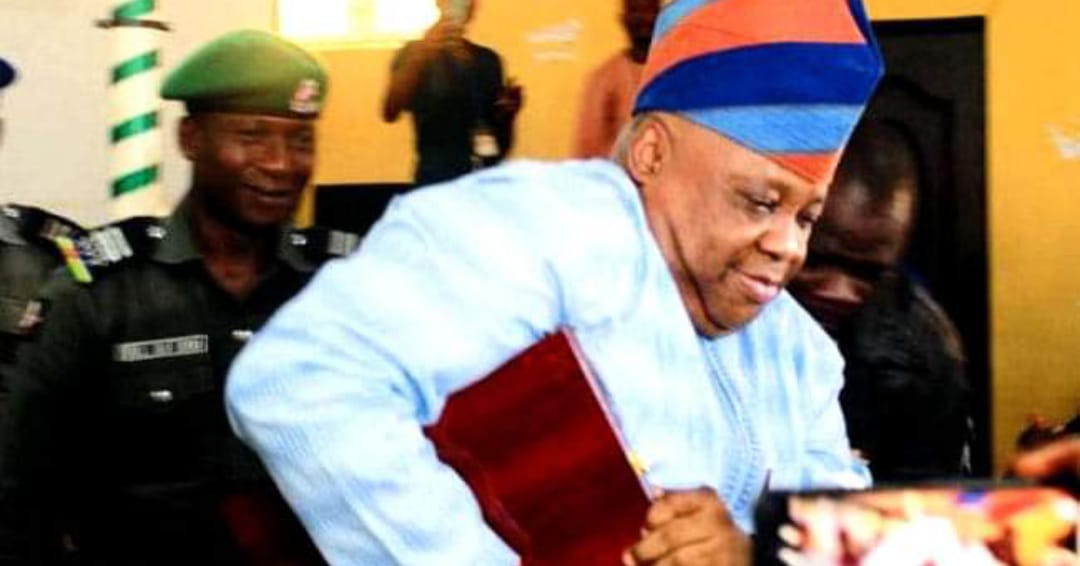
I didn’t start paying attention to the campaign in Osun until the final weeks before the election. My interest, as always, was on strategy and communications, trying to find out what was motivating who, what the strategy was and how it was being executed.
Again, I was fascinated by Alàgbà Jackson, wanting to know how he was handling his obvious weaknesses and harnessing possible strengths. The first opportunity to assess him was at the Debate conducted in Yoruba by the BBC in conjunction with other Radio Stations. First thing that struck me was his calmness and confidence. Even when on the spot, as was often the case, he found a way to dance himself out.
The ability to rope his intervention and message around supposed hardship (Ìyà) of the people of Osun, even if he fell short in terms of solutions was quite instructive. I found Ẹ kú ìrọ́jú, his refrain, quite powerful. I felt that there was more to the man than the dance and that dance might had become a strategic tool, a decoy to deflect attention from what might ordinarily be a focus.
Having listened to the man a few more times, I am more convinced that there is a bit of thought and strategy to Alàgbà Jackson than people acknowledge. I saw some attributes of his that might have play out as strengths that have helped his likeability factor, thus contributing to how he was able to dance his way to power.
Early on the campaign train, Alàgbà Jackson had goofily told the world he had come with a hefty war chest of dollars, pounds and other foreign currencies. I wondered how he was going to respond to questions around this when he was confronted. I was stunned by the confidence with which he spinned that statement. That did not only reinforce my thinking that there must be some strategic fingers behind the scene for Alàgbà, but he did come across to me as a man open to his errors and quick to make advised amends.
Alàgbà Jackson comes across as one who is sensitive (emotional), humble and teachable. These attributes, I saw play out at different points and I believe they helped endear him to the people at the emotive level, connecting him with the people at a level beyond the rational. The way he handled the loss at the last election, using it to galvanise his base, turning it to manure with which he nurtured the campaign is quite instructive.
I believe that though Dance had originally been a sideshow, but as people keyed into it, so was it further embraced as a strategic tool to deflect attention away from the obvious weaknesses of the man. But that is smart, embracing an unconventional, but effective tool is the smart thing to do.
Whereas the excesses of a Candidate should ordinarily be a source of concern, but there are exceptional circumstances, as seen with Trump, where that over-the-top conduct can serve to deflect attention while resonating with an unquestioning base.
No matter how you dice it, politics is a game of high emotions, choices are hardly rational. Choices are made on the basis of sundry emotional reasons that have little or nothing to do with values, competence or capacity.
As reason is often suspended when it comes to political choices, no surprise that Alàgbà was able to cruise to victory even with an empty tank in terms of content.
The case of Alágbá Jackson is one in which what otherwise might have been a weakness was deftly managed and positively deployed to achieve the desired result. Alágbá Jackson has defied the odds to dance his way to power. How he dances his way around governance is what we wait to see. But if indeed there was a bit of thought to what played out, then there just might be more thought to how the business of governance will be addressed than we assume.
Alàgbà Nurudeen Jackson fi ijó gba Adé.
Ìmọ́lẹ̀ Dé.