Ijebu State and the rhetoric of survival, by Folorunso Adisa
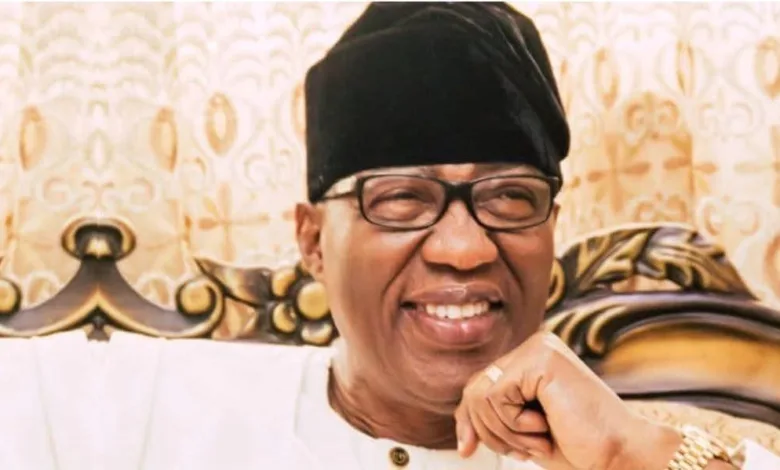
The statement made by Senator Gbenga Daniel is a textbook example of political rhetoric that blends personal ambition with collective aspiration. By asserting that the agitation for Ijebu State will suffer a setback if he is not returned to the Senate, OGD is not merely campaigning, he is engaging in what political communication scholars often call the rhetoric of indispensability.
The underlying message is strategic: his re-election is presented not as an individual pursuit of power, but as an existential requirement for a regional dream. This framing positions him as the irreplaceable bridge between the people’s desire for statehood and the machinery of federal politics. Consequently, the statement creates a dependency narrative, one in which the success or failure of a community’s decades-long aspiration hinges entirely on a single political figure.
The rhetorical device here is worth noting. The conditional phrase, “if I don’t…”, operates as a persuasive threat of loss. Political psychologists argue that loss aversion is often a stronger motivator than the promise of gain. By suggesting that the Ijebu cause will regress without him, OGD amplifies the cost of political disobedience. The burden of potential failure is subtly shifted to the electorate, who are now made to feel that voting him out would be equivalent to betraying their collective ambition.
Such rhetoric is neither new nor uniquely Nigerian. Globally, politicians have long sought to conflate their survival in office with the survival of a cause larger than themselves. As Murray Edelman argued in Constructing the Political Spectacle (1988), leaders often create symbols that transform private ambition into public necessity. Daniel’s invocation of Ijebu State is precisely such a symbol; meant to silence opposition, neutralize competing narratives, and concentrate legitimacy around his person.


However, the danger in this rhetoric lies in its reductionism. That OGD is tying the fate of Ijebu State to his personal re-election, presents him to the people of IJEBU as erasing the possibility of institutional continuity or broader collective leadership. It transforms a structural demand (state creation) into a personality-driven project, which is both politically expedient and democratically limiting. The agitation for new states in Nigeria has always been a multi-generational, multi-actor struggle, rarely the achievement of one man. Suggesting otherwise risks creating political disillusionment when promises inevitably clash with bureaucratic and constitutional realities.
Sadly, the senator’s message is a foxy blend of self-interest and communal aspiration. It is rhetorically effective, but also reveals the fragility of Nigerian politics, where long-standing structural causes are often personalized into electoral bargaining chips. The electorate would do well to recognize both the persuasive selfishness and the strategic self-interest embedded in such claims.