Kosegbe and the Nigerian tragedy of doing right, by Folorunso Adisa
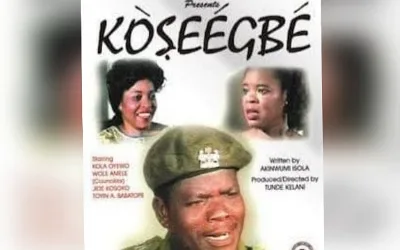
We did not have the luxury of smart screens or surround sound to savour its cinematic beauty. Most of us encountered Kosegbe on flickering black-and-white television sets, where images arrived grainy and sound travelled thin. The cameras that captured the film were modest by today’s standards, and the televisions that projected it were equally limited. However, neither the tools nor the technology diminished the force of its message. If anything, the restraint sharpened the story. In Kosegbe (1995), Tunde Kelani proved that truth, when well told, needs no polish to endure.
The film is a mirror held up to Nigeria. Not a flattering mirror, but an honest one. Kosegbe compresses the nation’s moral anxieties into a single narrative, exposing corruption as a slow-spreading cancer that respects neither rank nor intention. Kola Oyewo delivers a masterclass as the upright Comptroller-General of Customs, a man determined to cleanse his institution of rot. He wears integrity like a second skin. Calm. Resolute. Unyielding. And for that very reason, he becomes dangerous to those who profit from decay.
What follows is a familiar Nigerian tragedy. The reformer is not defeated by enemies alone, but by conspirators within his own house. Corrupt officials close ranks. A powerful minister lends weight to the plot. Gradually, methodically, the system turns on the man who dared to challenge it. As the Yoruba proverb reminds us, Itakun tó di mọ́ igi obi ni kojẹ k’oso èso rere, the climber wrapped around the kola tree prevents it from bearing good fruit. The obstruction comes from within.
They do not confront him head-on. They distract him. They weaken him emotionally. Hard drugs are planted on his son, leading to an arrest that binds his hands as both a father and a public officer. His wife’s pressure tightens the noose. Then comes the final blow: a carefully staged scandal. His drink is drugged. He is photographed in a compromising position. Evidence manufactured. Reputation shredded. Even Ajepe, the loyal henchman, falters at the last moment. Betrayal, in Kosegbe, is never loud. It is quiet, intimate, and devastating.



Watching the film today feels less like nostalgia and more like recognition. The dilemma it portrays has not aged. Corruption in Nigeria remains systemic, adaptive, and deeply entrenched. Powerful interests often prove more organised than reformers. Allegations involving staggering sums circulate with numbing regularity, leaving citizens suspended between outrage and exhaustion. Names change. Sectors differ. The pattern remains. One need not canonise accusers or demonise the accused to admit a sobering truth: the scale of alleged corruption in contemporary Nigeria has become frighteningly abstract, too vast to grasp, too frequent to shock for long.
Kosegbe is not just a political critique. It is art in its fullest sense. The film breathes with proverbs that instruct without sermonising. It dances. It sings. It acts. Music and movement are not decorative; they are narrative tools. This is total theatre, built on culture, confident in language, and unashamed of its Africanness. The heavy use of proverbs anchors the story in collective wisdom, reminding us that long before policy papers and commissions of inquiry, societies understood the moral cost of corruption.
They do not make films like Kosegbe anymore. Or perhaps we no longer listen the way we once did. Either way, the film endures, not because of nostalgia, but because Nigeria keeps proving its relevance. As long as integrity remains dangerous and corruption remains organised, Kosegbe will continue to feel less like fiction and more like prophecy.