Lagos positioned as Africa’s leading geoeconomic hub — Sanwo-Olu
By Adeola Ogunrinde
Lagos State Governor, Babajide Sanwo-Olu, has said Lagos is strategically positioned to serve as Africa’s leading geoeconomic hub, leveraging trade, infrastructure, finance, technology and human capital to drive prosperity across Nigeria, West Africa and the global economy.
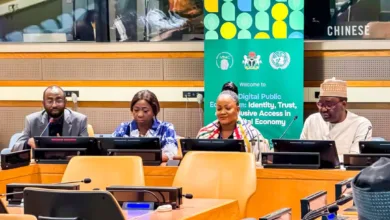
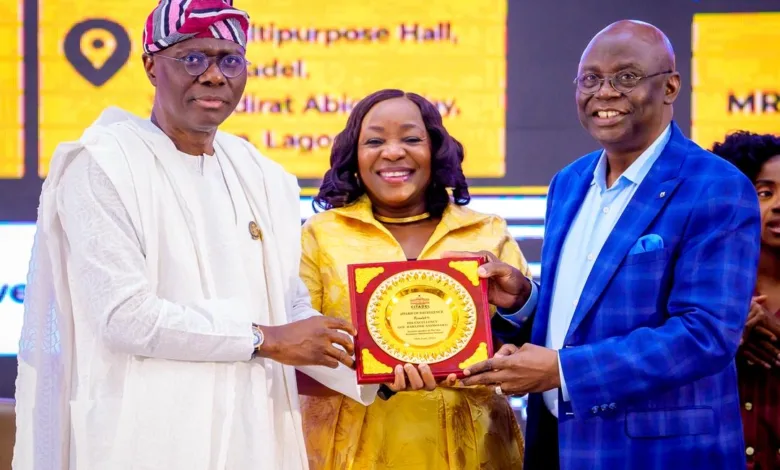
Sanwo-Olu made the assertion on Saturday at the Geo-Economic Optimization Summit Lagos 2026 hosted by the Citadel School of Government in Oregun. He noted that geoeconomics, which involves the use of economic instruments to project influence, has become a defining feature of the modern global order, where power is increasingly shaped by ports, data centres and supply chains.
According to the governor, Lagos contributes about one-third of Nigeria’s Gross Domestic Product and remains Africa’s second-largest metropolitan economy after Cairo, with an output estimated at more than $259.75 billion on a purchasing-power-parity basis.
He said that if Lagos were a sovereign nation, it would rank as Africa’s eighth-largest economy, adding that more than 90 per cent of the state’s economic output comes from a diversified base that includes finance, technology, trade, logistics, creative industries and the blue economy.
Speaking on the theme, “From South-West Nigeria to the Globe: Lagos State as a Geoeconomic Hub,” Sanwo-Olu outlined Lagos’ strategic role across different levels of economic engagement. He cited the state’s participation in regional institutions such as the Odu’a Group, the Development Agenda for Western Nigeria (DAWN) Commission and the South West Development Commission as evidence of its commitment to regional integration.
The governor reaffirmed that Lagos remains firmly rooted in the South-West region and would continue to promote stronger economic cooperation among the states. He stressed that the state’s position as Nigeria’s commercial and financial centre means that national economic growth is closely linked to Lagos’ performance.
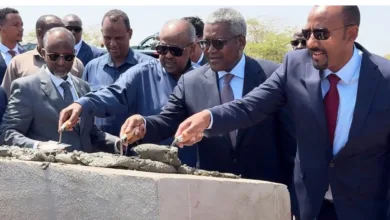
Sanwo-Olu highlighted major infrastructure investments undertaken by his administration, including the operational Blue and Red rail lines, federal counterpart funding for the Green Line rail project and ongoing upgrades to the Lagos-Badagry Expressway. He also pointed to electricity sector reforms and the implementation of the Lagos State Electricity Law as measures aimed at addressing power supply challenges.
The governor further cited federal infrastructure projects such as the 700-kilometre Coastal Highway and the over 1,000-kilometre Sokoto-Badagry Superhighway as initiatives that would strengthen connectivity and economic growth. He reiterated that Lagos remains open to investors and ready to partner with individuals, businesses, the South-West region and the international community. Speaking at the summit, Founder and Chairman of the Citadel School of Government, Pastor Tunde Bakare, said Lagos provides a suitable context for discussions on geoeconomic optimisation and sustainable development.