LETTER TO AREWA: Will the north miss history again? — by Segun Showunmi
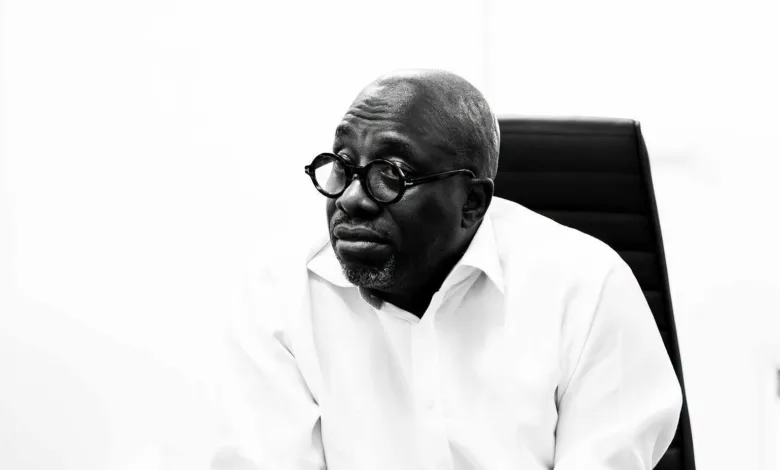
An open letter to the conscience of Northern Nigeria, its leaders, its elders, its intellectuals, its traditional institutions, and above all, its young people.
My dear people of Arewa,
There are moments in the life of a nation when silence becomes a burden on the conscience. There are moments when one must speak, not because speaking is convenient, but because keeping quiet begins to feel like an act of betrayal against the very people whose future one claims to care about.
For me, this is one of those moments.
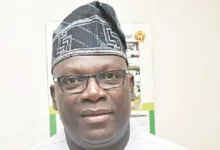
I write this letter with a heavy heart. Not with the satisfaction of a man who believes he has all the answers, and certainly not with the arrogance of someone who imagines that the challenges of Northern Nigeria can be reduced to a few paragraphs. I write because the condition of the North has become too consequential for Nigeria, too painful for its people, and too dangerous for any patriotic Nigerian to ignore.
I write because I remember a North that carried itself with a certain confidence, a North whose social structure appeared more stable, whose communities possessed a stronger sense of collective direction, and whose future seemed to hold greater promise. I remember the idea of a North in which a child could reasonably aspire to a better life, where communal identity meant something beyond political mobilisation, and where leadership promised that the people would advance together.
Today, when I look at the scale of the challenges confronting Northern Nigeria, I cannot help but ask myself: What happened to us? How did we arrive at this point? And why have we not summoned the collective courage to confront those responsible for the decisions and failures that brought us here?
I cannot look at the child who should be in school but is not, and feel indifferent.
I cannot think of a farmer who should be cultivating his land but is afraid to return to his farm. This mother struggles to feed her children, the young man who has become vulnerable to recruitment into violence because opportunity has abandoned him, or the family forced to flee its home, and pretend that these are merely statistics.
Behind every statistic is a human being. Behind every percentage point is a life. Behind every development ranking is a child whose opportunities may have been narrowed before that child even understood what opportunity meant.
And behind the enormous human-development challenges of Northern Nigeria are questions of leadership, public policy, institutional responsibility, and the choices that generations have made or failed to make.
We must speak about these things.
We must speak because we cannot love Arewa and remain permanently silent about the things that are hurting her.
- The pain of watching great people struggle
One of the cruellest things that can happen to a people is not merely to experience hardship. It is to begin to accept hardship as their natural condition.
It is when poverty becomes familiar, when insecurity becomes an ordinary feature of life, when children growing up without adequate education no longer provoke sufficient outrage, and when the absence of opportunity becomes something people are expected to endure rather than something their leaders must urgently correct.
That is the danger I see.
Northern Nigeria is not a land without people of intelligence, courage, enterprise, or ambition. It is not a region without history, culture, resources, or the capacity to produce extraordinary achievements. It is a region of immense possibilities, populated by people who deserve the same dignity, security, opportunity, and quality of life as any other citizen of this country.
Yet too many of its people remain caught in circumstances that deny them the chance to realise their potential.
How can we become comfortable with this?
How can a generation of leaders sleep soundly when the distance between the potential of their people and the reality of their lives remains so wide?
How can we celebrate political victories while communities continue to struggle with insecurity, schools remain inaccessible to too many children, and millions of young people face an uncertain future?
At what point do we stop making excuses and begin demanding answers?
I ask these questions because the North deserves better. Not because its people are superior to anyone else, but because no people should have to negotiate endlessly for the basic conditions of a dignified existence.
The tragedy of Arewa is not that its people lack potential. The tragedy is that so much of that potential remains unrealised while the cost is paid by generations who had no part in creating the circumstances that constrain them.
- What would the founding generation say to us?
I often wonder what Sir Ahmadu Bello and Sir Abubakar Tafawa Balewa would say if they could witness the present condition of Northern Nigeria.
What would they say to the generation that inherited the responsibility of building upon the foundations of their time, only to find itself confronting persistent and deeply troubling human-development challenges?
What explanation would we offer them?
Would we tell them that the problem was simply that other regions progressed faster? Would we blame geography, history, the federation, successive federal administrations, or the political opposition?
Would we tell them that the North has continued to struggle because the people have not prayed enough, worked hard enough, or demonstrated sufficient loyalty to those who claim to represent them?
Or would we finally admit that leadership must be judged by what it delivers to the people, and that generations of political choices deserve serious examination?
The founding generation cannot be our permanent refuge from present-day accountability. Their names cannot be invoked only when we need the emotional authority of history, while the obligations their legacies place upon us are conveniently forgotten.
To honour the past is to accept responsibility for the future.
If we invoke the Sardauna, then let us discuss the institutions we are building. If we invoke Tafawa Balewa, let us discuss the quality of leadership we are producing. If we invoke the greatness of Arewa, let us explain why so many of its people are still struggling to secure the elementary foundations of human progress.
History must be more than nostalgia. It must become a standard against which the present generation is prepared to measure itself.
And if we discover that we have fallen short, the appropriate response is not anger at those who point it out. It is the humility to correct our course.
- The dangerous pattern that keeps returning
There is a pattern in our national history that deserves our attention.
Chief Obafemi Awolowo understood the transformative power of education, healthcare, social investment, and purposeful government. His political philosophy held that the circumstances of birth should not permanently determine a child’s destiny.
Whatever one’s assessment of his politics, the development question he raised remains fundamental: what is government for if not to expand the possibilities available to ordinary people?
Yet our history repeatedly demonstrates how political rivalry, entrenched interests, and struggles over power can frustrate ambitious programmes and prevent their benefits from reaching those who need them most.
Then came Chief MKO Abiola, whose message of hope crossed many of the boundaries that had divided our national political space. His emergence represented, for many Nigerians, the possibility of a broader national compact in which people could imagine a shared future beyond their immediate identities.
His mandate was never realised, and the consequences of that chapter remain part of our national consciousness.
Now Nigeria finds itself at another consequential moment under President Bola Ahmed Tinubu.
His administration has undertaken major economic reforms intended to address structural weaknesses in the economy. Those reforms have also brought significant immediate hardships, particularly for vulnerable households. Their long-term value must be established through implementation, measurable outcomes, and the extent to which the benefits of growth reach ordinary citizens.
This is precisely why the moment demands seriousness rather than reflexive political hostility or unquestioning loyalty.
The North must ask itself whether it can afford to stand outside every difficult national conversation, allowing political antagonisms to determine its relationship with policies that may have significant consequences for its future.
Must every initiative be rejected because of who introduced it? Must every opportunity be turned into a battle over political ownership? Must the ordinary Northern Nigerian once again become the casualty of a struggle among political elites?
How many more generations must pay for the inability of our political class to put the long-term welfare of the people above the immediate calculations of power?
That is the pattern we must break.
- Arewa, do not allow your people to become instruments of elite survival
Let us speak plainly, but fairly.
Across our political system, regional identity can sometimes be used to protect leaders from the scrutiny they would otherwise face. Questions about performance are redirected into arguments about loyalty. Concerns about public services become accusations of political hostility. Calls for accountability are presented as attacks on a community.
This is a dangerous way to organise public life.
A leader who genuinely loves the North should welcome questions about schools, hospitals, roads, jobs, public expenditure, security, and the future of young people. Such questions are not an assault on Arewa. They are the beginning of taking Arewa seriously.
The people are not the property of their leaders.
The votes of the poor are not a hereditary entitlement. The trust of the vulnerable is not a licence to postpone their welfare indefinitely.
A mother who sends her child into an uncertain future deserves more than another speech about regional pride. A young person who has waited years for an opportunity deserves more than another appeal to political loyalty. A farmer whose livelihood has been disrupted by insecurity deserves more than assurances that everything is under control.
These citizens have lives to live. They have families to feed. They have dreams that are just as legitimate as the ambitions of those who occupy public office.
And they have every right to ask what their leaders have done with the opportunities entrusted to them.
Let nobody convince the ordinary people of Arewa that questioning a leader is equivalent to betraying the North.
Sometimes, the people who insist most loudly that they alone represent a region are the very people who should be asked to account most carefully for the condition of its inhabitants.
The issue is not whether every Northern leader has failed. That would be an unfair and inaccurate conclusion. There are public servants, community leaders, entrepreneurs, educators, and reformers working to improve lives across the region.
The issue is whether the overall record of leadership has matched the scale of the challenges, and whether the present generation is prepared to demand a substantially better standard.
That is the conversation we must have.
- What does it mean to be a leader when the people are suffering?
Leadership is not the ability to command a crowd. It is your responsibility to improve the circumstances of the people who gather before you.
Leadership is not measured only by the offices one has occupied, the number of political followers one commands, or the frequency with which one’s name is mentioned in public.
It is measured by the schools that function, the hospitals that serve, the communities that become safer, the businesses that grow, the jobs that are created, and the opportunities that become available to people who previously had none.
It is measured by whether a child born into poverty has a realistic chance of escaping it.
It is measured by whether a young woman can pursue an education without the limitations imposed by circumstances beyond her control.
It is measured by whether a young man can earn a living through productive work rather than being pushed towards desperation by the absence of alternatives.
It is measured by whether a family can sleep without fear, plan without despair, and look towards tomorrow with some reasonable expectation that life can improve.
This is the standard Arewa must demand.
I ask the political leaders of the North: when you look at the condition of your communities, do you see a legacy worth defending, or a responsibility still waiting to be fulfilled?
When you gather your supporters, do you discuss how many people have escaped poverty, how many children have gained access to quality education, or how many communities have become safer? Or do you discuss primarily who will occupy the next office?
When you speak of your achievements, can the ordinary person point to a meaningful improvement in the circumstances of their own life?
These are not questions designed to humiliate anyone. They are questions that ought to accompany the privilege of public service.
For what is the meaning of power if it cannot be translated into the welfare of the people?
And what is the meaning of political success if the people whose loyalty sustained it continue to wait for the benefits?
- Tinubu and the test of this moment
I have long believed that Nigeria must learn to think beyond immediate political gratification and confront the structural weaknesses that have limited its possibilities.
The country cannot build sustainable prosperity on a foundation of persistent economic distortions, weak productivity, inadequate infrastructure, and public finances that leave too little room for essential investment.
President Bola Ahmed Tinubu has chosen to undertake major reforms intended to confront some of these weaknesses. Whether one supports him, opposes him, or remains undecided, the consequences of these reforms deserve serious scrutiny.
For me, the most important question is what these changes ultimately mean for the Nigerian people.
Can they help create a more productive economy? Can they support stronger domestic investment? Can they improve the capacity of the government to fund infrastructure and public services? Can they contribute to an environment in which businesses expand and employment opportunities grow?
And, above all, can the gains be translated into tangible improvements in the lives of ordinary Nigerians?
These are questions that must be answered through evidence and outcomes, not merely through campaign rhetoric.
But Arewa must also confront a question of its own: if Nigeria is attempting to change the economic foundations upon which its future will rest, what is the North doing to prepare its people to participate in that future?
The region cannot afford to wait passively for the benefits of national growth to arrive at its doorstep.
It must prepare its young people with relevant skills. It must improve the quality and reach of education. It must strengthen agricultural productivity and build the processing industries that allow farmers to capture more value from their labour. It must improve security, support enterprise, expand infrastructure, and build institutions capable of converting public investment into measurable progress.
The North must be ready to compete, produce, innovate, and prosper.
If the reforms succeed in creating new opportunities, Arewa must be positioned to seize them. If the reforms fall short, Northern leaders must be prepared to identify the shortcomings, demand adjustments, and advance practical alternatives.
Neither blind loyalty nor permanent opposition is a development strategy.
The North needs a serious, evidence-driven engagement with the national project one that measures policies by their consequences and insists that the burdens of change do not fall disproportionately on those least able to bear them.
That is how a region protects its interests. That is how people prepare for the future.
- To the young Arewa man and woman: your future is at stake
To the young people of Northern Nigeria, I want to speak directly.
Do not allow anyone to persuade you that the conditions into which you were born must determine the limits of your life.
You deserve an education that prepares you for the world. You deserve an economy in which your skills can find expression. You deserve communities in which you can live and work without fear. You deserve leaders who understand that your energy is an asset to be developed, not a resource to be mobilised only when elections approach.
You are not merely the future of Arewa. You are its present.
Every year that passes without adequate investment in your education is a year of opportunity lost. Every young person excluded from productive employment represents talent that the region has failed to deploy. Every community trapped in insecurity represents a part of the North’s potential that cannot flourish as it should.
Your generation must therefore refuse to inherit the excuses of the past.
Ask questions. Study the issues. Demand facts. Examine budgets. Follow public expenditure. Compare promises with results. Organise peacefully and participate meaningfully in public life.
Respect your elders, but understand that respect does not require intellectual surrender.
Honour your heritage, but remember that heritage is not a substitute for development.
Value your faith, but do not permit anybody to use your devotion to shield public failure from scrutiny.
And never accept the argument that demanding a better life for your people is an act of disloyalty.
The future belongs to those who prepare for it. If your generation does not insist on a different standard of governance, there is no guarantee that the next generation will inherit anything substantially different from what you inherited.
Do not let that happen.
- Imagine the North we could have built.
Permit me to ask you to imagine something different.
Imagine a Northern Nigeria in which every child has access to quality basic education, where girls are not needlessly denied opportunities to learn, and where young people graduate with skills that connect them to real economic opportunities.
Imagine a region where farmers can cultivate their land without fear, where agricultural produce is processed locally, where businesses have reliable access to energy and finance, and where roads connect rural communities to thriving markets.
Imagine towns in which healthcare is accessible, local institutions function, and families are not forced to choose between feeding their children and seeking medical attention.
Imagine a North whose young people are recognised not primarily through the statistics of deprivation or insecurity, but through their contributions to science, technology, commerce, manufacturing, agriculture, culture, and public service.
Imagine a region whose political leaders compete to demonstrate which of them has improved the quality of life of the greatest number of people.
This is not an impossible dream.
It requires security, sound policy, investment, accountability, institutional reform, and years of consistent work. It requires the federal and state governments to perform their respective responsibilities. It requires citizens to participate and leaders to accept scrutiny. It requires an end to the politics that treats development as a campaign slogan rather than a continuous public obligation.
Above all, it requires a change in the way political success is understood.
The North must move from celebrating the power of its political actors to measuring the power of its people to shape their own destinies.
That is the real transformation.
- What shall we tell our children?
This is perhaps the most painful question of all.
One day, the children of this generation will ask us what we did when we saw the difficulties confronting our people.
They will ask what we said when opportunities were lost. They will ask whether we questioned the decisions that affected their future. They will ask whether we demanded accountability from those entrusted with public resources and authority.
What shall we tell them?
Shall we tell them that we were too afraid to speak because the truth might offend powerful people?
Shall we tell them that we defended leaders without examining their records because we shared a regional identity with them?
Shall we tell them that we spent our most productive years fighting political battles while the institutions that should have secured their future remained inadequate?
Shall we tell them that we saw the warning signs but convinced ourselves that somebody else would solve the problem?
I do not believe that is the legacy this generation wants to leave.
No parent wants to look into the eyes of a child and confess that a better future was possible, but the adults entrusted with building it were distracted by their own struggles for power.
No grandfather wants his grandchildren to inherit a society with fewer opportunities than the one he once imagined for them.
No people should have to explain to their children why their enormous human potential was not matched by the quality of the institutions built in their name.
We still have the opportunity to do something different.
But opportunity does not remain open forever. History moves, circumstances change, and the cost of delayed decisions accumulates.
The question is whether we will act while there is still time to alter the trajectory of the North, or whether we will leave our children to conduct the same painful reckoning after another generation has passed.
- My appeal to Arewa
My dear people of Arewa, I am not asking you to abandon your judgement to Bola Ahmed Tinubu, to any political party, or to any individual who claims to possess the answers to Nigeria’s problems.
I am asking you to place the future of your people above the convenience of political factions.
Examine the policies. Question the assumptions. Demand evidence. Insist that the burdens of economic adjustment are addressed fairly. Hold federal and state governments accountable for the outcomes they promise.
But do not let political rivalry blind you to opportunities that may serve your people. Do not allow the ambitions of individual politicians to become the limits of your regional imagination.
If a policy offers a credible path towards greater productivity and shared prosperity, examine it on its merits. If it fails, demand correction. If the implementation is deficient, insist on better execution. If vulnerable people are suffering, demand measures that protect them.
Above all, refuse to make the welfare of millions of people subordinate to the political survival of a few.
Arewa must become more than a geographical expression or an emotional slogan. It must become a community of shared responsibility, united by the determination to give its people a better chance at life.
Its greatness must be visible in its schools, its hospitals, its farms, its businesses, its institutions, and the confidence of its young people.
Its leadership must be measured by the opportunities it creates, not simply by the loyalty it commands.
Its politics must become a contest of ideas, performance, and service rather than a permanent struggle to preserve established interests.
And its people must never again be made to believe that their suffering is the price they must pay for somebody else’s ambition.
The final question
I return to where I began.
We have lived through the era of Awolowo’s development vision. We have witnessed the unfulfilled promise of Abiola’s national moment. We now stand amid another consequential period in Nigeria’s economic and political evolution under Bola Ahmed Tinubu.
These are different historical circumstances, and no two leaders or political moments are identical. But they leave us with one enduring question: will we learn from our history, or will we continue to allow narrow political calculations to frustrate the larger possibilities of our country?
For Northern Nigeria, that question carries an especially urgent weight.
The North cannot afford to remain trapped in a cycle in which governments change but too many of the fundamental challenges confronting ordinary people persist. It cannot afford a politics in which leaders ask for patience without demonstrating progress, demand loyalty without accepting accountability, and invoke the greatness of the region without doing enough to improve the lives of its inhabitants.
I want to see an Arewa that is confident because its people are educated, secure, productive, and economically empowered.
I want to see a North whose children can dream without having to negotiate with poverty before they begin.
I want to see a region where leadership is a burden of service rather than an instrument of personal advancement.
And I want to see a Nigeria in which Northern citizens can look at their own circumstances and feel that the country is working for them, not merely that they are being asked to work for the country.
That is why I cannot be indifferent. That is why this conversation must not be postponed. And that is why I believe this generation must summon the courage to think beyond the next election and towards the next fifty years.
Arewa, history has brought us to another crossroads. Will we choose the difficult work of transformation, or will we allow another opportunity to disappear beneath the weight of political rivalry and unaccountable leadership?
The answer cannot be left to politicians alone. It belongs to the people, the young and old, the educated and uneducated, the traditional institutions, the private sector, the public servants, and every citizen who understands that the destiny of a region cannot be secured by rhetoric alone.
Let us speak the truth, even when it is uncomfortable.
Let us judge leadership by the lives it improves.
Let us protect the vulnerable, prepare the young, strengthen our institutions, and demand a politics that serves the people rather than consumes them.
And let us remember that the greatest tribute we can pay to the generations before us is not to repeat their slogans, but to build a future worthy of the sacrifices they made.
I refuse to believe that the North has exhausted its possibilities. I refuse to believe that the suffering of its people must become permanent. I refuse to believe that the children of Arewa must inherit a diminished version of the future their grandparents once imagined.
But hope without responsibility is an illusion, and pride without progress is an empty inheritance.
The time has come for this generation to decide what it truly means to love Arewa.
Let us not be remembered as the generation that watched the North decline and found excuses. Let us be remembered as the generation that confronted the truth, demanded accountability, seized the opportunities of its time, and began the difficult work of rebuilding a future in which every Northern child could stand tall.
History is asking us a question.
Our children are waiting for the answer.
May we have the courage to give them one they can be proud of.
- Showunmi is the founder of The Alternative