Looking past the Davos applause for Canada’s Prime Minister, by Gimba Kakanda
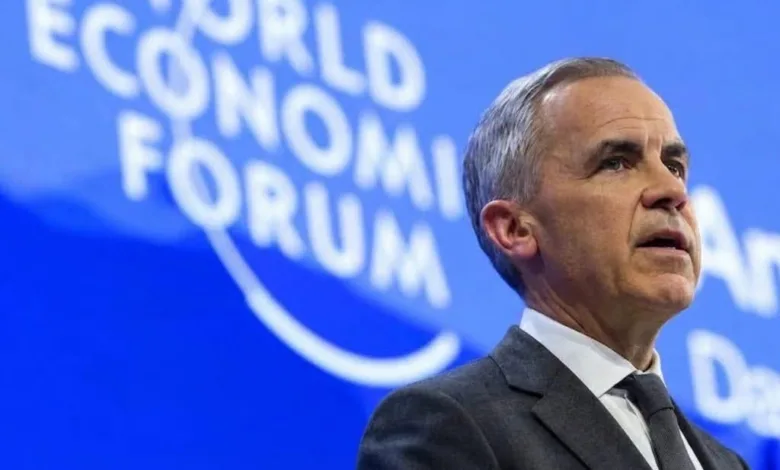
I feel goosebumps watching Mark Carney, the Prime Minister of Canada, deliver this speech at the World Economic Forum in Davos, and for students of history, it must evoke the knowledge of smaller powers rising up to a bully that begins to cross the boundaries of tolerance, just as European states came together to stop Napoleon. But there’s nothing the Canadian prime minister has said that’s a revelation, at least for powers outside the Western hemisphere or those occupying the small tables at international institutions.
The Canadian prime minister has arrived at realism precisely because the Western hemisphere now feels threatened, not because the tragedies he spoke about had been non-existent. His choice of a realist lens to interpret the actions of his American neighbour is a strategic necessity forced by changing material conditions, and he would be the first major victim if the world fails to rebalance.
Of course, the rupture Carney describes is real from his perspective, but the so-called rupture has been there even before Thucydides, whom he mentioned. In his book, The History of the Peloponnesian War, the Athenian general argued that “the strong do what they can and the weak suffer what they must,” and this forms the foundation of classical realism.
So, there’s no truly any rupture in the true sense of the word; the Canadian, like his Western counterparts, is just coming to terms with what they have experienced on TV being done by American hegemony. Countries like Iraq and Libya, for instance, did not experience the rules-based order as a stabilising fiction that was “useful.” They experienced it as selective legality enforced through overwhelming force. For them, the strong had long done what Thucydides said they could, and the weak had long suffered what they must. Most of the Western powers were not vocal in condemning the erosion of sovereignty, the weaponisation of sanctions, or the collapse of institutional protection when other states were invaded or coerced.



Other cases reinforce the point. Serbia, Afghanistan, Syria, Yemen, and Palestine have all encountered this so-called rupture, this hard edge of power dressed in normative language. They learned that rules do not restrain power, that power decides when rules apply. So, what Carney calls a rupture was the system functioning exactly as designed in the years of order—where hegemonic discretion masqueraded as universal principle.
Canada, as the prime minister admitted, benefited from the post-1945 order. As a middle power embedded within Western alliance structures and protected by American hegemony, it enjoyed predictability, security, market access, and moral voice at relatively low cost. The fiction worked because it was never tested against Canada’s survival. The sign in the window did not threaten the shopkeeper.
This is why it matters to clarify where the transition is actually occurring. The world is not transitioning away from a rules-based order. The West is. What Carney describes as a global awakening is, more precisely, a Western reckoning with a condition that non-Western states have long inhabited. The shock lies not in the collapse of norms, but in the diffusion of power that now constrains Western freedom of action.
It’s bold that America’s next-door neighbour is calling for an alliance against a threat, but Carney’s speech is a pursuit of self-interest, not humanitarian intervention. He is crying because Western middle powers recognise that they are no longer operating above the anarchic system, but within it. But this does not invalidate his argument. It may feel hypocritical that they were silent or complicit when other states were invaded, coerced, or destroyed through sanctions, but his outrage is not misplaced. The only minor—sorry, major—correction is this: the rules-based order has not suddenly failed the world. What it has done is finally begin to fail the Western beneficiaries of the system.