Nigerians were never meant to think small — by Kio Amachree
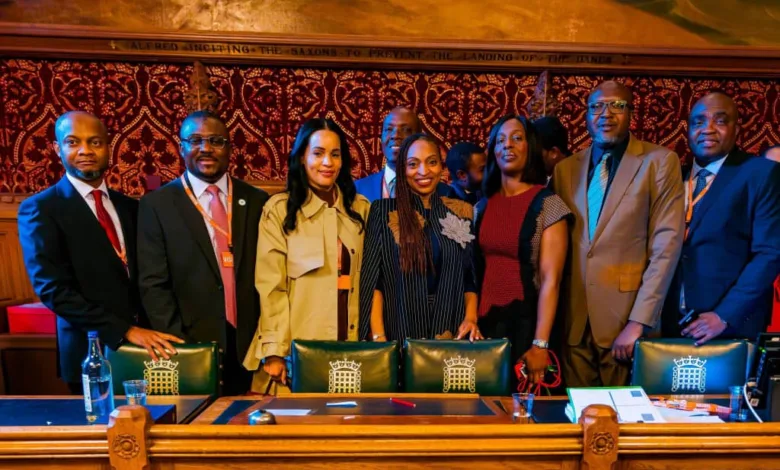
When I first began writing about my life, my experiences, and the circles I moved in, many Nigerians doubted me. They questioned the validity of my stories. They simply could not comprehend that there are Nigerians walking this earth who stand shoulder to shoulder with anyone—royalty, wealth, power, intellect, or influence.
But that disbelief says more about our present mindset than it does about my past.
Nigerians have been breaking barriers for generations.
Playing polo with Prince Charles was never a big deal to me. That was the world I grew up in. I socialized with those people. I went to school with them. I dated their sisters. I became one of them. Not because I was trying to be something else—but because I was raised with the confidence that I belonged.



This did not start with me.
My grandfather, Chief Ben Oluwole, first visited London in 1902. At a time when very few Nigerians had ever seen England, he was already traveling there, attached to the Governor-General’s staff. My paternal grandfather was part of the 1948 independence delegation, sitting across the table from British leadership. These were not small men. These were Nigerians operating at the highest levels long before independence.
My father spent the entire Second World War in England. He studied at Cambridge, the London School of Economics, and University College London. So when I was growing up, I met his friends—white, influential, educated men who treated him with respect. That environment shapes a child. It removes fear. It builds certainty.
So, when I arrived at Eton College in the early 1970s, I was not intimidated. There were only two Nigerians there at the time. Today, there are dozens. But someone had to walk through that door first—and more importantly, stay there, succeed, and normalize it.
By 1975, simply graduating from Eton as a Nigerian without “problems” was considered unusual. Today, it is expected. That is how barriers fall—one person at a time, until it becomes a flood.
I have had Africans, especially South Africans, tell me: “Only Nigerians could live the way you have lived.” They spoke of oppression, of limits, of systems that crushed ambition. Nigerians were different. You tell a Nigerian “no,” and he will force you to say “yes.”
That is our nature.
Colonial rule never truly conquered the Nigerian spirit. It divided us. It turned us against each other. But it never broke that internal confidence—that refusal to bow.
That same confidence is what allowed me to tell Prince Charles to his face that his so-called jokes were unacceptable. And I got away with it. Not because I was reckless—but because I knew my worth. Only a Nigerian raised with that level of self-belief could do that without fear.
That is who we are.
The tragedy is not that Nigerians doubt my story. The tragedy is that many Nigerians have forgotten their own.
We were never meant to think small. We were never meant to shrink ourselves. We were never meant to feel inferior in any room, anywhere in the world.
The real question is this: how do we take that same confidence—the one that allowed us to walk into the world’s most elite institutions and command respect—and apply it to rebuilding Nigeria?
Because that is where it is needed most now.
Not in polo fields. Not in drawing rooms.
But in the governance, discipline, and future of our country.